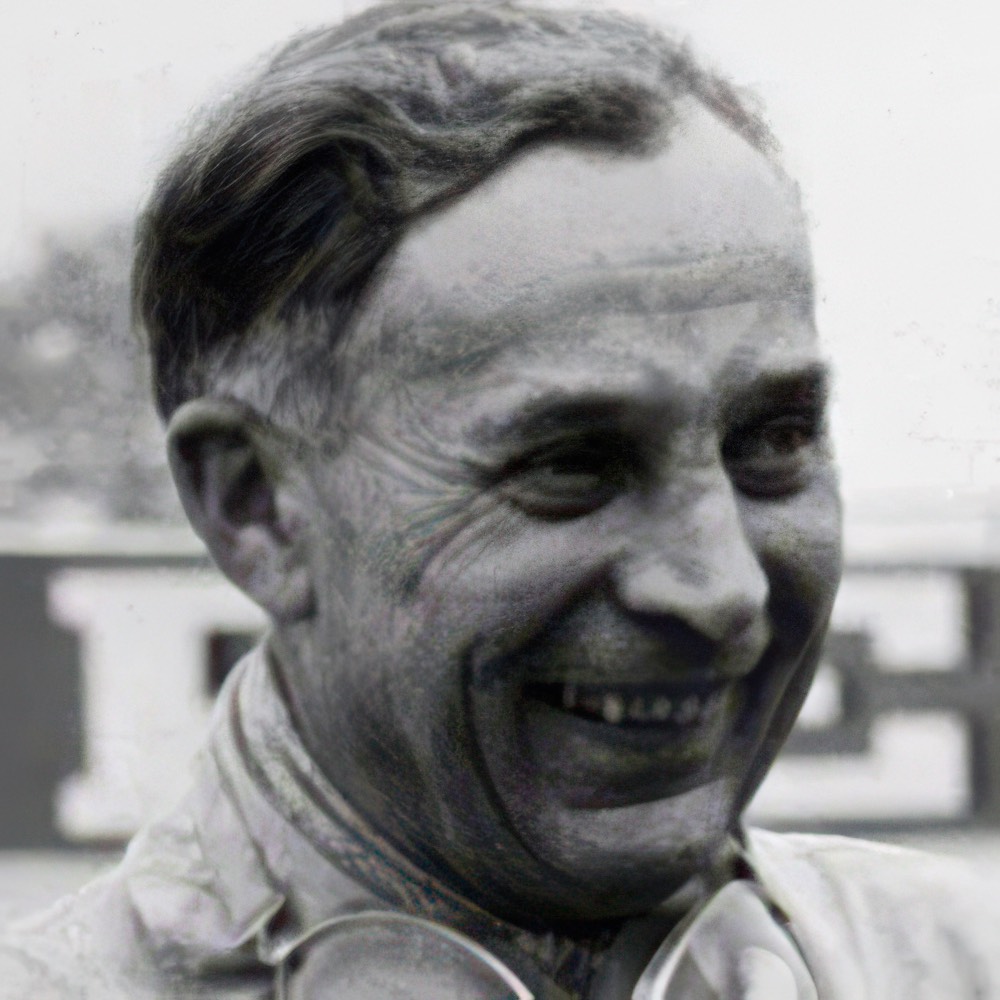
Adolf Brudes
Career Statistics
Biography
Adolf Brudes (15 October 1899 - 5 November 1986) was a German racing driver who competed in one Formula One World Championship Grand Prix, the 1952 German Grand Prix, capping a remarkable motorsport career spanning nearly 50 years across motorcycles and automobiles. Born in Breslau (now Wrocław, Poland) on 15 October 1899, Brudes began his motorsport journey racing motorcycles in 1919, just after World War I ended. Between 1924 and 1927, he served as master mechanic and works rider for motorcycle manufacturer Victoria, combining technical expertise with competitive riding—a dual role that demonstrated his comprehensive understanding of racing machinery. In 1926, Brudes achieved national recognition by setting a German Land Speed Record of 102.
5 mph (165 km/h) riding a Victoria motorcycle, establishing himself as one of Germany's fastest riders. By 1928, Brudes wished to compete at higher levels and began racing cars alongside his motorcycle competition. He purchased a Bugatti Type 37A and competed primarily in hillclimbing events across Poland, taking numerous overall and class victories. His success in hillclimbing demonstrated exceptional car control on the demanding mountain courses that characterized European motorsport during the late 1920s and early 1930s.
Meanwhile, Brudes established a BMW and Auto Union dealership in Breslau, creating a successful business that provided both income and access to the latest automotive technology. By 1934, Brudes had expanded his racing stable to include a Bugatti Type 35B and an MG C-type. Driving the MG, he scored a class victory at the 1934 Eifelrennen at the Nürburgring, one of Germany's most prestigious racing events, demonstrating his competitiveness at the national level. Throughout the 1930s, Brudes balanced his dealership business with competitive racing, establishing himself as a respected figure in German motorsport circles.
World War II devastated Brudes' life and career. By 1945, with Germany defeated and Breslau now part of Poland under Soviet occupation, Brudes had lost everything—his business, his home, and his possessions. As a German in territory transferred to Poland, he was forced to flee westward, joining millions of displaced Germans in the chaotic aftermath of the war. After taking numerous odd jobs to survive, Brudes moved to Berlin seeking stable employment.
He found work at the BMW dealership in Halensee, reconnecting with the automotive industry he'd known before the war. At the BMW dealership, Brudes was introduced to Alexander Orley, an American officer stationed in occupied Germany who was interested in racing. This connection helped Brudes re-enter motorsport competition after years away from racing due to the war. By the early 1950s, Brudes had resumed racing, now competing with Veritas, a small German manufacturer building sports cars and Formula One machinery from modified BMW components.
Despite being in his early fifties—extraordinarily old for a racing driver—Brudes secured a drive in the 1952 German Grand Prix at the Nürburgring, giving him the opportunity to compete in Formula One's World Championship. On 3 August 1952, Brudes made his Formula One debut at the Nürburgring driving the Veritas RS. However, his World Championship career lasted just five laps before engine problems forced his retirement. Though his Formula One statistics show one start with a retirement and no points, the mere fact that Brudes competed in a World Championship Grand Prix at age 52 represented an extraordinary achievement, demonstrating the resilience and determination that had characterized his entire career.
Following his brief Formula One appearance, Brudes signed with Borgward in 1953, becoming an official works driver for the German manufacturer. When Borgward decided to enter international motorsport, Brudes was among the drivers selected for the team. Their first major event was the 1953 24 Hours of Le Mans, with Borgward entering three Borgward-Hansa 1500 Rennsport Coupés. Brudes' car ran competitively for three hours before running out of fuel, ending his Le Mans debut prematurely.
Throughout the 1950s and into the 1960s, Brudes continued competing in various categories, demonstrating remarkable longevity. His racing career spanned from 1919 motorcycles through 1968 automobiles—an incredible 49 years of competitive motorsport. Brudes made his final competitive appearance in 1968 at the Taunus Hillclimb at age 68, driving an Alfa Romeo Giulia to third place in class. Few racing drivers have competed across five decades, and Brudes' achievement of racing competitively into his late sixties was extraordinary by any standard.
Adolf Brudes passed away on 5 November 1986 in Bremen, Germany, at age 87, having lived through virtually the entire history of motorsport from its pioneer days through the modern era. His career spanned from post-World War I motorcycles through the rise of Grand Prix racing, World War II's devastation, Germany's postwar reconstruction, and the establishment of Formula One. Though his Formula One career consisted of just five laps at the 1952 German Grand Prix, Brudes' legacy rests on his nearly 50-year racing career, his land speed record, his resilience in rebuilding his career after losing everything in World War II, and his remarkable achievement of competing into his late sixties. Today, Adolf Brudes represents the generation of German racing pioneers whose careers spanned motorsport's transformation from a gentleman's hobby into professional sport.