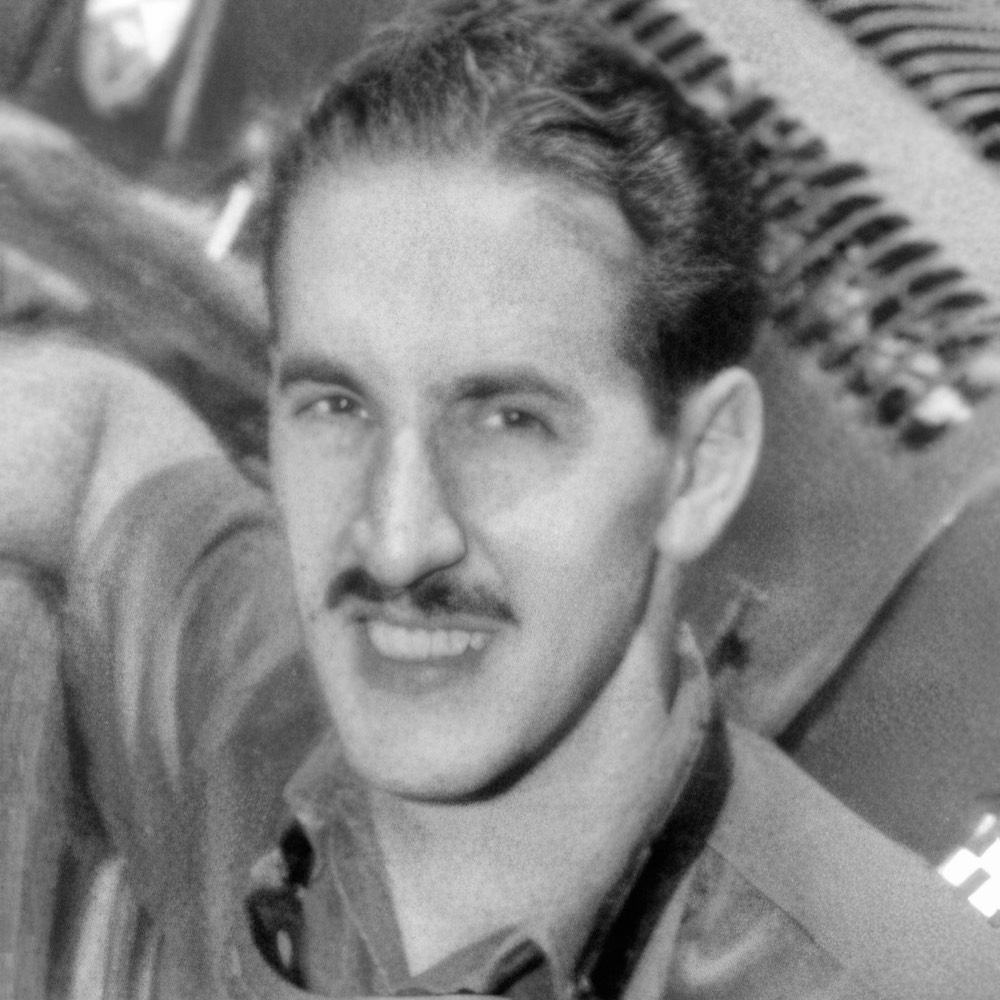
Alberto Crespo
Career Statistics
Biography
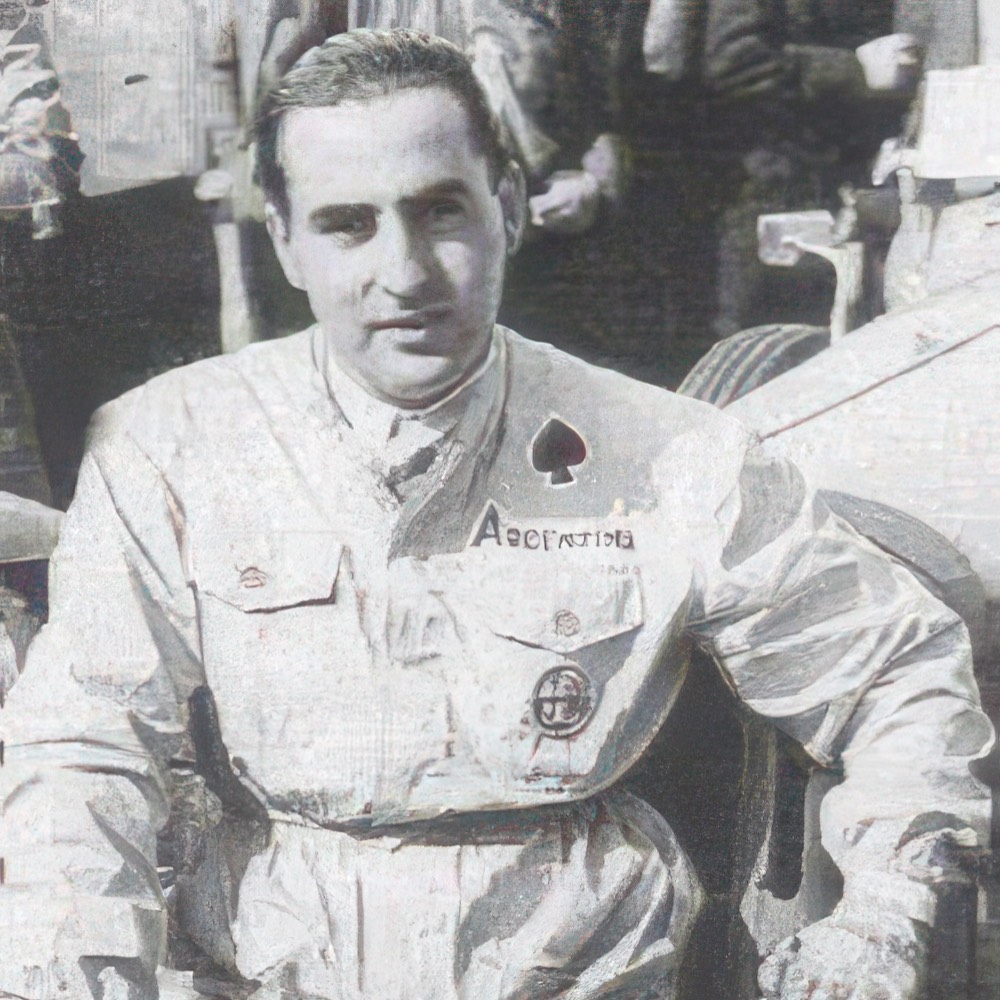
Alberto Augusto Crespo (16 January 1920 - 14 August 1991) was an Argentine racing driver who attempted to qualify for one Formula One World Championship Grand Prix—the 1952 Italian Grand Prix at Monza—though he ultimately failed to make the starting grid, becoming one of dozens of drivers whose Formula One careers consisted of a single unsuccessful qualifying attempt, yet whose passion for motorsport and contributions to Argentine racing deserved recognition despite his brief appearance on the world stage. Born in Buenos Aires, Argentina, on 16 January 1920, Crespo grew up during the golden age of Argentine motorsport when the country was developing a strong racing culture that would later produce world champions including Juan Manuel Fangio and Carlos Reutemann, and while Crespo never reached the heights achieved by his more famous compatriots, he was part of the generation of Argentine drivers who built the foundation for the country's motorsport success.
During the late 1940s and early 1950s, Crespo competed in various Argentine national racing events, driving a variety of cars in both road races and circuit events, and while detailed records of his domestic racing career are limited, he achieved enough success and recognition to attract the attention of European team owners who were always searching for drivers with financial backing or sponsorship to support their operations. In 1952, Crespo traveled to Europe with ambitions to compete in international motorsport, and he was entered in the Daily Mail Trophy—a non-championship Formula One race held in Britain—driving a Talbot-Lago T26C entered by the car's constructor, Antonio Lago himself, and Crespo qualified twelfth and finished tenth in this race, a respectable result that gave him valuable experience with European racing and Formula One-specification machinery.
Encouraged by his performance in the Daily Mail Trophy, Crespo made the ambitious decision to attempt to qualify for the 1952 Italian Grand Prix at Monza, one of the most prestigious races on the Formula One calendar, and he secured an entry with a Maserati entered by Enrico Platé, an Argentine team owner who was supporting several South American drivers in their European racing ambitions. At the Italian Grand Prix qualifying session, Crespo posted the 26th-fastest time among 35 entrants, but because the regulations permitted only the fastest 24 qualifiers to start the race, Crespo missed the cut by two positions, failing to qualify and ending his brief Formula One career before it had truly begun, a disappointing outcome that demonstrated the fierce competitiveness of Formula One even in its early years.
Despite failing to qualify for the Italian Grand Prix, Crespo continued racing in South America, and in 1953 he competed in the Buenos Aires Grand Prix—a non-championship Formula One race held in Argentina's capital—driving an Alfa Romeo and finishing eleventh, demonstrating that he remained competitive in regional racing even if success at the World Championship level eluded him. Throughout the 1950s, Crespo remained involved in Argentine motorsport, competing occasionally and maintaining connections with the racing community, though detailed records of his activities during this period are scarce, as Argentine motorsport historians have focused primarily on more successful drivers like Fangio, Froilán González, and José Froilán González who achieved international recognition.
After his active racing career ended, Crespo remained involved with Argentine motorsport administration for several decades, contributing to the organizational and bureaucratic infrastructure that supported racing in Argentina, and his work behind the scenes helped ensure that future generations of Argentine drivers would have opportunities to compete domestically and internationally. Alberto Crespo died on 14 August 1991 in Argentina at age 71, passing away more than four decades after his brief moment on the Formula One stage at Monza in 1952, though his death received little attention outside Argentine motorsport circles, as he had never achieved the fame or success that would have made him a household name.
Crespo's legacy in Formula One is necessarily minimal—he is officially recorded as entering one World Championship Grand Prix but failing to qualify, meaning he never started a Formula One race and therefore never had the opportunity to score championship points or demonstrate his abilities at the World Championship level. However, his story is representative of dozens of drivers from the 1950s who attempted to compete in Formula One with limited resources, inadequate preparation, or simply insufficient speed to qualify for races where entry lists exceeded the maximum grid size, and whose names appear in Formula One's statistical records only as footnotes—drivers who entered but did not qualify, who practiced but withdrew, or who started but immediately retired.
For students of Argentine motorsport history, Crespo represents the second tier of drivers who competed during the Fangio era—talented racers who achieved success in domestic competition and who had the courage and ambition to attempt to compete at the World Championship level, even if ultimate success eluded them, and whose contributions to building Argentine motorsport culture deserve recognition even if their names are not widely remembered today. The fact that Crespo is listed in official Formula One records at all—appearing in the entry list for the 1952 Italian Grand Prix—ensures that his name will remain in the sport's historical databases as long as records are kept, a small immortality that he shares with hundreds of other drivers whose Formula One careers consisted of a single unsuccessful qualifying attempt but whose passion for racing and willingness to test themselves against the world's best drivers deserved respect and recognition regardless of the outcome.