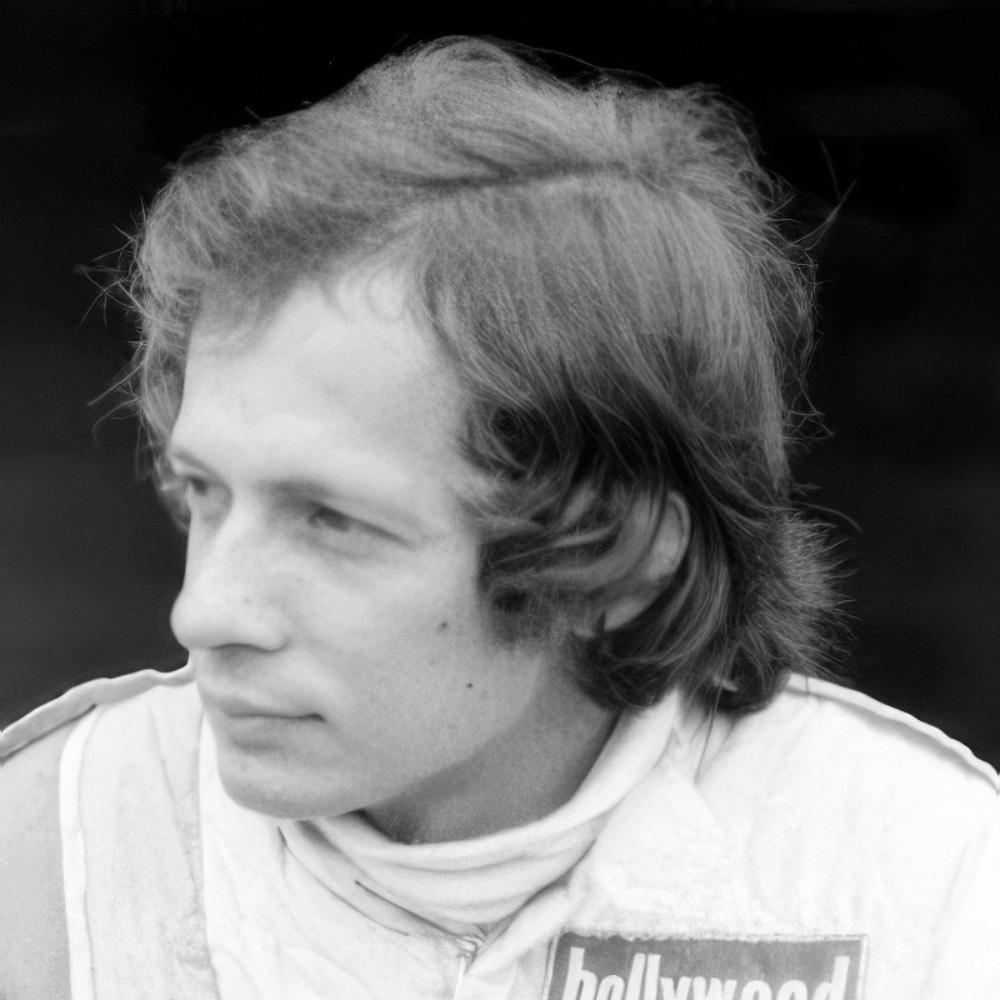
Alex Ribeiro
Career Statistics
Biography
Alex Dias Ribeiro (November 7, 1948 - Present): A Brazilian racing driver whose Formula One career was defined by struggles with uncompetitive machinery, but whose deep Christian faith, evangelical racing team, and later role as Formula One's medical car driver created a legacy extending far beyond his modest racing statistics. Born on November 7, 1948, in Belo Horizonte, Brazil, Ribeiro came from a country with a growing motorsport tradition but limited infrastructure for aspiring drivers. His racing journey began unusually in 1967 when he started competing in a home-built car, demonstrating the determination and resourcefulness that would characterize his career. After winning the Brazilian Karting Championship for two consecutive years, Ribeiro progressed to single-seater racing, entering Brazilian Formula Ford after impressing the manager of the Hollywood team with his raw speed and commitment.
His talent quickly became evident, and he moved to Europe to compete in Formula Two, where he finished an impressive fifth in the European Championship. This strong performance established him as a highly-rated young driver and earned him recognition from Formula One teams. In October 1976, the Hesketh Ford team gave Ribeiro his first taste of Formula One at the United States Grand Prix at Watkins Glen, where he finished 12th. For 1977, Ribeiro secured backing from his previous sponsor Hollywood and established his own team based on his evangelical Christian beliefs.
He named his operation Jesus Saves Racing and painted his Formula Two car with prominent "Jesus Saves" messages, creating one of motorsport's most distinctive liveries. Ribeiro entered all 17 rounds of the 1977 Formula One World Championship, but the season proved nightmarish. He failed to qualify for eight races, retired from four of the nine Grands Prix he did qualify for, and failed to score points in the remaining five races. The 1977 season represented one of the most difficult campaigns any driver has endured in Formula One history.
Between his Formula One commitments, Ribeiro continued racing in Formula Two with his Jesus Saves team. At the Nürburgring, in a field of 44 cars including established Formula One drivers like Keke Rosberg, Riccardo Patrese, Jochen Mass, and Elio de Angelis, Ribeiro delivered one of his finest performances, winning the race by just a tenth of a second. This victory validated his talent and demonstrated that given competitive machinery, he could defeat top-level opposition. In 1978, Ribeiro was called back to Formula One to race alongside his countryman and former World Champion Emerson Fittipaldi for the Copersucar team at the Italian, United States, and Canadian Grands Prix.
However, the team was focused on Fittipaldi, and Ribeiro's equipment was inferior. He failed to qualify for the Italian Grand Prix at Monza and did not start the other two events, ending his Formula One driving career with a total of 20 race entries, zero championship points, and a success rate that statistically ranked among the sport's lowest. Despite his difficult Formula One career, Ribeiro's deep evangelical Christian faith—unusual in predominantly Catholic Brazil—never wavered. He shared with the late Ayrton Senna a belief in divine intervention and providence, though Ribeiro's faith was more explicitly evangelical.
The "Jesus Saves" branding on his racing cars made him a unique figure in motorsport and brought his Christian message to international audiences. Following his retirement from driving, Ribeiro remained involved in motorsport. In 1999, when FIA president Max Mosley decreed that permanent safety car and medical car drivers be appointed for Formula One, Ribeiro was selected as the medical car driver alongside permanent safety car driver Oliver Gavin. This role saw him return to Formula One circuits worldwide, driving FIA medical doctor Sid Watkins around the track during sessions and races.
However, drama struck at the 2000 Monaco Grand Prix when Ribeiro crashed the medical car at the Tabac curve before Saturday morning practice. The accident left passenger Dr. Sid Watkins with three broken ribs, an embarrassing incident that nevertheless demonstrated the challenging nature of driving quickly on street circuits. Despite this setback, Ribeiro continued in various motorsport roles and remained a figure of interest within the paddock.
Today, Alex Ribeiro is remembered not for his Formula One racing statistics, which were among the sport's least successful, but for his pioneering Jesus Saves Racing team, his unshakeable faith in the face of adversity, and his years of service as Formula One's medical car driver. His story represents perseverance, conviction, and finding purpose beyond personal achievement.