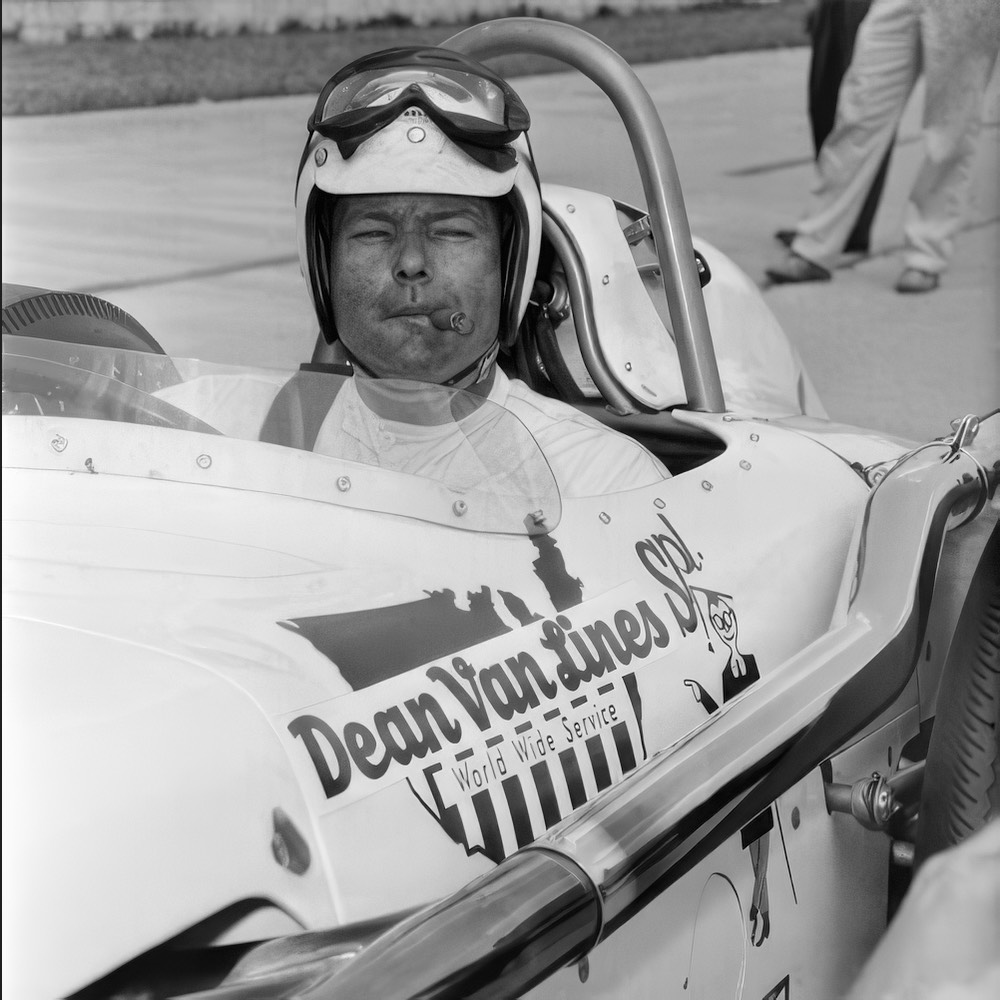
Bill Cheesbourg
Career Statistics
Biography
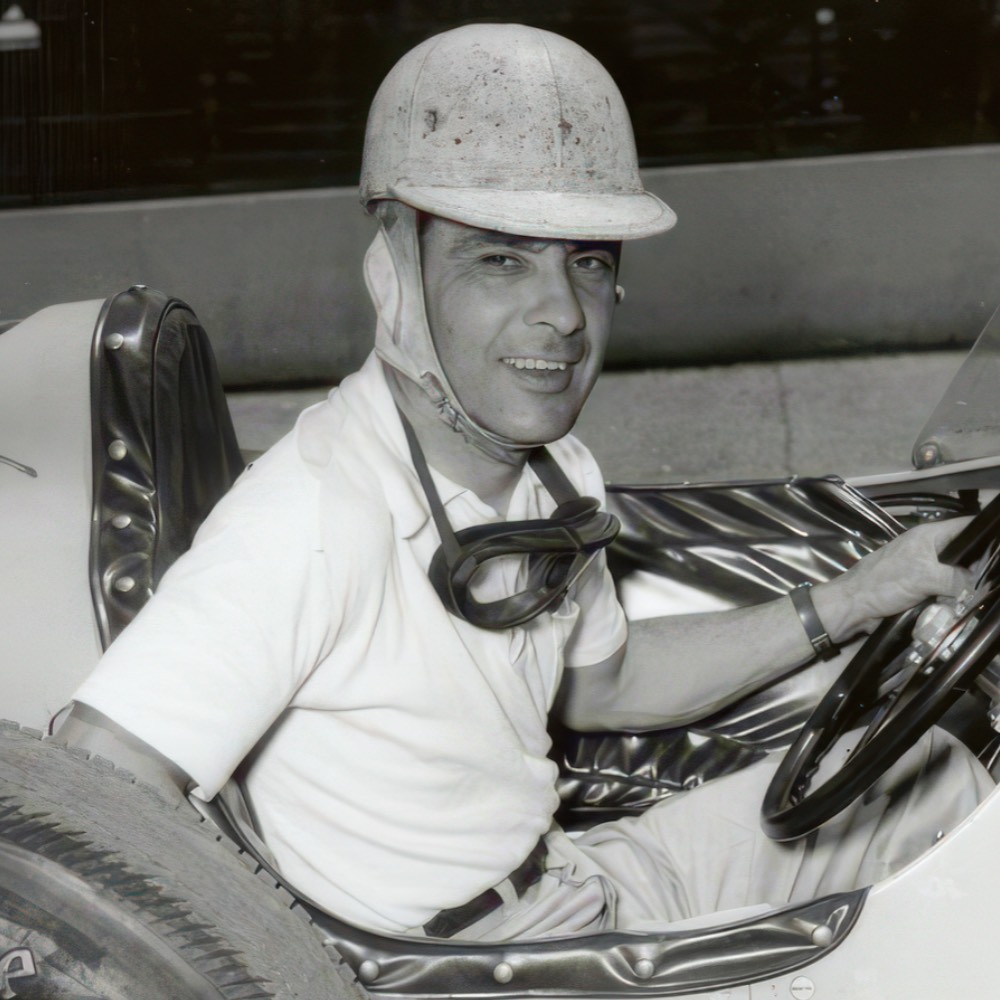
William 'Bill' Cheesbourg (12 June 1927 - 1995) was an American racing driver who competed primarily in sprint car, midget, and jalopy racing across the western United States, while also participating in seven Indianapolis 500 races between 1957 and 1966, with four of those starts counting toward the Formula One World Championship during the era when the Indianapolis 500 was included as a round of the World Championship despite being run to different technical regulations, making him technically a Formula One driver though he never competed in a traditional Grand Prix on a road circuit. Born in Tucson, Arizona, Cheesbourg grew up during the Depression and World War II years and developed his passion for racing at the grassroots level, beginning his competition career at age 13 when he won the Soap Box Derby in Tucson, demonstrating the competitive instinct that would drive him throughout his life.
After World War II, Cheesbourg began racing jalopies—production-based cars modified for oval track racing—on the dirt tracks around Tucson and throughout Arizona, quickly establishing himself as one of the region's most talented young drivers and winning races with remarkable consistency despite limited financial resources. He progressed to midget car racing, competing throughout Arizona and the southwestern United States in the highly competitive midget series that served as a training ground for many drivers who would later compete at Indianapolis, and his success in midgets earned him recognition beyond his local area. Cheesbourg won the Arizona Jalopy Racing Association Championship in 1955 after finishing as runner-up in 1952, and driving a distinctive 1932 Ford nicknamed 'Bobalu,' he achieved extraordinary success on Arizona's dirt tracks, once winning an incredible 73 of 75 races entered, a winning percentage that remains remarkable by any standard and demonstrated his complete mastery of dirt oval racing.
His success in jalopy and midget racing eventually provided opportunities to compete in higher levels of motorsport, and in 1956, Cheesbourg began competing in the USAC Championship Car series, the top level of American open-wheel racing, making 31 career starts between 1956-1962 and 1964-1966, though always on a shoestring budget without the sustained sponsorship that supported more successful competitors. Cheesbourg first qualified for the Indianapolis 500 in 1957, driving the Seal Line Kurtis Kraft 500G powered by an Offenhauser engine, starting 23rd on the grid but retiring on lap 81 due to a fuel leak, a frustrating end to his first appearance at the Brickyard but one that gave him valuable experience with the unique demands of America's greatest race.
His best Indianapolis 500 finish came in 1958 when he finished 10th, and during that race he set a record that still stands today: most positions gained on the opening lap, passing an incredible 17 cars during the first lap to rocket through the field, a display of courage and racecraft that demonstrated why his fellow competitors respected him despite his lack of financial backing. Between 1957 and 1966, Cheesbourg started seven Indianapolis 500 races, and because the 500 counted as a Formula One World Championship round from 1950 through 1960, four of his Indianapolis starts—in 1957, 1958, 1959, and 1960—technically count as Formula One World Championship races, making Cheesbourg one of dozens of American oval track specialists who are officially classified as Formula One drivers despite never driving a Grand Prix car or competing on a road course.
Throughout his career, Cheesbourg raced without significant sponsorship, often preparing his own equipment and scrambling to find rides at Indianapolis, embodying the spirit of the privateer racer who competed for love of the sport rather than financial reward, and his persistence in returning to Indianapolis year after year despite limited resources earned him respect throughout the American racing community. After his Indianapolis career ended in 1966, Cheesbourg continued racing in various forms of motorsport throughout the southwestern United States, and in 1975 he won a NASCAR race in Phoenix, demonstrating that his competitive fire and skill remained sharp even as he approached his 50th birthday.
Cheesbourg primarily competed in stock car races at Tucson's Corona Speedway and Tucson Raceway Park throughout the 1970s and 1980s, becoming a local legend in Arizona motorsport and a beloved figure among racing fans who appreciated his everyman background and genuine love of competition. Beyond his racing career, Cheesbourg was hired by Champion Spark Plug Company to tour the United States speaking to high school students about highway safety, using his celebrity as a racing driver to deliver an important message to young people about responsible driving, a role that demonstrated his character and commitment to giving back to his community. In his later years, Cheesbourg owned and operated a Volkswagen specialty shop in Tucson, working on cars virtually until his death from cancer in Tucson in 1995 at age 67 or 68, remaining connected to the automotive world that had defined his life and staying active in the local car culture that he had helped build over five decades.
Bill Cheesbourg's legacy is that of the quintessential American privateer racer—a talented driver who competed at the highest levels of American motorsport including the Indianapolis 500, set records that still stand decades later, and achieved remarkable success in regional racing while never enjoying the financial backing or factory support that would have allowed him to demonstrate the full extent of his abilities, yet who continued racing and working with cars because he genuinely loved the sport and the mechanical challenges it presented. His story represents thousands of talented American racers who competed during the golden age of oval track racing in the 1950s and 1960s, drivers who risked their lives on dangerous dirt tracks and high-speed ovals for modest prize money and the simple satisfaction of competition, and whose contributions to American motorsport history deserve recognition even if their names are not as widely remembered as the sport's superstars.
The fact that Cheesbourg is officially classified as a Formula One driver—a quirk of the Indianapolis 500's inclusion in the World Championship from 1950-1960—adds an interesting footnote to his career, though he would undoubtedly have been prouder of his jalopy championship, his 10th place Indianapolis finish, and his record for most positions gained on an opening lap, achievements earned through skill, courage, and determination on American soil competing against American rivals in the racing style that he loved.