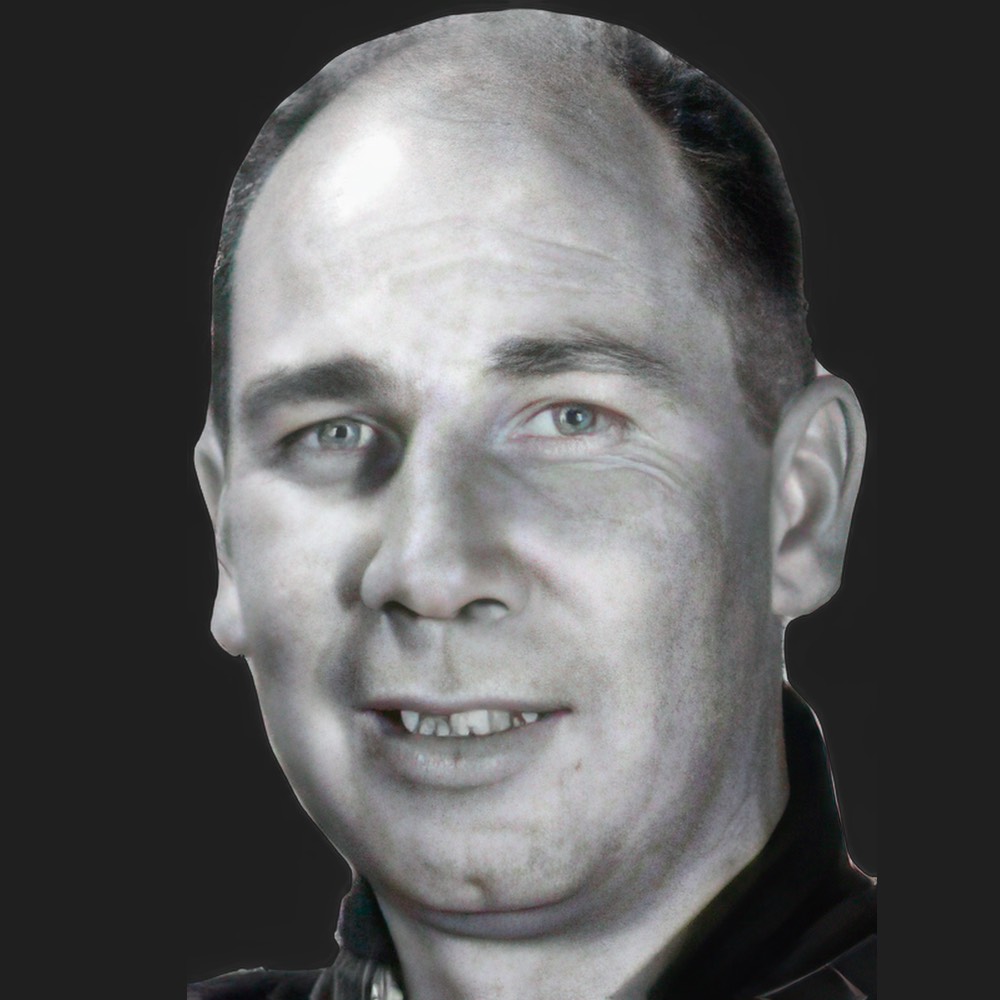
Bob Christie
Career Statistics
Biography
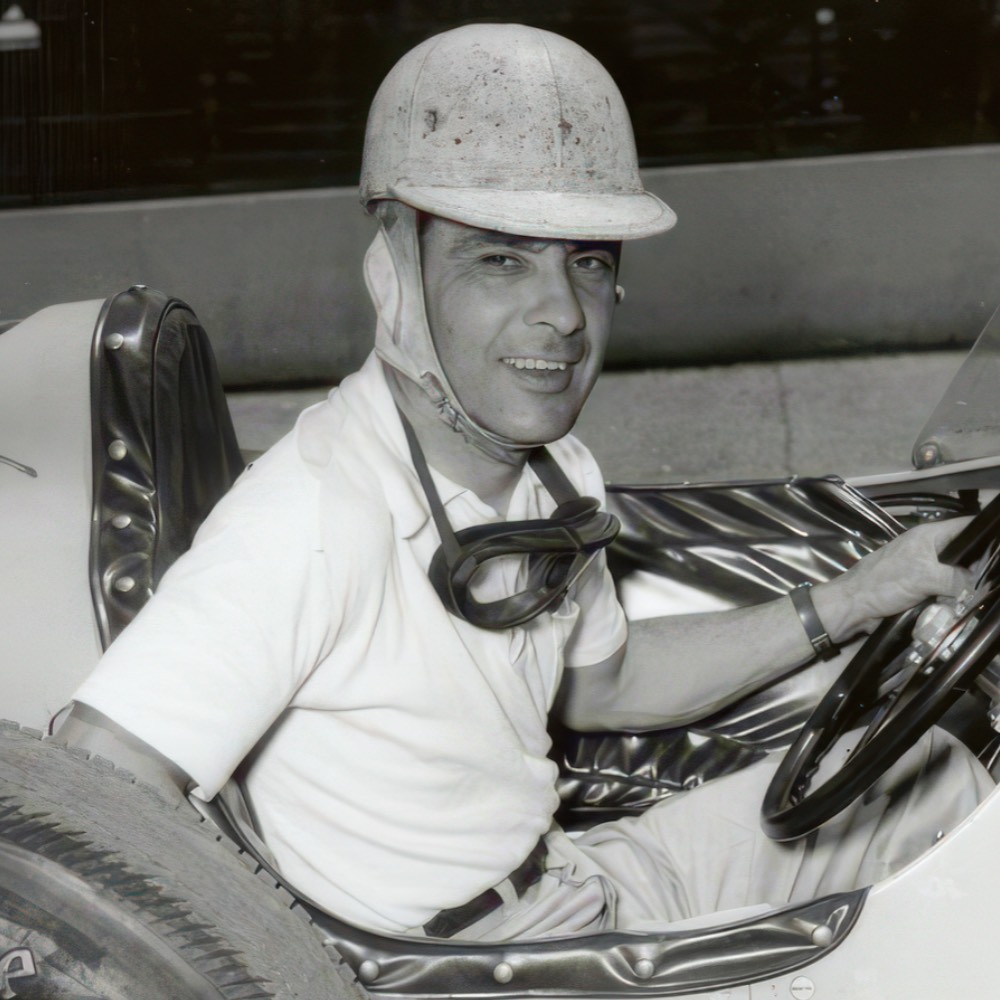
Robert 'Bob' Christie (4 April 1924 - 1 June 2009) was an American racing driver who competed primarily in the USAC Championship Car series between 1956 and 1963, participating in eight Indianapolis 500 races with seven of those starts counting toward the Formula One World Championship during the era when the Indianapolis 500 was included as a round of the World Championship from 1950-1960, despite being run to completely different technical regulations than European Grand Prix racing, making Christie one of dozens of American oval track specialists who are officially classified as Formula One drivers despite never driving a Grand Prix car on a road circuit. Born in Grants Pass, Oregon, a small city in the southwestern part of the state known for its scenic Rogue River and outdoor recreation, Christie acquired his memorable nickname 'Caveman' from the 20-foot-tall statue of a caveman wearing only a loincloth and wielding a club that stands as a landmark near downtown Grants Pass, a quirky piece of Americana that became forever associated with Christie throughout his racing career.
Christie began his motorsport career racing midget cars, the small single-seat open-wheel cars that competed on quarter-mile and fifth-mile oval tracks across the United States, and he quickly demonstrated natural talent and courage on the rough dirt and paved bullrings that served as training grounds for many drivers who would eventually compete at Indianapolis. After establishing himself in midget racing, Christie transitioned to stock car racing in the Pacific Northwest, competing in the regional NASCAR and independent stock car series that were popular throughout Washington, Oregon, and California during the 1950s, winning races and building a reputation as a versatile driver who could adapt to different types of cars and racing surfaces.
His success in regional racing eventually provided opportunities to compete in the USAC Championship Car series, the premier level of American open-wheel racing, and Christie made his first trip to the Indianapolis Motor Speedway in 1954, attempting to qualify for the Indianapolis 500 and beginning his relationship with America's greatest race that would span nearly a decade. Christie made his first successful Indianapolis 500 start in 1956, launching a run of eight consecutive Indianapolis 500 appearances between 1956 and 1963 that represented the pinnacle of his racing career, and while he never seriously challenged for victory at the Brickyard, he achieved consistent mid-pack finishes that demonstrated competence and reliability in America's most demanding race.
In his debut 1956 Indianapolis 500, Christie finished 13th, matching this result again in 1957, and these solid if unspectacular finishes established him as a reliable competitor who could complete the grueling 500-mile distance at the Indianapolis Motor Speedway, no small achievement during an era when mechanical reliability was far from guaranteed and many cars retired with engine failures, crashes, or other mechanical problems. Christie's best Indianapolis 500 finish came in 1960 when he placed 10th, earning him induction into the Champion Club, the exclusive group of drivers who have finished in the top ten at the Indianapolis 500, and this result also counted toward the 1960 Formula One World Championship, technically making Christie a classified finisher in a Formula One World Championship race.
His final Indianapolis 500 start came in 1963 when he again finished 13th, bookending his Indianapolis career with identical finishing positions eight years apart, demonstrating remarkable consistency even if outright speed and front-running performances eluded him throughout his time at the Brickyard. Across his USAC Championship Car career, Christie competed in 31 races between 1956 and 1966, finishing in the top ten five times, with his single best career result coming with third place at Daytona in 1959, a strong performance that demonstrated he possessed genuine speed when circumstances aligned properly. In Formula One World Championship statistics, Christie is officially credited with seven race entries and five starts—these being his Indianapolis 500 appearances from 1956 through 1960 when the race counted toward the World Championship—though he never scored World Championship points and never competed in a traditional Formula One Grand Prix on a road course, making his Formula One classification a quirk of history rather than a reflection of his actual racing career.
After his Indianapolis career ended in the mid-1960s, Christie continued racing in various forms of motorsport in the Pacific Northwest, remaining active in the racing community around his hometown of Grants Pass and maintaining connections with the motorsport world that had defined much of his adult life. Throughout his career, Christie raced without major sponsorship or factory support, embodying the spirit of the privateer competitor who prepared his own equipment, scraped together funding to compete at Indianapolis, and raced primarily for the love of competition rather than financial reward, a common story among American regional racers during the 1950s and 1960s when the sport was far less commercialized than it would later become.
Bob Christie died on 1 June 2009 in Grants Pass, Oregon, at age 85, passing away in the same small Oregon city where he had been born more than eight decades earlier and where the caveman statue that had inspired his racing nickname still stands as a local landmark. His legacy is that of a solid, consistent American oval track racer who competed at the highest levels of American motorsport for nearly a decade, qualified for eight consecutive Indianapolis 500 races during an era when simply making the starting field at the Brickyard was a significant achievement, and who represented the thousands of regional racing heroes whose names are not widely remembered outside their local communities but who formed the backbone of American motorsport during its golden age.
The fact that Christie is officially classified as a Formula One driver—appearing in seven World Championship races and making five starts according to official FIA records—is an interesting historical footnote that reflects the unusual decade from 1950-1960 when the Indianapolis 500 counted toward the World Championship despite having no technical, sporting, or cultural connection to European Grand Prix racing, creating the odd situation where American oval track specialists like Bob Christie are listed alongside Juan Manuel Fangio, Stirling Moss, and Alberto Ascari in the official Formula One record books, a quirk of motorsport history that ensures Christie's name will remain in the archives of the world's premier racing series even though he never drove a Formula One car or competed on a European circuit.