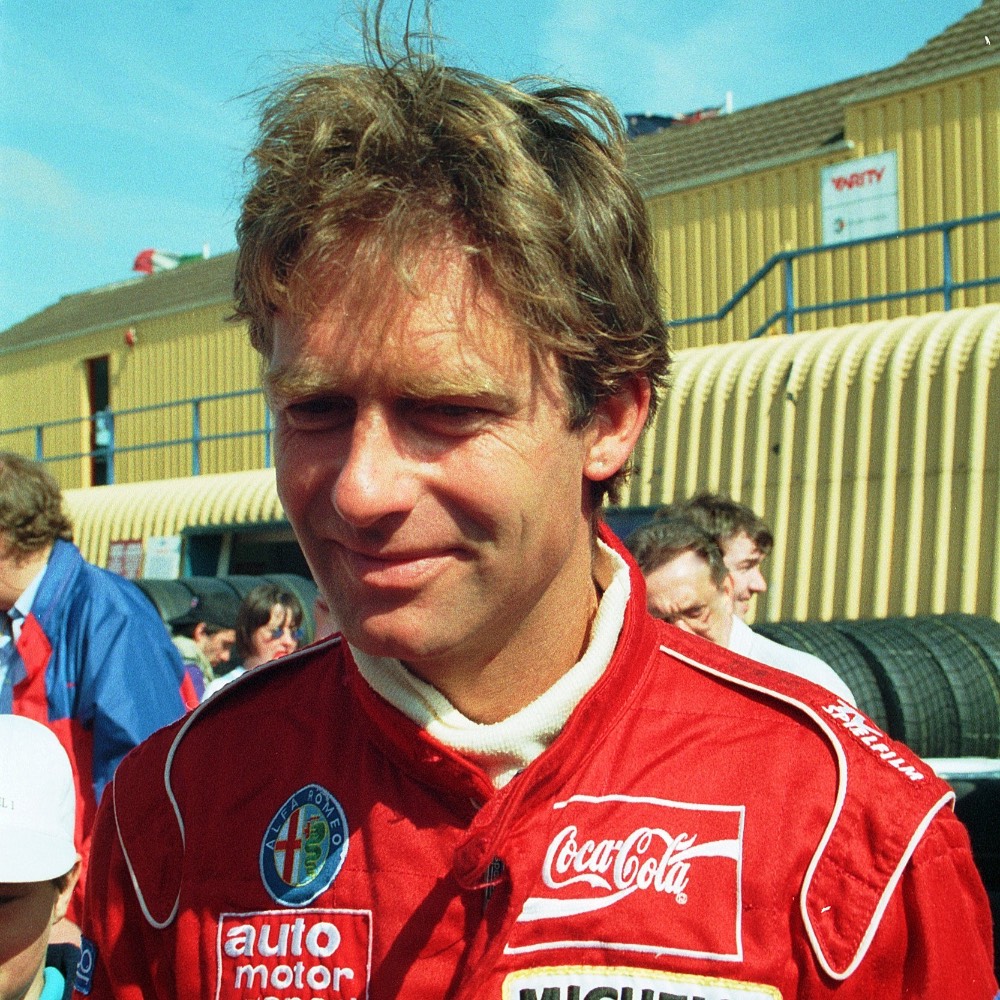
Christian Danner
Career Statistics
Biography
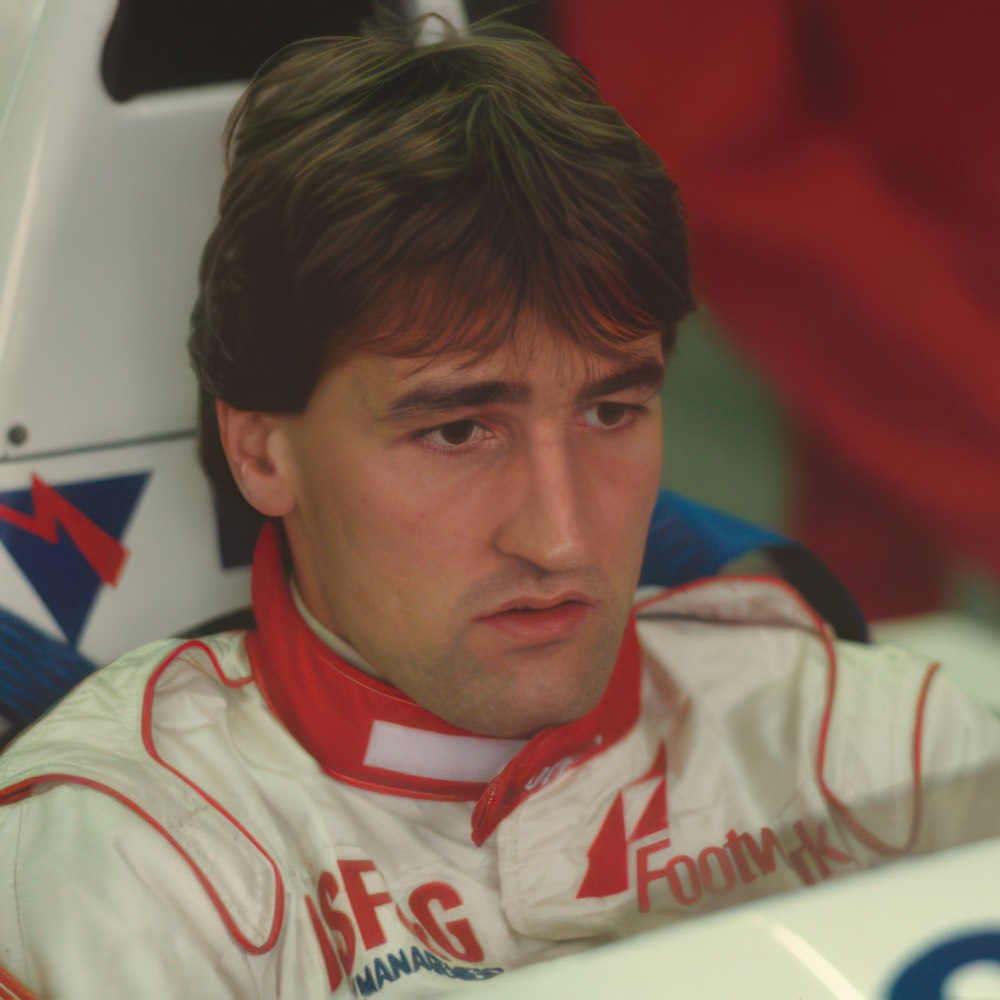
Christian Josef Danner (born 4 April 1958) is a German former racing driver and television commentator who competed in 36 Formula One World Championship Grands Prix between 1985 and 1989, scoring a total of four championship points while driving for Zakspeed, Osella, Arrows, and Rial, before the inaugural Formula 3000 Champion found that his Formula One opportunities dried up despite his obvious talent, and he transitioned to a successful post-racing career as one of Germany's most prominent Formula One television commentators and pundits for the RTL network. Born in Munich, Germany, on 4 April 1958, Danner is the son of Max Danner, a well-known automotive engineer who was one of the leading researchers into road safety and car safety systems, and Christian grew up surrounded by automotive technology and engineering discussions that would later inform his analytical approach to racing and his ability to communicate technical concepts to television audiences.
Danner started his motorsport career immediately after leaving school in 1977, beginning in the Renault 5 Cup, a one-make championship that served as an affordable entry point into circuit racing for many young German drivers during the late 1970s, and his performances in the Renault 5 Cup demonstrated natural speed and racecraft that justified progression to more competitive categories. After his Renault 5 Cup apprenticeship, Danner moved to the European Formula Two Championship for the 1981 season, and during his years in Formula Two from 1981 through 1984, he was a constant frontrunner, scoring multiple podium finishes and demonstrating consistency that marked him as a future Formula One prospect, though he never won a Formula Two race despite frequently running near the front.
In 1985, Formula Two was replaced by the new Formula 3000 Championship, which became Formula One's primary feeder series using chassis based on Formula One technology from a few years earlier, and Danner joined the inaugural Formula 3000 season and dominated the championship, winning four races and securing the title, becoming the first-ever Formula 3000 Champion and earning himself a Formula One opportunity. His Formula One debut came in 1985 with the German Zakspeed team, making two race starts during the season but failing to finish either race due to mechanical failures, a frustrating introduction to Grand Prix racing that highlighted Zakspeed's chronic reliability problems, as the small German team was building its own engines and chassis and struggling to match the engineering resources of established constructors.
For 1986, Danner drove for both Osella and Arrows, two small teams that lacked the budgets to compete consistently with the sport's frontrunners, and while he occasionally qualified in the midfield and showed flashes of speed, competitive results eluded him as the cars simply lacked the performance to challenge for points. Danner returned to Zakspeed for the 1987 and 1988 seasons, as the German team hoped that their experienced German driver could help develop their uncompetitive car into a points-scorer, but the Zakspeed was both fundamentally uncompetitive and chronically unreliable, and whenever Danner did manage to finish races—a rarity given the car's tendency to break—he always finished outside the points-paying positions, making his Zakspeed years exercises in frustration.
His best Formula One season came in 1989 when he drove for the Rial team and finally scored championship points, achieving his best career result with fourth place at the United States Grand Prix in Phoenix, though this would prove to be his final season in Formula One as the team folded and he was unable to secure another drive despite his 1989 performances. Across his 36 Formula One starts between 1985 and 1989, Danner scored only four championship points, a statistic that fails to reflect his genuine talent as demonstrated by his Formula 3000 Championship and his consistent competitiveness in Formula Two, and his Formula One career became another example of a talented driver whose results were limited by consistently uncompetitive machinery rather than personal deficiencies.
After his Formula One career ended in 1989, Danner competed in various touring car and sports car championships during the early 1990s, maintaining his racing career while beginning to explore opportunities in motorsport media, and he gradually transitioned from active driving to broadcasting as he recognized that his future in motorsport lay in communication rather than competition. Since the mid-1990s, Danner has worked as a Formula One commentator and expert analyst for RTL television in Germany, and he has become one of German motorsport's most recognizable media personalities, providing expert analysis of Formula One races, driver performances, and technical developments to millions of German television viewers across three decades of broadcasting.
Danner's broadcasting style combines technical expertise inherited from his engineer father and developed during his own racing career with clear communication skills and genuine passion for Formula One, making him popular with both hardcore fans who appreciate his technical insights and casual viewers who benefit from his ability to explain complex concepts in accessible language. Beyond his television work, Danner has also been involved in driver safety education and has worked as a driving instructor and safety consultant, applying the knowledge he gained both from his racing career and from his father's pioneering safety research to help improve driver education and road safety. Christian Danner's legacy in motorsport is twofold: as a racing driver, he was the inaugural Formula 3000 Champion whose Formula One career never fulfilled its early promise due to consistently uncompetitive equipment, and whose four championship points from 36 starts represent unfulfilled potential rather than genuine ability; and as a broadcaster and commentator, he has become one of Germany's most prominent Formula One media voices, educating and entertaining German audiences for more than two decades and ensuring that his influence on German motorsport extends far beyond his modest Formula One statistics, making him far more significant as a communicator about racing than he ever was as a competitor at Formula One's highest level.