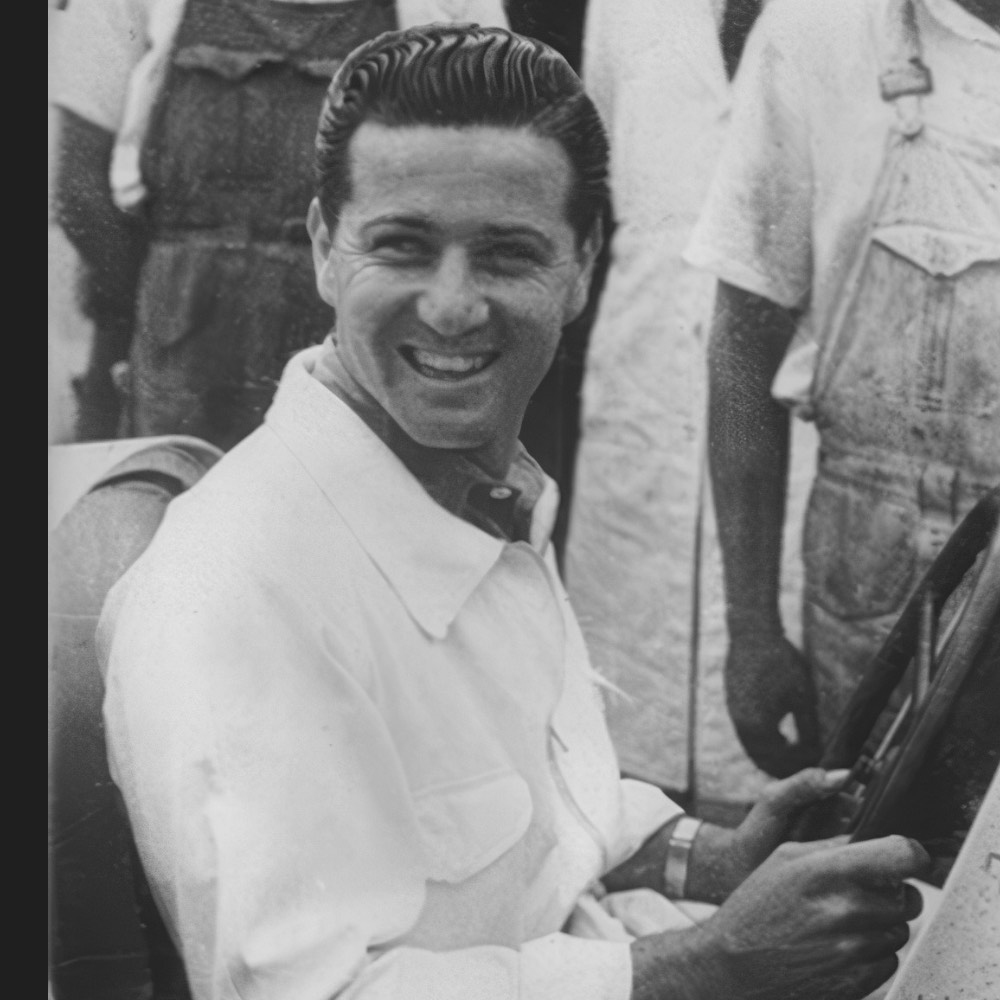
Clemar Bucci
Career Statistics
Biography
Clemar Bucci (4 September 1920 - 12 January 2011) was an Argentine racing driver who competed in five Formula One World Championship Grands Prix during the mid-1950s, while achieving far greater success as Argentina's national champion and setting a South American Land Speed Record. Born in Zenón Pereyra, Argentina, on 4 September 1920, Bucci was the son of Domingo Bucci, an aviator and racing driver, meaning motorsport was part of his family heritage from birth. Growing up in a racing household provided young Clemar with early exposure to competition and technical knowledge that would shape his career. Bucci began competing in 1939 at age 19, driving a Midget car he had built himself—demonstrating both his mechanical skills and determination to race despite limited resources.
In his debut at the Huma circuit in Buenos Aires, Bucci finished second, immediately showing promise as a competitive driver. Throughout the early 1940s, Bucci honed his skills in Argentine domestic racing, competing in various categories while Argentina remained isolated from European motorsport due to World War II. In 1947, Bucci competed in the 'Fuerza Libre' (Unlimited) category driving a 16-cylinder Cadillac—a massive American engine in a racing chassis that demonstrated the creative engineering approaches common in South American racing. Though he retired from that year's Argentine Grand Prix, Bucci won five races throughout the season and became 1947 Argentine National Champion—his first major title and establishing him as one of Argentina's leading drivers.
In 1948, Bucci joined a group of Argentine drivers including the legendary Juan Manuel Fangio who traveled to Europe to compete with support from President Juan Domingo Perón's government. Perón's administration promoted Argentine motorsport internationally as a demonstration of national pride and capability, providing financial backing for drivers to compete abroad. This government-sponsored European campaign gave Argentine drivers invaluable international experience and exposure to European racing standards and equipment. By mid-1954, Bucci had secured a Formula One opportunity with the French Gordini team, making his World Championship debut at the 1954 German Grand Prix on 1 August.
Driving the Gordini Type 16, Bucci competed at the fearsome Nürburgring Nordschleife, gaining experience in World Championship racing though without achieving strong results. Over 1954-1955, Bucci participated in five World Championship Grands Prix for Gordini and Maserati, though he never scored championship points. For the 1955 Argentine Grand Prix held in Buenos Aires in broiling heat, Bucci joined the works Maserati team—a significant opportunity to drive for one of Formula One's leading constructors at his home race. The extreme heat made the race a grueling endurance test, and Bucci shared his Maserati 250F with Harry Schell and Carlos Menditeguy, a common practice when drivers became exhausted in brutal conditions.
While the shared drive meant Bucci couldn't claim individual results, competing for Maserati at home represented a career highlight. Beyond Formula One, Bucci achieved one of his most notable accomplishments in 1953 when he set a new South American Land Speed Record driving a Porsche-designed Cisitalia Formula One prototype. This record-setting run demonstrated Bucci's bravery and skill at high speeds, bringing him recognition across South America. An amusing anecdote from Bucci's career involves the 1954 Buenos Aires Grand Prix, where he was reportedly disqualified for not wearing a crash helmet—a safety violation that seems shocking by modern standards but reflected the more relaxed safety attitudes of 1950s racing.
The disqualification highlighted the evolving safety regulations that would gradually transform motorsport from its dangerous early years. After retiring from competitive driving, Bucci established Scuderia Bucci, his own racing team that supported Argentine drivers and promoted motorsport in his homeland. In 1970, Scuderia Bucci revealed a concept car called the Dogo, an ambitious automotive design project that proved influential for a young Argentine car designer named Horacio Pagani. Pagani would go on to found Pagani Automobili, becoming one of the world's most respected hypercar manufacturers, acknowledging Bucci's Dogo concept as inspiration for his own work.
Beyond motorsport, Bucci became a successful restaurateur in Buenos Aires, establishing dining establishments that became popular with Argentina's racing community. He also developed a passion for collecting classic cars, assembling a collection of historically significant racing and sports cars that preserved Argentina's motorsport heritage. Clemar Bucci passed away in Buenos Aires on 12 January 2011 at age 90, having lived long enough to see Argentine motorsport's evolution from his 1940s championship through modern Formula One. Though his five World Championship starts brought no points, Bucci's legacy rests on his 1947 Argentine Championship, his South American Land Speed Record, his role in promoting Argentine motorsport internationally during the 1950s, and his influence on the next generation including Horacio Pagani.
Today, Bucci is remembered as one of Argentina's pioneering international racing drivers who competed alongside Fangio in bringing Argentine talent to Europe's attention.