Ettore Chimeri
Career Statistics
Biography
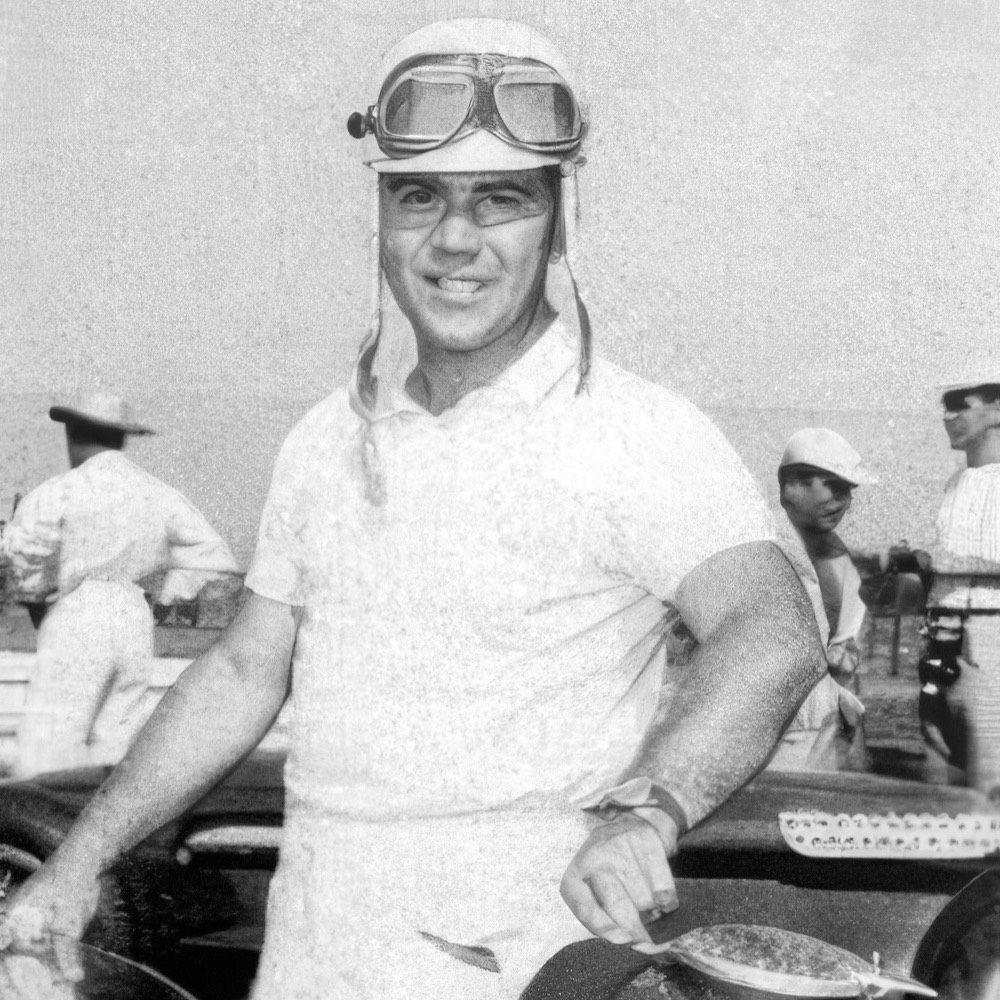
Ettore Chimeri (4 June 1921 - 27 February 1960) was a Venezuelan racing driver of Italian birth who became the first Venezuelan to compete in a Formula One World Championship Grand Prix when he drove for the works Maserati team at the 1960 Argentine Grand Prix, though his pioneering Formula One career ended after just one race when he was killed in a practice accident at a sports car event in Cuba just two weeks later, becoming one of the many talented drivers whose lives were cut short during motorsport's most dangerous era. Born in Lodi, a city near Milan in northern Italy, Chimeri was the child of Italian parents, but when he was just two years old his family emigrated to Venezuela, settling in South America where they built a new life far from their Italian homeland, though Chimeri retained his Italian citizenship throughout his life.
Growing up in Venezuela during the 1920s and 1930s, Chimeri developed an interest in motorsport despite the sport's limited infrastructure in South America compared to Europe, and as an adult he served in the Italian Air Force during World War II, returning to Italy to fight for his ancestral homeland during the global conflict, an experience that must have profoundly shaped his character and worldview. After the war, Chimeri returned to Venezuela and used his service experience and business acumen to establish a successful construction company, which provided him with the financial resources necessary to pursue his passion for motor racing, making him a gentleman driver in the classic tradition—a wealthy amateur who raced for the love of competition rather than financial necessity.
Throughout the 1950s, Chimeri competed in sports car races across North and South America, driving powerful machines in events from Argentina to Mexico to the United States, and while he rarely competed against the European stars who dominated international motorsport, he became well-known and popular within the South American racing community, where his Italian heritage, Venezuelan residence, and genuine driving talent made him a unique figure. By the late 1950s, Chimeri had achieved enough success and recognition in sports car racing to attract the attention of European manufacturers, and the legendary Maserati factory team—builder of some of the most beautiful and successful racing cars in history—decided to enter Chimeri in the 1960 Argentine Grand Prix, the opening round of that year's Formula One World Championship, giving the Venezuelan driver his chance to compete at the highest level of motorsport.
The 1960 Argentine Grand Prix at Buenos Aires on 7 February 1960 marked Chimeri's Formula One debut and his only World Championship race, as he drove a Maserati 250F, the elegant front-engined Grand Prix car that had been a frontrunner in the mid-1950s but was by 1960 obsolete compared to the new rear-engined designs that were beginning to dominate Formula One. During the race, Chimeri struggled with the physical demands of driving a Grand Prix car in the heat of an Argentine summer, and he was eventually forced to retire from the race due to fatigue, unable to complete the distance, a disappointing result that nevertheless made him the first Venezuelan driver to start a Formula One World Championship Grand Prix, a historic achievement that brought pride to his adopted homeland.
Following his Argentine Grand Prix appearance, Maserati and Chimeri intended to contest more Formula One races during the 1960 season, and there was hope that with more experience and better physical preparation, the Venezuelan driver might become a regular presence in the World Championship, potentially opening doors for other South American drivers and helping to expand Formula One's global reach. However, just two weeks after his Formula One debut, Chimeri traveled to Havana, Cuba, to compete in the Gran Premio Libertad, a sports car race being held in the Caribbean nation, and during practice for the event on 27 February 1960, Chimeri was involved in a fatal accident, suffering injuries that killed him at age 38, bringing his promising motorsport career to a sudden and tragic end.
The circumstances of Chimeri's death at the Gran Premio Libertad practice are not extensively documented, but his passing represented another victim of the extraordinarily dangerous era of 1950s and early 1960s motorsport, when safety equipment was primitive, medical facilities at race tracks were inadequate, and fatal accidents occurred with horrifying frequency, claiming the lives of dozens of talented drivers including many who, like Chimeri, had shown promise but never had the opportunity to fully realize their potential. Ettore Chimeri's legacy in motorsport is necessarily limited by the brevity of his career—just one Formula One start and a handful of sports car races at the international level—but his significance lies in being a pioneer for Venezuelan motorsport, proving that drivers from South America could compete at Formula One level decades before drivers like Carlos Reutemann, Ayrton Senna, and others would demonstrate that South American drivers could not only compete but dominate in Grand Prix racing.
His story also represents that of countless gentleman drivers during the 1950s—wealthy amateurs who raced for passion rather than profession, who brought enthusiasm and financial support to motorsport, but who often lacked the experience, physical preparation, or competitive equipment to succeed at the highest levels—and his death serves as a poignant reminder of the risks that all drivers accepted during an era when racing was far more dangerous than it is today. In Venezuela, Chimeri is remembered as a motorsport pioneer, and while he was followed by other Venezuelan Formula One drivers including Johnny Cecotto and Pastor Maldonado decades later, Ettore Chimeri will always be remembered as the first, the man who carried the Venezuelan flag to Formula One and opened a door that others would later walk through, even if his own journey through that door lasted only one race and ended in tragedy just two weeks later.
His Italian birth, Venezuelan upbringing, wartime service in the Italian Air Force, and ultimate death in Cuba make Chimeri's life story one of remarkable geographic and cultural breadth, a truly international figure whose brief motorsport career at the highest level nevertheless earned him a permanent place in Formula One history books and in the hearts of Venezuelan racing fans who remember him as a trailblazer who proved that drivers from South America belonged in Grand Prix racing.