Gino Bianco
Career Statistics
Biography
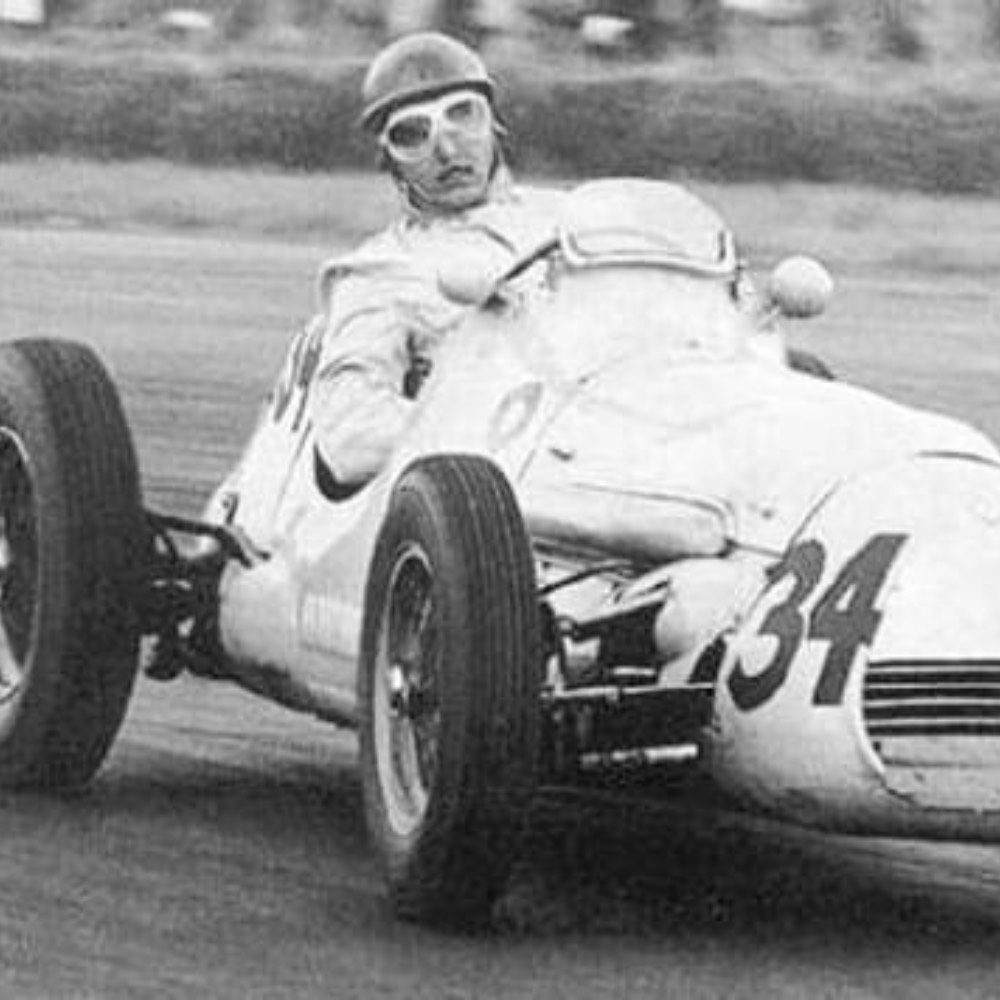
Luigi Emilio Rodolfo Bertetti Bianco, better known as Gino Bianco (22 July 1916 - 8 May 1984), was a Brazilian racing driver of Italian origin who became a pioneering figure in Brazilian motorsport and competed in Formula One during the early 1950s. Born in Milan, Italy, Bianco emigrated to Brazil as a child where he would establish himself as one of the country's first internationally competitive racing drivers. Before entering the Grand Prix world, Bianco dominated Brazilian domestic motorsport, becoming a four-time Brazilian hillclimb champion and establishing himself as the leading driver in South American circuit racing during the late 1940s. His success in hillclimbing was particularly notable, as he won championships in an era when Brazilian motorsport was still in its formative years, helping to establish the sport's popularity in his adopted homeland.
In 1952, Bianco made the ambitious leap to Formula One, joining the Escuderia Bandeirantes team to drive a Maserati A6GCM in the World Championship. He made his debut at the 1952 British Grand Prix at Silverstone, becoming the first Brazilian driver to compete in a Formula One World Championship race. Though he finished 18th in that inaugural race, his participation marked a historic moment for Brazilian motorsport, opening the door for future generations of Brazilian F1 drivers who would go on to achieve legendary status. Bianco participated in four World Championship Grands Prix during the 1952 season, all driving for Escuderia Bandeirantes in the Maserati A6GCM.
His Formula One campaign was challenging, as he faced the difficulty of competing against the dominant Ferrari and Maserati works teams with limited resources and a privateer entry. Despite these obstacles, Bianco's achievement of finishing races and scoring a completion marked him as a trailblazer for South American racing. His best result remained that 18th place finish at Silverstone, though his consistent presence demonstrated the viability of drivers from beyond Europe's traditional racing nations competing at the highest level. After his brief Formula One adventure, Bianco returned to Brazil where he continued to dominate domestic competition.
In 1953, he claimed his fourth Brazilian hillclimb championship, cementing his status as the country's premier motorsport competitor. However, his racing career came to an abrupt end following a serious accident that year, forcing him into retirement from competitive driving. Following his retirement from racing, Bianco established a successful workshop in the fashionable Ipanema district of Rio de Janeiro, where he catered to both racing enthusiasts and regular motorists. He sold his trusty Maserati, the car with which he had achieved so much success in domestic racing and hillclimbing, and focused on his business ventures.
His workshop became well-known among Rio's motorsport community, serving as a gathering place for racing enthusiasts and a center for high-performance automotive work. Bianco lived in Rio de Janeiro for the remainder of his life, maintaining connections with Brazil's growing motorsport community. He passed away on 8 May 1984, aged 67, after suffering from breathing problems. Though his Formula One career was brief, Gino Bianco's legacy as Brazil's first Formula One driver and a pioneer of South American motorsport remains significant.
He paved the way for the incredible success that Brazilian drivers would achieve in Formula One, from Emerson Fittipaldi's world championships in the 1970s to Ayrton Senna's legendary career in the 1980s and 1990s, and Nelson Piquet's multiple titles. Today, Bianco is remembered as a forgotten hero of Formula One's early years and a founding father of Brazilian motorsport.