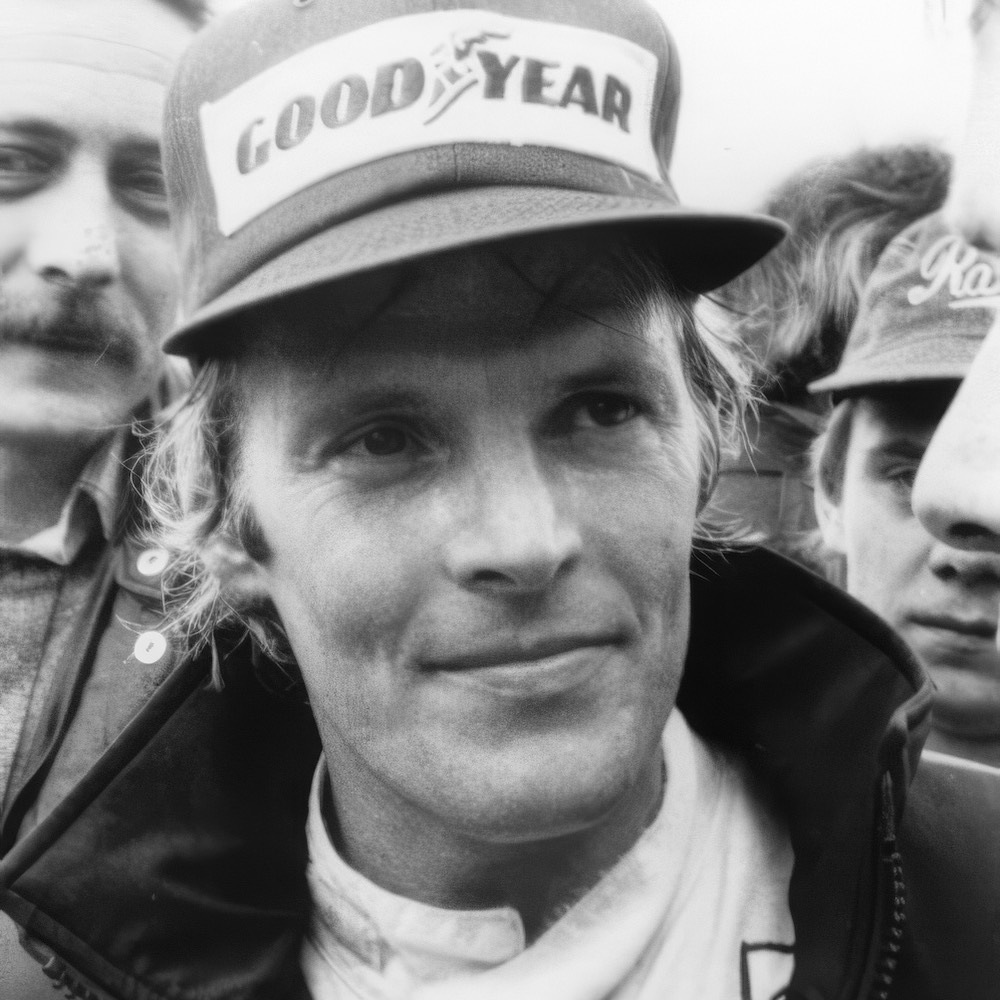
Hans Heyer
Career Statistics
Biography
Hans Heyer (born 16 March 1943) is a German former racing driver from Mönchengladbach who achieved the unique and bizarre distinction of being the only driver in Formula One history to be credited with a DNQ (did not qualify), DNF (did not finish), and DSQ (disqualified) in the same race—a feat that occurred at the 1977 German Grand Prix and has become one of motorsport's most enduring stories of audacity and rule-breaking. Born to parents who ran a bitumen and concrete mixing company, Heyer developed his passion for motor racing and engineering when he was at boarding school at Adenau, which is near the legendary Nürburgring circuit where he would later create Formula One history.
Heyer started an apprenticeship with Daimler-Benz as a mechanic which was completed in 1962, giving him the technical foundation that would serve him throughout his racing career. Living close to the Netherlands and not yet allowed to race in Germany at the age of 16, he began his racing career there in 1959 with karts. He won the 1962 Dutch Karting Championship in the 100cc category, which he followed up by winning the 125cc class in 1963, establishing himself as a promising young talent before transitioning to cars.
For many years, Heyer was closely associated with Zakspeed, one of Germany's most successful touring car racing operations. Racing their Group 2 Ford Escorts in the European Touring Car Championship, Heyer won the championship in 1974. He continued his dominance in the Deutsche Rennsport Meisterschaft (DRM), Germany's premier touring car series, winning championships in both 1975 and 1976. His aggressive driving style, technical feedback, and consistency made him one of the most feared touring car drivers in Europe during the mid-1970s.
Heyer's infamous Formula One appearance came at the 1977 German Grand Prix on July 31, 1977, held at the Hockenheimring. With little experience in single-seater racing and driving the second Penske PC4 entered by the new German ATS team (not to be confused with the later ATS team), Heyer struggled during qualifying. The car was uncompetitive and Heyer was unfamiliar with its handling characteristics, resulting in his failure to qualify for the race. By all rights, his Formula One adventure should have ended there.
However, what happened next became legendary in Formula One folklore. When the race started, there was significant commotion and chaos on the starting grid. Taking advantage of the confusion, Heyer made the audacious decision to start the race anyway, slipping out of the pits and joining the pack of qualified cars. Remarkably, nobody noticed for several laps that an unqualified driver was competing in a World Championship Grand Prix. Heyer circulated at the back of the field, his ambitions limited by the uncompetitive car and his lack of single-seater experience.
The unauthorized participation only came to light after nine laps when Heyer's gearbox failed and he retired from the race. Only then did race officials realize that he should never have been competing in the first place, and he was promptly disqualified. The incident created a statistical anomaly: Heyer is officially credited with failing to qualify (DNQ), not finishing the race (DNF), and being disqualified (DSQ)—all in the same event. No other driver in Formula One's 75-year history has achieved this dubious triple distinction.
Despite—or perhaps because of—this Formula One misadventure, Heyer's touring car career continued to flourish. In 1980 he won the DRM championship again, this time driving for Lancia in a Group 5 Lancia Beta Monte Carlo Turbo, a car he also helped develop with his engineering knowledge and technical feedback. His ability to extract maximum performance from turbocharged cars and provide valuable setup information made him invaluable to racing teams.
Heyer achieved significant success in endurance racing as well. He won the 12 Hours of Sebring race in 1984, driving alongside Stefan Johansson and Mauricio de Narvaez in a Porsche 935. During the years that the Spa 24 Hours was run as part of the European Touring Car Championship, Heyer won the prestigious Belgian endurance race three times in succession—in 1982, 1983, and 1984—cementing his reputation as one of Europe's most accomplished touring car and endurance drivers.
Throughout his racing career, Heyer was known for his trademark appearance: a Tirolerhut, a traditional hat from Tyrol or Bavaria, which he wore regularly and which became his signature look. His personality was as colorful as his racing exploits, and he remained a popular figure in German motorsport circles throughout his career. Heyer retired from competitive racing in 1989 after an extraordinary career spanning 999 races over 30 years—nearly 1,000 race starts, a remarkable testament to his longevity, consistency, and passion for motorsport.
While Heyer never achieved success in Formula One—indeed, his single appearance was more farcical than competitive—his touring car career places him among Germany's most successful drivers of his generation. His championships in both the European Touring Car Championship and the Deutsche Rennsport Meisterschaft, combined with his endurance racing victories at Sebring and Spa, demonstrate a versatility and skill that far exceeded his brief and bizarre Formula One moment. Today, Hans Heyer is remembered fondly in motorsport history: to casual fans, as the driver who raced in Formula One without qualifying; to touring car enthusiasts, as one of the great German touring car champions of the 1970s and 1980s.