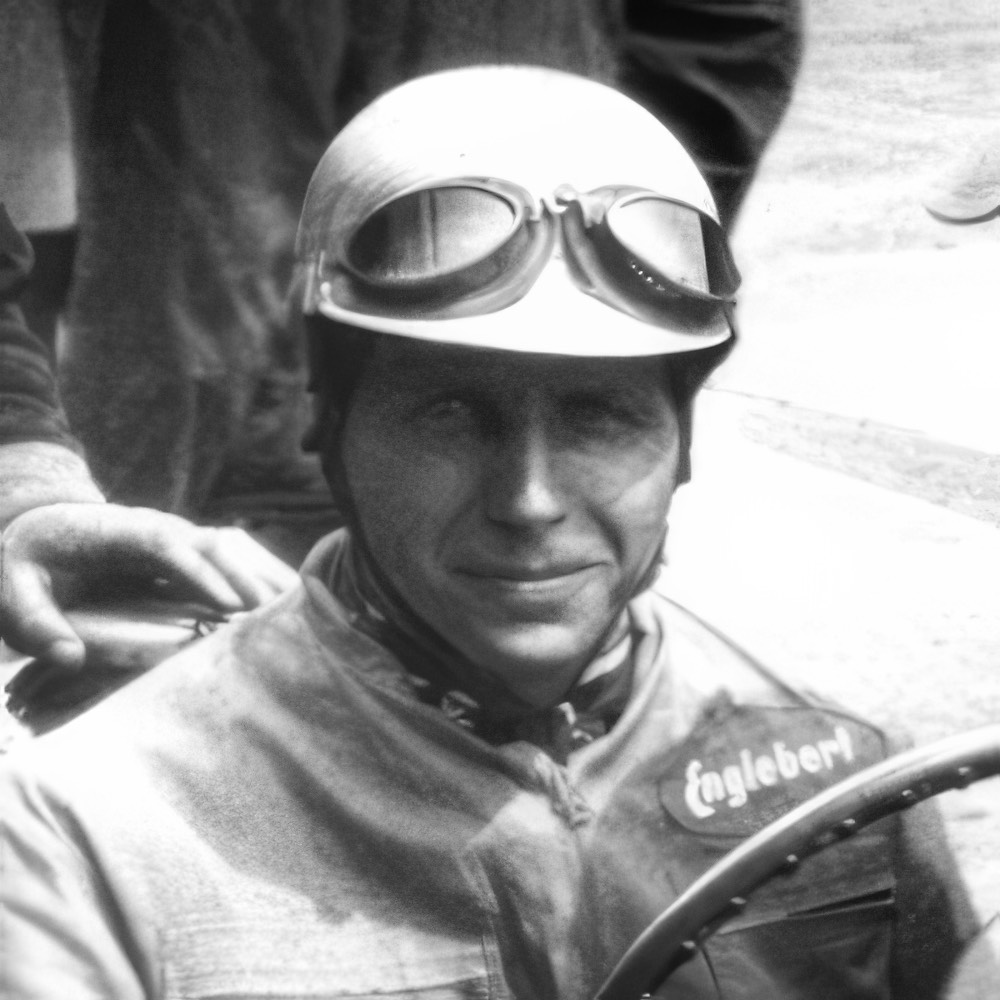
Kurt Adolff
Career Statistics
Biography
Kurt Adolff (5 November 1921 - 24 January 2012): German racing driver and businessman from Stuttgart who participated in one Formula One World Championship Grand Prix, the 1953 German Grand Prix at the Nürburgring, retiring after only a few laps and scoring no championship points. Adolff's racing career was brief, overshadowed by his successful business interests in textiles and his later role as a consul to Chile, but his single Formula One appearance during the early years of the World Championship marks him as one of Germany's pioneering Grand Prix drivers. Born in Stuttgart into a family that owned a textile company, Adolff grew up with financial security that would later enable him to pursue motorsport as a passionate hobby rather than a profession.
During World War II, he served as a paratrooper in the German military, experiencing the conflict from the frontlines and surviving to return to civilian life in a devastated Germany. After the war, Adolff took over management of the family textile business, but his passion for motorsport led him to begin racing in the late 1940s. He started competing in hillclimbs and local circuit races, initially with BMW-engined cars that were among the few German racing machines available in the immediate postwar period when most German industry was still recovering. In the early 1950s, Adolff competed in Formula Two races, the primary European single-seater category alongside the new Formula One World Championship.
Racing BMW-engined cars at circuits including the Munich-Riem Airport circuit, Adolff achieved modest success including a second-place finish in one race, demonstrating he possessed competitive pace in appropriate equipment. Adolff's Formula One opportunity came in 1953 when he obtained access to a Ferrari 500, the car that dominated Formula Two (which Formula One regulations had adopted for 1952-1953). The Ferrari 500 was the car to have—Alberto Ascari won both the 1952 and 1953 World Championships with the Tipo 500. Adolff entered the 1953 German Grand Prix at the Nürburgring on 2 August, driving Rudi Fischer's Ferrari 500 for Ecurie Espadon, a small Swiss team.
The Nürburgring Nordschleife was 14.2 miles of the most challenging circuit in motorsport, with over 170 corners threading through the Eifel mountains. Qualifying among the back markers, Adolff started the race but retired after completing only a few laps. The specific cause of his retirement—whether mechanical failure, accident, or driver decision—is not extensively documented, but the result was unambiguous: DNF (Did Not Finish), zero points, and the end of his Formula One career.
One race entry, one start, one retirement—statistics that place Adolff among the many drivers whose Formula One careers consisted of a single unsuccessful appearance. Following his brief Formula One foray, Adolff left single-seater racing to concentrate on his business interests, recognizing that success in the increasingly professional and expensive world of international motorsport required resources and commitment beyond what he was willing to invest. However, his passion for driving competitions did not end entirely. Throughout the late 1950s and into the 1960s, Adolff enjoyed success in hillclimbs and touring car racing, particularly with Jaguars.
Hillclimbing suited his driving style and allowed him to compete without the extensive travel and time commitment required by international circuit racing. He won several hillclimb events in Germany, establishing himself as a competitive driver in this discipline. Beyond motorsport, Adolff's business career flourished. The family textile company prospered in the postwar German economic recovery, and Adolff's management ensured its continued success through the 1960s and beyond.
His business connections and diplomatic skills led to his appointment as consul to Chile, a position that required him to represent Chilean interests in Germany and facilitate trade and diplomatic relations between the two countries. Adolff lived to the remarkable age of 90, passing away on 24 January 2012 in Germany. His death prompted brief notices in German motorsport publications, celebrating him as one of the early German Formula One drivers who competed during the championship's formative years. His longevity meant he witnessed Formula One's evolution from the dangerous, amateur-spirited early years through to the modern era of massive budgets and global commercial success.
Known for his business acumen, competence in hillclimb competition, and status as a gentleman racer who competed for personal satisfaction rather than professional ambition, Kurt Adolff represents the privateer drivers who attempted Formula One in the 1950s with limited equipment and support. While his single Grand Prix retirement hardly constitutes a significant motorsport legacy, his successful business career and diplomatic service demonstrate that motorsport was only one aspect of a full and accomplished life.