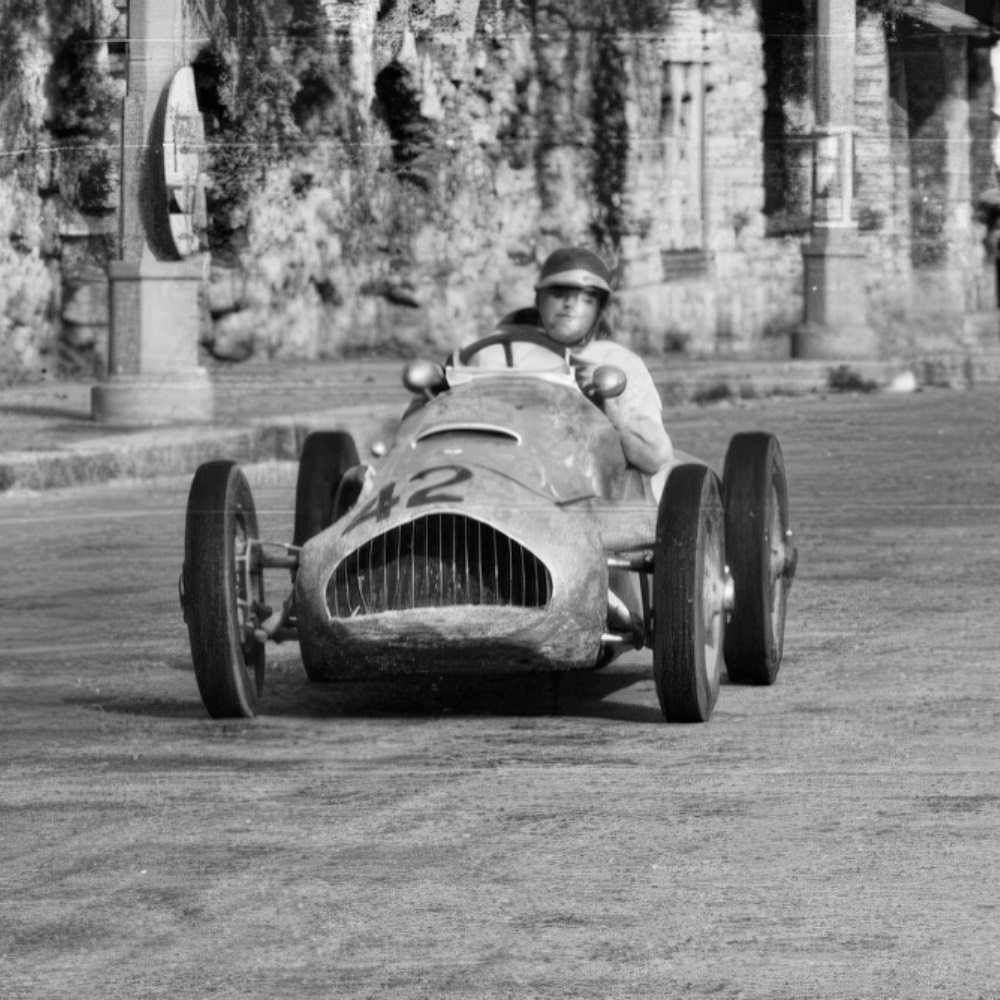
Ludwig Fischer
Career Statistics
Biography
Ludwig Fischer (17 December 1915 - 8 March 1991): German racing driver from Straubing who raced successfully throughout the 1950s and early 1960s in German Formula Two, hillclimbing, and sports car events. Fischer participated in one Formula One World Championship entry at the 1952 German Grand Prix, driving a privately-run AFM-BMW, though he did not start the race despite qualifying 31st fastest of 32 entrants. Fischer began racing in the late 1940s after World War II, competing in various German national motorsport events. He quickly established himself as a capable and determined competitor, willing to race anything from sports cars to single-seaters.
During the early 1950s, German motorsport was rebuilding after the devastation of the war, and drivers like Fischer formed the foundation of this resurgence. For the 1952 German Grand Prix at the Nürburgring on 3 August, Fischer entered a privately-run AFM-BMW, one of several small German constructors attempting to compete in Formula One. The AFM (Alex von Falkenhausen Motorenbau) was powered by a BMW-based engine and represented German engineering ambition, though it lacked the development and resources of established manufacturers. Fischer managed to set the 31st fastest time in practice, ahead of one other entry, and all 32 entrants were initially considered as having qualified for the race.
However, Fischer did not take the start—whether due to mechanical issues, team decision, or other circumstances remains unclear, but his Formula One career ended before it truly began: one entry, zero starts, zero finishes, zero points. Following his Formula One disappointment, Fischer abandoned single-seater Grand Prix efforts and concentrated on sports car racing, where he achieved considerably more success. He competed in numerous endurance races throughout the 1950s and into the 1960s, including the 1000km of Nürburgring and the Giro di Sicilia. Racing various sports cars, Fischer earned a number of top-ten results and even achieved several top-three finishes, demonstrating that he possessed genuine pace when racing appropriate machinery.
Fischer also competed successfully in hillclimbing, a discipline popular in Germany and Austria where drivers raced against the clock up mountain roads. His performances in hillclimbs added to his reputation as a versatile and committed competitor. Fischer was described as 'among the most, hmm, controversial personalities of German post-war motor racing,' a characterization suggesting he was an outspoken and colorful figure in the paddock. Details of specific controversies are scarce, but the description implies Fischer was not afraid to speak his mind or challenge established norms.
Remarkably, despite pushing fifty years of age, Fischer continued competing into the mid-1960s, demonstrating remarkable longevity and dedication to motorsport. Racing into one's late forties and early fifties was uncommon even in an era when drivers generally competed longer than in modern times, and Fischer's continued participation reflected his deep passion for the sport. In 1966, Fischer published a self-written autobiography, an unusual step for a driver who had achieved moderate rather than spectacular success. The autobiography suggests Fischer had stories to tell and a perspective on motorsport he wanted to share, though the book remains obscure and difficult to find today.
Fischer lived to the age of 75, passing away on 8 March 1991 in Bad Reichenhall, Germany. His death received limited coverage, reflecting his status as a minor figure in Formula One history but a more significant personality in German national motorsport. Known for his versatility across sports cars, single-seaters, and hillclimbs, controversial personality, longevity as a competitor, and contributions to rebuilding German motorsport after World War II, Ludwig Fischer represents the national-level racers who formed the backbone of European motorsport during the 1950s. While his single Formula One entry yielded no race start, his broader career spanning nearly two decades demonstrates commitment to racing as a way of life.