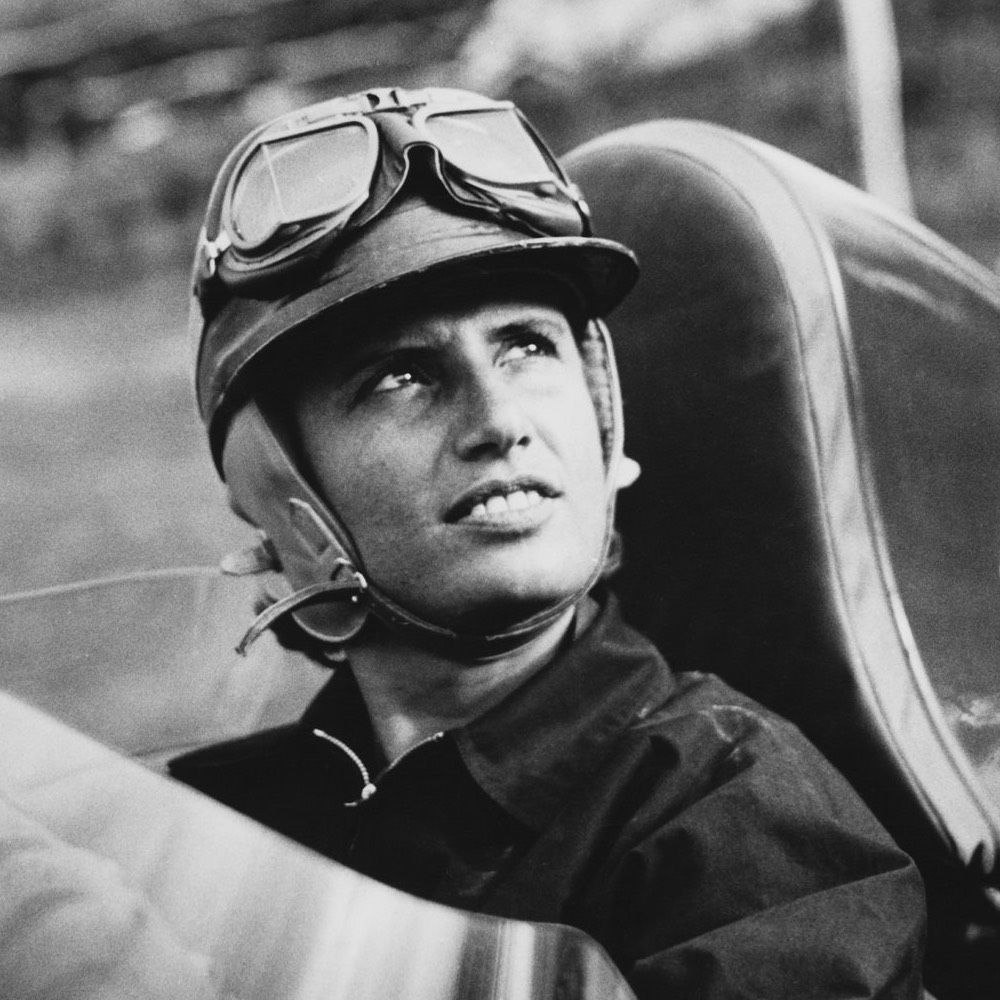
Maria Teresa de Filippis
Career Statistics
Biography
Maria Teresa de Filippis (11 November 1926 - 9 January 2016): Italian racing driver and countess from Marigliano who became the first woman to compete in Formula One, participating in five World Championship Grands Prix from 1958 to 1959 and achieving one finish—tenth place at the 1958 Belgian Grand Prix. De Filippis faced significant discrimination throughout her career, most notoriously when the French Grand Prix race director told her 'the only helmet a woman should wear is the one at the hairdresser's,' but she persevered and paved the way for future female racing drivers. Born into Italian nobility as the youngest of five children of Count Serino Francesco De Filippis and Spanish noblewoman Narcisa Anselmi Balaguer Roca de Togores y Ruco y Perpignan, Maria Teresa grew up with privilege and opportunity.
She displayed an interest in sport from her teenage years, excelling as a horse rider and tennis player—both considered acceptable pursuits for young aristocratic women. Racing cars was decidedly not acceptable, but de Filippis proved willing to defy convention. At age 22 in 1948, de Filippis began her racing career despite reservations from her brothers, who bet that she would be slow and soon lose interest. She proved them wrong immediately, winning her first race driving a Fiat 500 on a 10km drive between Salerno and Cava de' Tirreni.
The victory gave her confidence to compete seriously, and she entered the Italian sports car championship, finishing second in the 1954 season—a remarkable achievement that caught Maserati's attention. Recognizing her potential, Maserati signed de Filippis as a works driver, making her one of the few women to receive factory support. She competed in sports car races across Europe, achieving several class victories and establishing herself as a legitimate competitor rather than a novelty. Her success in sports cars earned her the opportunity to attempt Formula One.
On 18 May 1958, de Filippis entered the Monaco Grand Prix, the second round of the 1958 Formula One season, driving a Maserati 250F for the Behra-Porsche team. She failed to qualify at Monaco, but the attempt made her the first woman to enter a Formula One World Championship race. At the next race, the 1958 Belgian Grand Prix at Spa-Francorchamps, de Filippis successfully qualified 19th of 28 entries and took the start. The race was wet and treacherous, and attrition was high—only 10 of 28 starters finished.
De Filippis completed the full race distance to finish tenth and last among finishers, lapped multiple times but still classified. It was a historic achievement—the first woman to start and finish a Formula One World Championship race. At the 1958 French Grand Prix at Reims-Gueux, de Filippis attempted to qualify but was dismissed by race director before she could participate. He told her, 'the only helmet a woman should wear is the one at the hairdresser's,' a statement that exemplified the sexism female racers faced.
De Filippis was furious but powerless against such institutional discrimination. The incident remains one of the most notorious examples of gender discrimination in Formula One history. Despite this setback, de Filippis continued. She qualified for the 1958 Portuguese Grand Prix but retired with engine failure after just six laps. At the 1959 Monaco Grand Prix, she again failed to qualify the uncompetitive Maserati.
Her Formula One career ended with five entries, three starts, and one finish. While her statistics were modest, her achievement as the first woman to race in Formula One was groundbreaking. Beyond Formula One, de Filippis continued racing sports cars and touring cars for several more years. However, the 1959 death of her friend and fellow Maserati driver Jean Behra at the Avus circuit in Germany deeply affected her.
When asked why she stopped racing, she said simply, 'Too many friends had died.' The constant toll of racing deaths during the late 1950s—including drivers like Luigi Musso, Peter Collins, and Stuart Lewis-Evans—made continuing impossible for her. No woman would race in Formula One again for 15 years until Lella Lombardi competed between 1974 and 1976. After retiring from racing, de Filippis occasionally visited Grand Prix paddocks and in 1979 joined the International Club of Former Grand Prix Drivers, an organization that honored her pioneering role.
She lived quietly in Italy, rarely giving interviews but occasionally speaking about her career when approached by motorsport historians. De Filippis passed away on 9 January 2016 at age 89, just weeks before her 90th birthday. Her death prompted tributes from across the motorsport world, celebrating her courage in competing during an era of intense discrimination and dangerous racing. Formula One's official channels honored her memory, recognizing that without pioneers like de Filippis, the path for later female drivers would have been even more difficult.
Known for her courage in defying social conventions, determination to compete despite discrimination, aristocratic background that gave her resources to race independently, and pioneering role as Formula One's first female competitor, Maria Teresa de Filippis broke barriers and paved the way for every woman who followed. While she faced rejection and prejudice, her refusal to quit demonstrated strength of character that transcended her modest racing statistics.