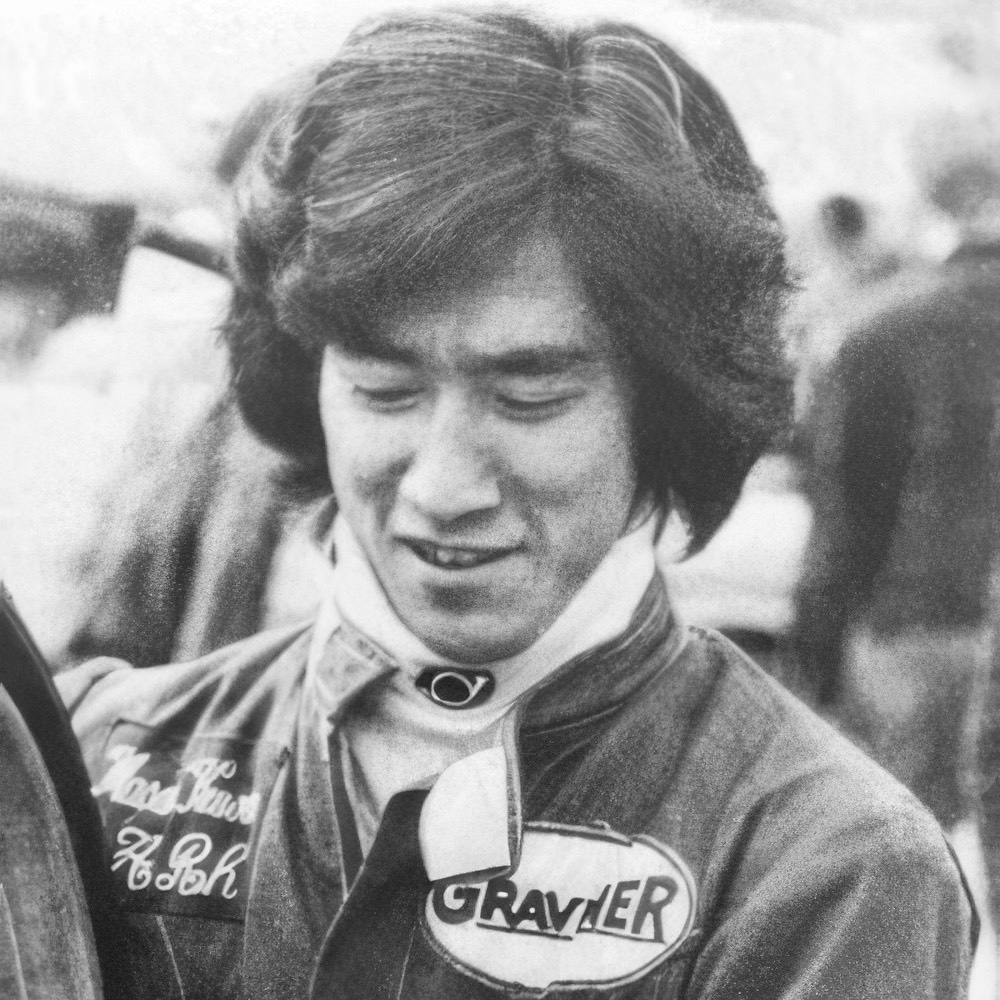
Masami Kuwashima
Career Statistics
Biography
Masami Kuwashima (14 September 1950 - Present): Japanese racing driver from Tokyo (or possibly Kumagaya City) who holds the unusual distinction of having the shortest Formula One career in history—replaced by Frank Williams after completing just one practice session at the 1976 Japanese Grand Prix when his promised sponsorship money failed to materialize. Kuwashima participated in first practice but was dropped before second practice in favor of Hans Binder, who brought more reliable funding. His official Formula One record shows one entry, zero starts, zero finishes, and zero points. Kuwashima started racing in 1969 with a Datsun 240Z, competing in Japanese national events and showing promise.
After some success in production cars, he switched to single-seaters and traveled to Britain in 1972 and 1973 to compete in Formula 3, where he won a number of races and established himself as a capable driver. His performances in British F3 suggested he had the talent to progress to higher categories. Returning to Japan, Kuwashima became a regular competitor in Japanese Formula 2000 (later Formula 2) through the mid-1970s, though he was more of an occasional participant than a full-time entrant. In 1974, he made only one start all season in his March 742-BMW at the final round at Suzuka, finishing second and tying for third in the championship with Motoharu Kurosawa despite his single appearance—a remarkable achievement demonstrating his speed.
In 1977, Kuwashima completed a full season racing for Sakai Racing in a Nova 512B and the newer Nova 522B-BMW. He achieved several strong finishes including fifth at Suzuka in March, second in April at Suzuka, fourth in August at Fuji, and another fourth in November at Suzuka, demonstrating consistency and competitiveness. For the 1976 Japanese Grand Prix at Fuji Speedway on 24 October—Japan's first Formula One World Championship race—Kuwashima secured a deal to drive for Wolf-Williams Racing (which later became Williams Grand Prix Engineering under Frank Williams). He was entered in a Wolf-Williams FW05, the team's 1975-spec car that was already outdated compared to the latest machinery.
The arrangement was contingent on Kuwashima bringing substantial Japanese sponsorship money to fund the entry. Williams, always desperate for funding during this period before the team's eventual success, was willing to give Kuwashima an opportunity if the money appeared. Kuwashima participated in Friday's first practice session, setting a time of 1:17.90, which was approximately 5 seconds slower than Mario Andretti's pole position time.
While not competitive, the lap time was respectable for a driver with no Formula One experience in an outdated car. However, the critical issue was not Kuwashima's pace but his finances. When the promised sponsorship money failed to materialize before second practice, Frank Williams made the pragmatic decision to replace Kuwashima with Austrian driver Hans Binder, who had more secure backing. Binder was not significantly quicker—he qualified only marginally faster than Kuwashima's Friday time—but he brought money the team needed.
Kuwashima was unceremoniously dropped after one practice session, establishing a record that still stands—the shortest Formula One career in history. Being booted out by Frank Williams after one solitary day as a Grand Prix driver was humiliating, but Kuwashima had little recourse. Formula One in the 1970s was brutally commercial, and drivers without money were expendable regardless of talent. The incident highlighted the harsh reality that speed alone was insufficient—drivers needed either enormous talent that made them indispensable or substantial financial backing.
Kuwashima had neither in sufficient quantity. Following his Formula One disappointment, Kuwashima returned to Japanese national racing and continued competing in Formula 2 and sports cars through the late 1970s and into the 1980s. He achieved moderate success without ever dominating, establishing himself as a competent professional on the Japanese racing scene. In motorsport record books, Kuwashima appears as a footnote—a driver who entered one Grand Prix but was replaced before the race, never starting or finishing a World Championship event.
His story has been repeated in various motorsport publications as a cautionary tale about the importance of secure funding and the ruthlessness of team owners like Frank Williams when financial survival was at stake. Known for his Formula Three success in Britain, competitiveness in Japanese Formula 2, and unfortunate distinction as holder of Formula One's shortest career, Masami Kuwashima represents the many drivers whose talent was insufficient to overcome the financial barriers preventing Formula One participation. His single practice session stands as a reminder that in 1970s Formula One, money often mattered more than speed.