Paul Emery
Career Statistics
Biography
Paul Emery (12 November 1916 - 3 February 1993): British racing driver, engineer, and car constructor from Chiswick, London who participated in two Formula One World Championship Grands Prix in 1956 and 1957, scoring no championship points, but who achieved far greater significance as the builder of Emeryson racing cars that competed across five decades and in four different World Championship formulae, making Emeryson one of only two constructors (alongside Ferrari) to produce cars for all of the first four World Championship formulae from the 1940s to the 1960s. Born in Chiswick, London on 12 November 1916, Emery was the son of French-born George Emery, an engineer who built racing specials in the 1930s.
Paul worked as an apprentice in his father's workshop from a young age, learning engineering and fabrication skills, though their relationship was often difficult—the two frequently fell out, and when they did, Paul would leave to work at Alta, another small British racing car manufacturer. This exposure to both his father's operation and Alta gave young Paul comprehensive knowledge of racing car design and construction. Emery's debut as a racing driver came at Donington Park in 1936 when he was 20 years old, driving one of his father's Gwynne-engined Emeryson Specials in competition. World War II interrupted his racing ambitions, but afterward Paul and his father resumed building racing cars.
In 1947 they constructed a prototype single-seater called an Emeryson, powered by a 1934 Lagonda Rapier engine reduced to 1087cc and fitted with two-stage supercharging. The car was very quick and was hired out to Eric Winterbottom for a race at the Gransden Lodge airfield circuit, which Winterbottom won, demonstrating the Emeryson's potential. Throughout the late 1940s and 1950s, Emery built numerous front-wheel-drive 500cc Formula 3 cars named Emeryson and raced them himself, becoming a regular competitor in British Formula 3 racing. An innovative designer and engineer, many of Emery's ideas were ahead of their time, including front-wheel drive layouts, unusual suspension geometries, and lightweight construction techniques, but lack of resources meant these concepts were never properly developed or realized.
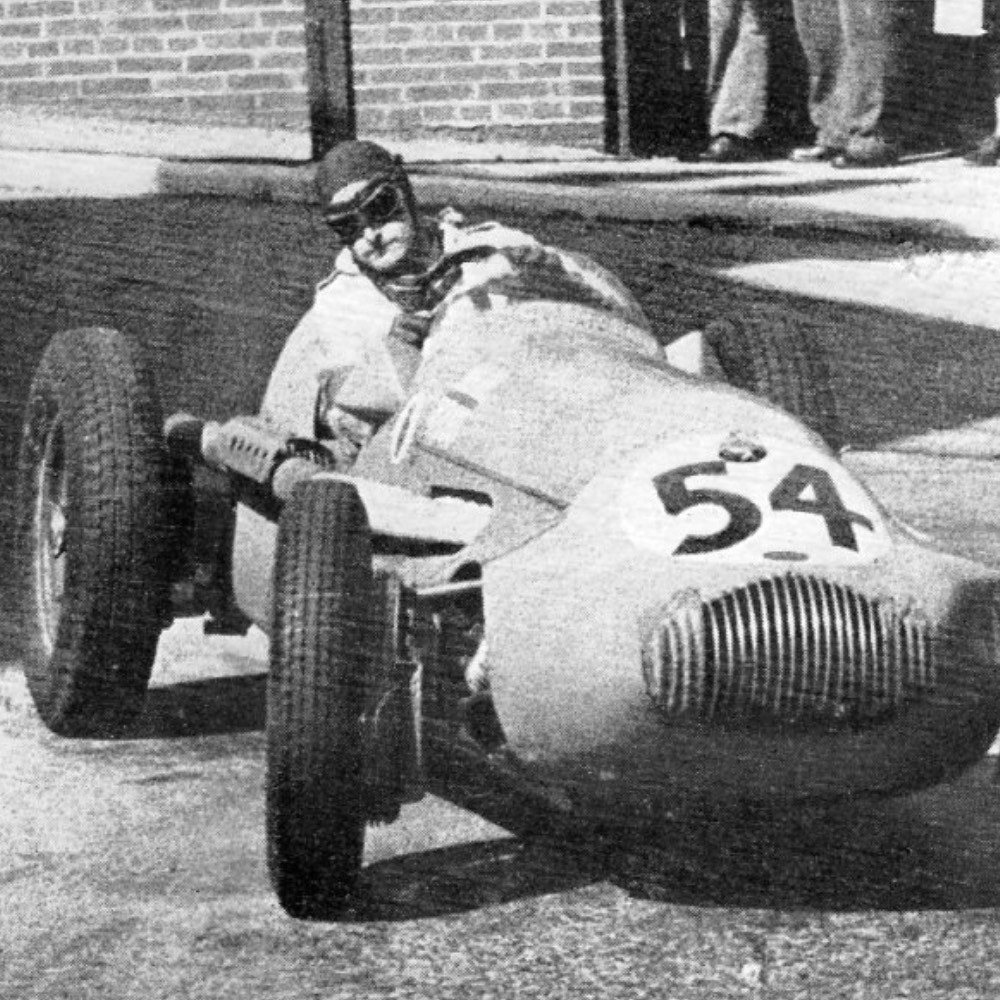
As Emery himself stated: 'I built my own cars because I wanted to race and never had enough money to go racing except by building my own cars'—a philosophy that characterized his entire career. Emery's first Formula One World Championship appearance came at the 1956 British Grand Prix at Silverstone on 14 July 1956, where he drove his self-built Emeryson Special, a three-year-old car powered by an Alta engine. Remarkably, despite the car's age and humble origins, Emery outqualified several Maserati 250Fs driven by Umberto Maglioli, Francisco Godia, Louis Rosier, and Jack Brabham, as well as Hermano da Silva Ramos' Gordini—a stunning achievement for a privateer in a self-built special. However, in the race Emery suffered ignition trouble and was forced to retire after just four laps, his promising performance ending in mechanical failure.
He did not compete in another World Championship race in 1956. Emery's second and final Formula One World Championship appearance came at the 1957 British Grand Prix at Aintree on 20 July 1957, again driving his Emeryson-Alta. This time he qualified toward the back of the grid and retired early with mechanical problems, ending his brief World Championship career with two starts, two retirements, and zero points. However, Emery continued competing in non-championship Formula One races and numerous other categories throughout the late 1950s and into the 1960s.
In 1958, Emery turned his attention to racing Connaughts for Bernie Ecclestone, who was just beginning his involvement in Formula One as a team owner before his later transformation into Formula One's commercial supremo. Emery drove Ecclestone's Connaught in several non-championship races, providing the future F1 boss with racing experience as an entrant. Beyond his driving career, Emery's greatest achievement was as a constructor. Emeryson became one of only two racing car manufacturers (the other being Ferrari) to produce competitive cars for all of the first four World Championship formulae: 500cc Formula 3 in the late 1940s, Formula Two in the 1950s, Formula One from the mid-1950s through early 1960s, and Formula Junior in the early 1960s.
This remarkable achievement demonstrated Emery's versatility as a designer and engineer, adapting his concepts across different regulations and engine sizes. Emery's racing career spanned an extraordinary five decades. Even in the 1970s, long after retiring from Formula One, he achieved further success winning championships in Midget racing with his Imp-powered designs, demonstrating that his engineering ingenuity and competitive spirit remained undiminished even in his 50s. His cars were known for innovative ideas including front-wheel drive, unusual weight distribution, and clever suspension designs, though limited funding meant these concepts rarely received the development necessary to unlock their full potential.
Paul Emery died on 3 February 1993 in Epsom, Surrey at age 76, having devoted his entire adult life to designing, building, and racing cars. His legacy as one of British motorsport's great innovators and privateers endures, representing an era when talented individuals could design and construct their own racing cars in small workshops and compete against factory teams at the highest level. The Emeryson name remains respected in historic racing circles, with surviving examples valued for their innovative engineering and connection to Paul Emery's lifetime of motorsport dedication. Known for building his own racing cars out of financial necessity, for being one of only two constructors to produce cars for all four early World Championship formulae (matching Ferrari's achievement), for his innovative but underfunded engineering concepts, for his five-decade racing career from the 1930s to the 1970s, and for his association with Bernie Ecclestone in 1958, Paul Emery represents the spirit of British privateer racing—talented, resourceful, innovative, but perpetually underfunded, yet competing with passion and ingenuity against far wealthier opposition.