Alfonso Thiele
Career Statistics
Biography
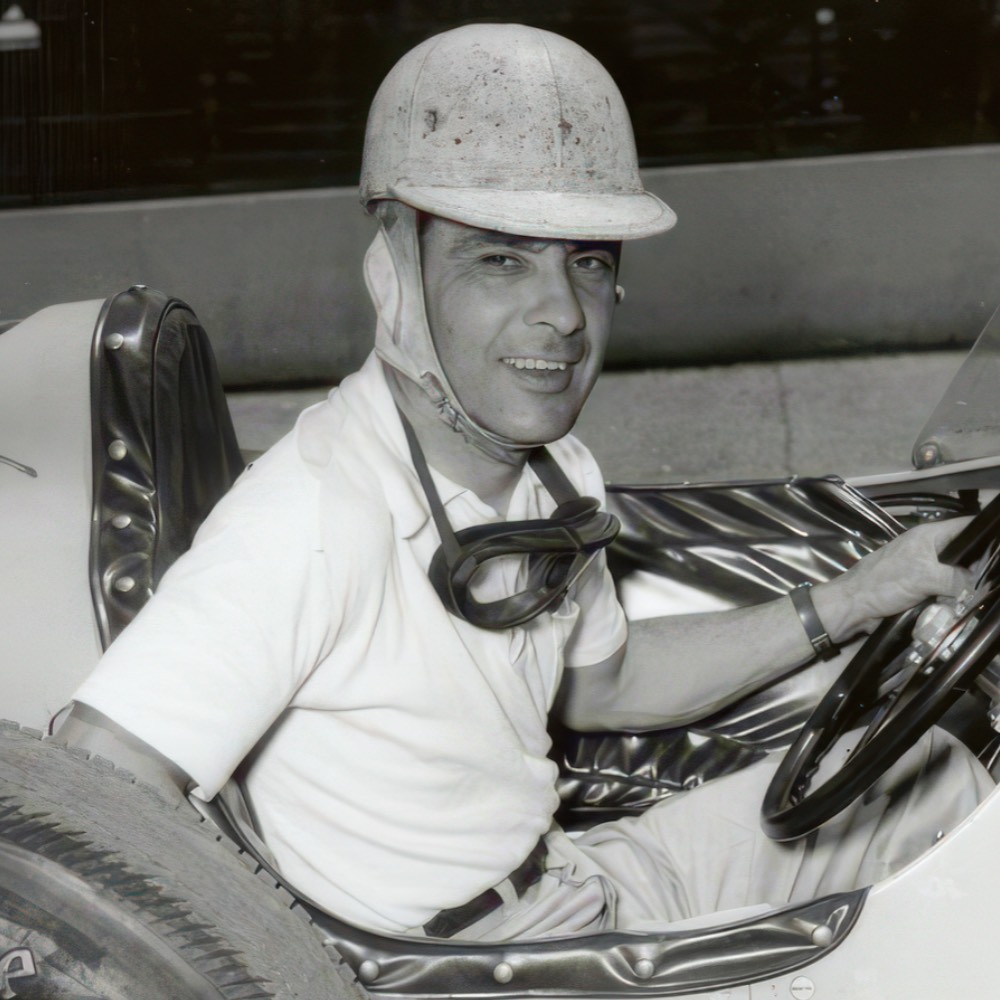
Alfonso Thiele (April 5, 1920 - July 15, 1986): An American-Italian racing driver who held dual citizenship of the United States and Italy, spending most of his life in Italy and building a successful sports car racing career during the 1950s and 1960s, though his single Formula One World Championship appearance was brief and unsuccessful. Born on April 5, 1920, Thiele came from a background that connected him to both American and Italian cultures, though he primarily identified with Italy and made his home there. During an era when many drivers competed across multiple racing categories, Thiele focused his efforts mainly on sports car racing rather than single-seater formulas. His career flourished in the late 1950s when he campaigned the diminutive but spirited Fiat Abarth cars that were popular among Italian privateer racers.
In 1957, Thiele achieved a significant milestone when he took a class victory in the legendary Mille Miglia, the open-road endurance race across Italy, driving a Fiat Abarth 750cc. This achievement in one of Italy's most prestigious motorsport events established his reputation as a capable and determined competitor who could extract maximum performance from small-capacity machinery. The Mille Miglia victory demonstrated not just speed but also the mechanical sympathy and endurance necessary to complete the grueling 1,000-mile race. As his career progressed and his results improved, Thiele graduated to more powerful machinery, moving from the small Fiat Abarth to the far more potent Ferrari 250GT.
In 1959, he achieved success at the Monza GT meeting, winning his class in the Ferrari and demonstrating his ability to adapt to different types of racing cars. The Ferrari 250GT was a significantly more powerful and sophisticated machine than the Abarth, and Thiele's class victory showed his versatility as a driver. During the early 1960s, Thiele's performances attracted the attention of major manufacturers. He became a works driver for both Fiat Abarth and Alfa Romeo, gaining factory support from two of Italy's most respected automotive companies.
For Alfa Romeo, Thiele competed in several major events, most notably the Targa Florio, the demanding Sicilian road race that was considered one of motorsport's ultimate challenges. In 1964, driving for the Alfa Romeo works team, Thiele finished fourth overall at the Targa Florio, running just behind his Alfa Romeo teammate Businello. This strong result in one of the world's most challenging races represented the peak of his sports car racing career and demonstrated his ability to compete at the highest levels of international motorsport. Thiele's sole Formula One World Championship appearance came on September 4, 1960, when he entered the Italian Grand Prix at Monza.
However, his Grand Prix debut proved disappointing—he failed to set a competitive qualifying time and did not start the race, ending his Formula One ambitions before they had truly begun. He scored no championship points and never attempted another World Championship event, recognizing that his talents were better suited to sports car racing. Throughout the remainder of the 1960s, Thiele continued competing primarily in sports car and GT racing across Europe, participating in various Italian and European championship events. He maintained his connection with Italian manufacturers and remained a respected figure in Italian motorsport circles, known for his smooth driving style and consistency over long distances.
Following his retirement from competitive racing, Thiele remained in Italy, where he had spent most of his adult life. Details of his post-racing career and personal life remain relatively scarce, as he maintained a private existence away from the motorsport spotlight. Alfonso Thiele passed away on July 15, 1986, at the age of 66. While his Formula One career consisted of a single non-start at the 1960 Italian Grand Prix, his broader motorsport legacy was more substantial.
His Mille Miglia class victory, success with Ferrari in GT racing, works drives for Alfa Romeo and Fiat Abarth, and fourth-place finish at the demanding Targa Florio established him as a respected sports car driver of the 1950s and 1960s. Today, Thiele is remembered as a capable and versatile driver who wisely focused on the racing categories where his skills were best suited, rather than pursuing Formula One glory.