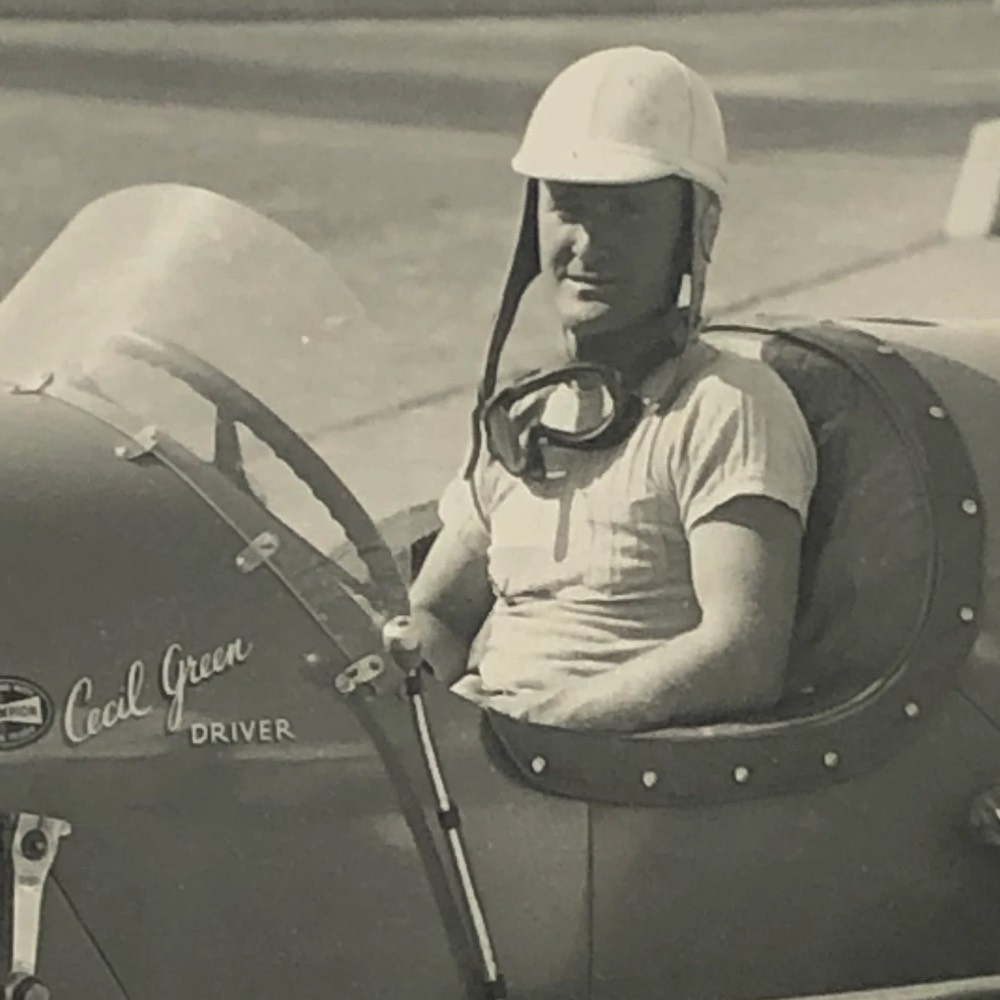
Cecil Green
Career Statistics
Biography
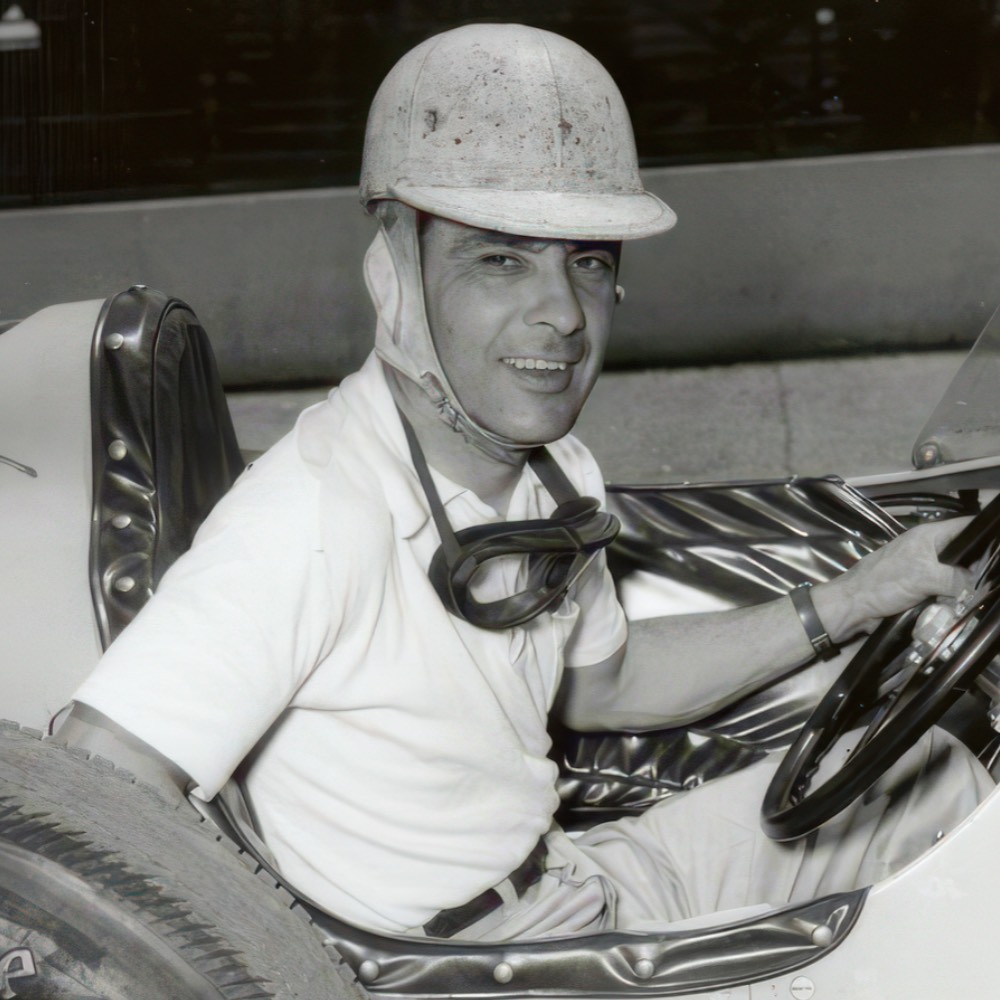
Walter Judge "Cecil" Green (September 30, 1919, Dallas, Texas - July 29, 1951, Winchester, Indiana): An American racing driver from Dallas whose promising career was tragically cut short on a day that became known as motorsport's "Black Sunday." Green established himself as one of America's premier midget car racers, winning an impressive 34 midget races between 1948 and 1950 across Oklahoma and Missouri, plus several more in his home state of Texas. His dominance in regional racing earned him both the 1949 Oklahoma City and Southwest AAA titles, marking him as a driver ready for the sport's highest level. Green's Indianapolis 500 debut in 1950 proved remarkably successful, as he finished fourth in his first attempt at the Brickyard, an exceptional result that demonstrated his ability to compete with America's best drivers on the sport's biggest stage.
He returned to Indianapolis in 1951, though this time finished 22nd. As the Indianapolis 500 races counted toward the Formula One World Championship from 1950 to 1960, Green's two starts technically made him a Formula One driver, though he never competed in a Grand Prix outside North America. Tragically, Green's life ended during qualifying for an AAA sprint car race at Funk's Speedway in Winchester, Indiana, on July 29, 1951. While attempting to qualify, his Offenhauser-powered sprint car spun as he hit the steep southwest banked curve.
The car crashed through a two-foot guard rail and plunged down a 25-foot embankment, turning as it fell. Green died in the accident, becoming one of three drivers killed that day across different racing venues. Bill Mackey perished during consecutive qualifying runs at the same Winchester event, while Walt Brown was killed at a different track. The convergence of these three deaths on a single day led to July 29, 1951, being remembered as "Black Sunday" in American motorsport history, a grim reminder of the extreme dangers faced by racers in that era.
Green was just 31 years old.