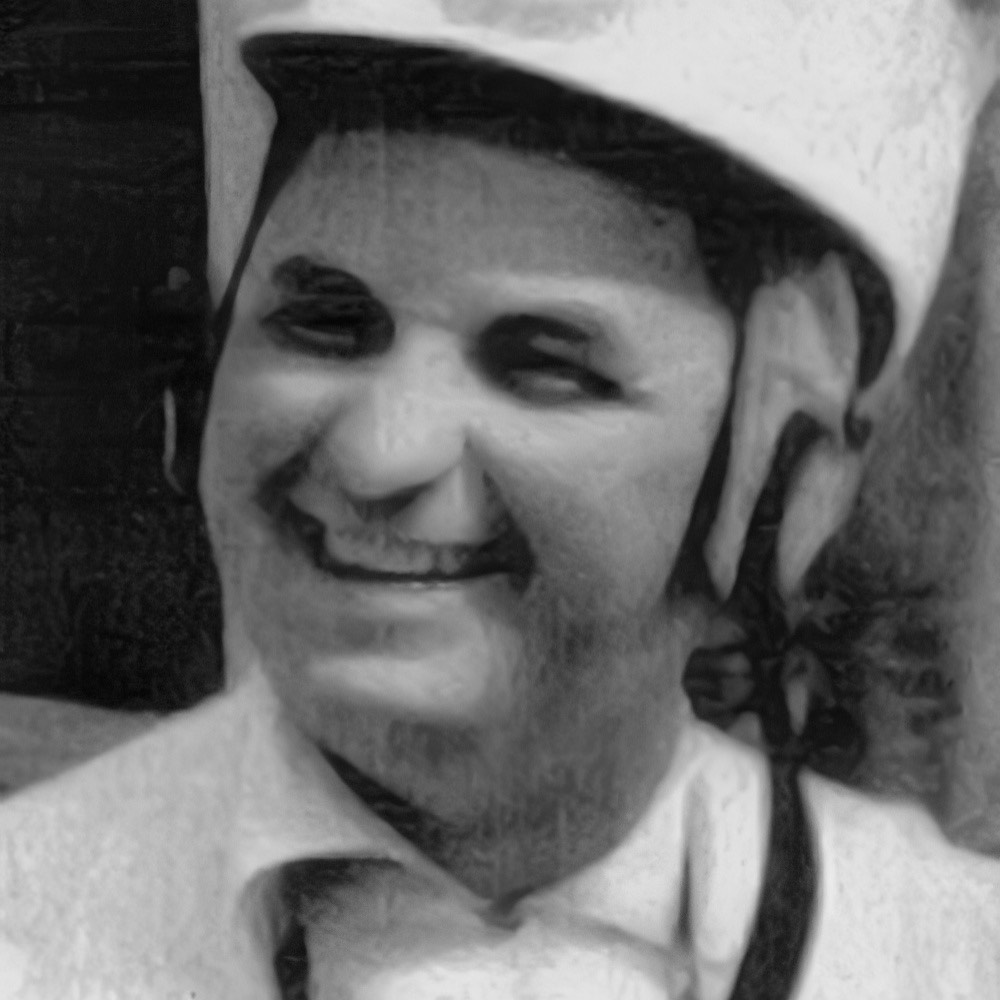
Giulio Cabianca
Career Statistics
Biography
Giulio Cabianca (19 February 1923 - 15 June 1961) was an Italian racing driver who competed in four Formula One World Championship Grands Prix from 1958 to 1960, scoring three championship points, while achieving far greater success in sports car racing where he won multiple Italian championships before his tragic death in a testing accident. Born in Verona, Italy, on 19 February 1923, Cabianca made his racing debut in 1947 at the wheel of a Fiat 1100S sports car in the Coppa d'Oro delle Dolomiti, beginning a racing career that would span 14 years and more than 300 races. Throughout his career, Cabianca recorded 38 overall victories and 65 class wins, establishing himself as one of Italy's most successful and versatile drivers.
During the 1950s, Cabianca became closely associated with OSCA (Officine Specializzate Costruzione Automobili), the small Italian manufacturer founded by the Maserati brothers after they left their original company. Cabianca spent most of the decade driving works OSCA sports cars against more powerful opposition, regularly achieving class victories in classic Italian and European events through superior driving and car control despite his cars' power disadvantages. His consistency and speed earned him the 1100cc Italian Sportscar Championship in 1952 and the 1500cc Italian Sportscar Championship in 1955, demonstrating his mastery across different engine capacities. In 1958, Cabianca won the Italian GT Championship, a title that would be awarded to him posthumously in 1961, three years after his achievement.
Cabianca's endurance racing prowess was demonstrated through his participation in ten consecutive Mille Miglia races from 1948 to 1957, Italy's legendary 1,000-mile open-road race. Successfully completing this notoriously dangerous event ten times represented an extraordinary achievement, as the Mille Miglia claimed numerous drivers' lives during its existence and required exceptional stamina, bravery, and mechanical sympathy. Cabianca attempted to enter Formula One at the 1958 Monaco Grand Prix driving an OSCA Formula 2 car, but his qualifying attempt failed, preventing his Grand Prix debut. However, he succeeded in making his Formula One debut several months later at the 1958 Italian Grand Prix at Monza, gaining valuable World Championship experience.
His Formula One breakthrough came at the 1960 Italian Grand Prix at Monza, where Cabianca drove the Castellotti Cooper T51-Ferrari to a career-best fourth-place finish. He finished behind Ferrari drivers Phil Hill, Richie Ginther, and Willy Mairesse, scoring three World Championship points and demonstrating genuine Formula One competitiveness. This result represented the highlight of Cabianca's Grand Prix career and proved he possessed the speed to challenge for points when provided competitive machinery. Over four World Championship starts from 1958-1960, Cabianca scored three championship points with that single fourth-place finish, though his limited Formula One opportunities meant he never received the chance to build on this promising result.
Tragedy struck on 15 June 1961 at the Modena Autodrome during a private test session. Cabianca was testing a Cooper when the car suffered a stuck throttle, sending the car out of control at high speed. Unable to slow the car, Cabianca crashed through the circuit's barriers and onto a public road adjacent to the track. The runaway Cooper struck a bicycle, a motorcycle, a mini-van, and three parked cars in a catastrophic accident.
The drivers of both the mini-van and motorcycle were killed instantly at the scene—innocent civilians whose lives were tragically ended by the racing accident. Cabianca sustained massive injuries in the accident and was rushed to hospital in Modena, where doctors fought to save his life. Despite their efforts, Cabianca died several hours later from his injuries, becoming another victim of 1960s motorsport's deadly toll. He was just 38 years old, with his racing career spanning 14 years and more than 300 races.
The accident's tragic circumstances—killing two innocent civilians on a public road adjacent to a racing circuit—highlighted the inadequate safety measures surrounding motorsport testing during the early 1960s. The fact that a stuck throttle could send a racing car onto a public road where civilians were traveling demonstrated the dangerous proximity of circuits to public areas and the minimal barriers separating racing from everyday life. Cabianca's funeral was attended by the Italian motorsport community, mourning the loss of one of Italy's most accomplished and respected drivers. His death was particularly poignant as it came just as he was establishing himself in Formula One, having scored points at Monza and seemingly poised for more opportunities with competitive teams.
Giulio Cabianca is remembered as one of Italy's finest sports car racers of the 1950s, a multiple Italian champion whose ten consecutive Mille Miglia appearances and 300-plus race starts demonstrated remarkable consistency and longevity. Though his Formula One career consisted of just four races, his fourth place at the 1960 Italian Grand Prix showed he possessed Grand Prix-level talent. Today, Cabianca's name is honored among the many talented drivers whose careers were cut short by racing accidents during motorsport's deadly early decades.