Jim Crawford
Career Statistics
Biography
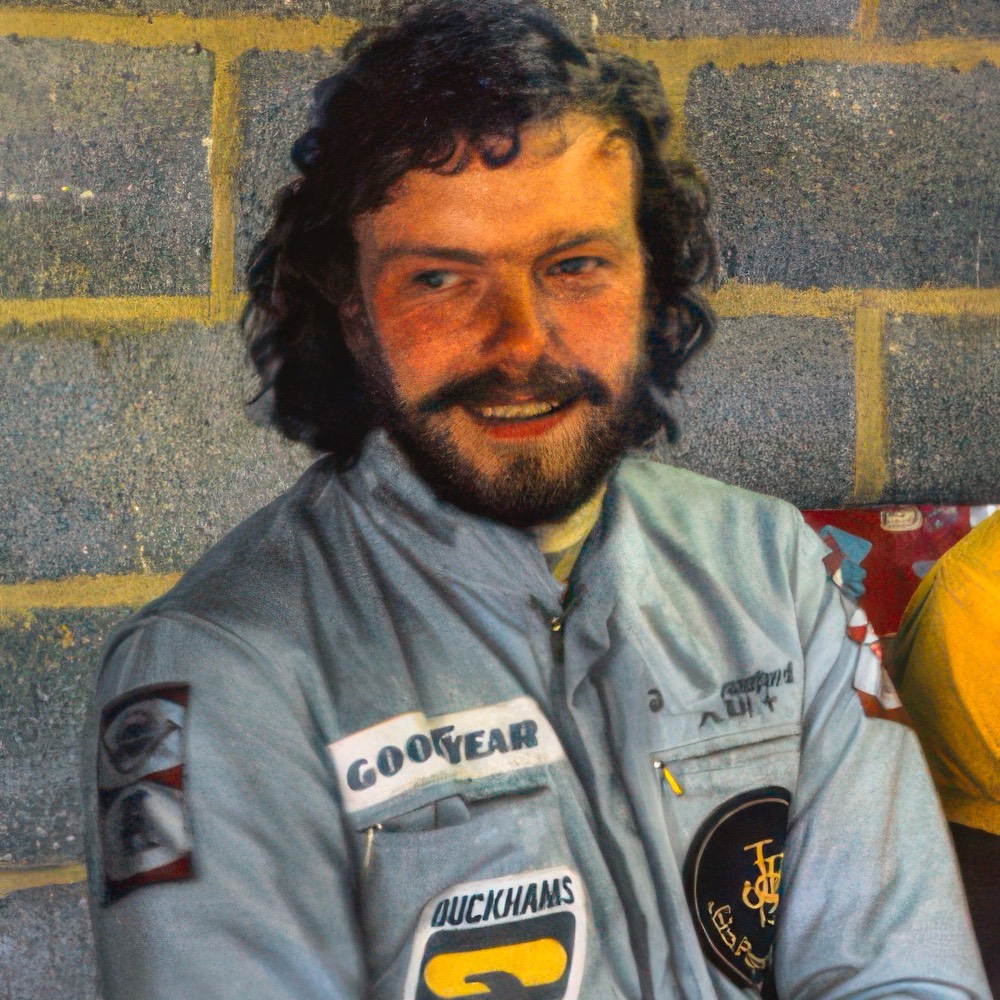
James Alan Crawford (13 February 1948 - 6 August 2002) was a Scottish-born racing driver who competed briefly in Formula One in 1975, making two World Championship starts for Lotus and earning the distinction of becoming the 500th driver to start a Formula One World Championship Grand Prix, before finding considerably greater success in North American motorsport, winning the 1982 British Formula One Championship and competing in the Indianapolis 500 multiple times, though his career was ultimately cut short by injuries and he died in 2002 from liver failure at age 54. Born in Dunfermline, Scotland, Crawford's first exposure to motorsport came through rallying, and he began competing behind the wheel of a Mini in various British rally events during the late 1960s, gaining car control skills and mechanical understanding that would later translate to circuit racing.
Crawford transitioned from rallying to circuit racing in 1972 when he began working as a mechanic for a Formula Atlantic team in Britain, and his mechanical knowledge and obvious enthusiasm impressed team owners enough that he was given the opportunity to drive one of the team's Chevron racing cars in 1973, beginning his career as a racing driver rather than merely a mechanic. In 1974, Crawford won the British Formula Atlantic Championship, a significant achievement in one of Britain's premier junior single-seater categories, and his championship success attracted the attention of Team Lotus, who offered him a test contract for 1975 and the opportunity to compete in selected Formula One races.
Crawford's Formula One debut came at the 1975 British Grand Prix at Silverstone on 19 July 1975, driving the number 6 Lotus 72E, and he qualified 25th on the grid, a respectable position for a Formula One debutant in an older-specification car, though his race ended after 28 laps when he crashed out, a disappointing conclusion to his first Formula One start. His second and final Formula One start came at the 1975 Italian Grand Prix at Monza in September, again driving a Lotus (this time the 72F variant with the number 6), and he completed 46 laps before retiring, classified 13th at the finish, a modest result but one that demonstrated he could complete a reasonable distance in Formula One machinery.
Crawford's status as the 500th driver to start a Formula One World Championship Grand Prix is a quirk of timing that has given him a footnote in Formula One history, as he happened to be the driver who brought the total number of different Formula One starters to exactly 500, a numerical milestone that the sport marked and that ensures Crawford's name appears in Formula One record books. After his brief Formula One experience in 1975, Crawford recognized that opportunities in Grand Prix racing were limited for a driver without significant financial backing or factory support, and he focused on building a racing career in other categories, competing in various British single-seater and sports car championships throughout the late 1970s.
In 1982, Crawford won the British Formula One Championship—a national-level series for Formula One cars that was separate from the World Championship and served as a platform for drivers to race contemporary and older Formula One machinery in Britain—giving him a championship title that included 'Formula One' in its name, even if it was not the World Championship. In the early 1980s, Crawford moved to the United States to pursue opportunities in North American motorsport, and he competed in the Can-Am sports car championship, finishing runner-up in the series twice, demonstrating consistent speed and competitiveness in powerful prototype sports cars on North American circuits. Crawford's most notable North American success came in Indianapolis 500 competition, where he competed multiple times throughout the 1980s and early 1990s, and in 1988 he delivered his best performance at the Brickyard, leading laps during the race and finishing sixth, a strong result that demonstrated he possessed the oval racing skills required to compete at America's most prestigious motorsport event.
Throughout his Indianapolis 500 career, Crawford competed for various teams including Dick Simon Racing, and while he never won the race or consistently challenged for victory, he established himself as a competent and professional oval racer who could be relied upon to bring the car home in respectable finishing positions. Crawford's racing career was eventually curtailed by injuries sustained in accidents, and after retiring from active competition, he struggled with health problems that would ultimately prove fatal. James Crawford died on 6 August 2002 at age 54 from liver failure, passing away in relative obscurity compared to more famous Formula One drivers, though his death was mourned by those who had competed against him and worked with him throughout his long career in British and American motorsport.
Jim Crawford's legacy in Formula One is necessarily modest—just two World Championship starts in 1975, both retirements, and no championship points scored—but his distinction as the 500th driver to start a Formula One race gives him a permanent place in the sport's statistical history, and his subsequent success in British Formula One Championship, Can-Am, and Indianapolis 500 competition demonstrated that he possessed genuine racing talent that simply never received the opportunity to shine on Formula One's world stage. His story represents that of dozens of talented British racing drivers during the 1970s and 1980s who made brief appearances in Formula One without securing permanent drives, and who built successful racing careers in other categories, proving that Formula One is not the only measure of a racing driver's talent or significance, and that drivers like Crawford who competed across multiple continents and disciplines deserve recognition for their versatility, professionalism, and commitment to motorsport even if Formula One success eluded them.