Larry Perkins
Career Statistics
Biography
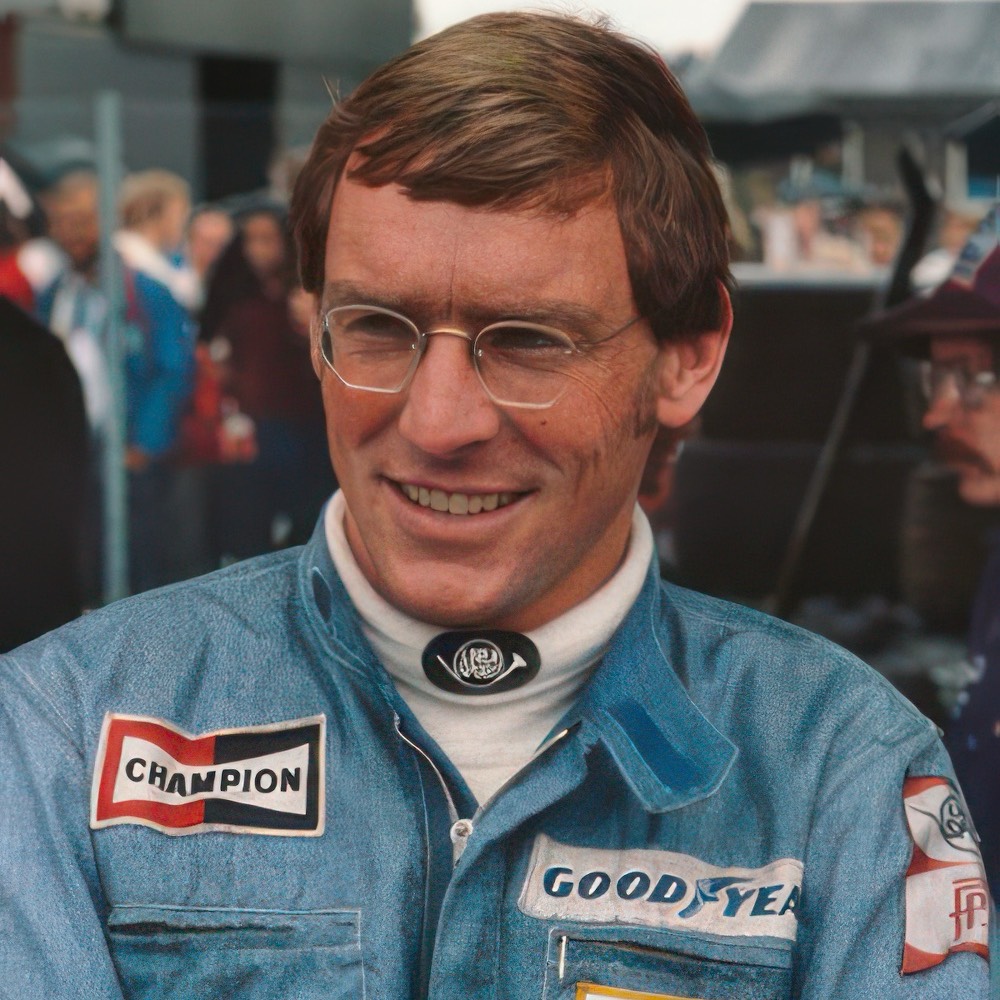
Larry Clifton Perkins (18 March 1950 - Present): Australian racing driver and engineer from Muroc, California, United States who participated in 11 Formula One World Championship Grands Prix from 1976 to 1977, scoring no championship points. Perkins is far better known for his remarkable success in Australian touring car racing, where he won the Bathurst 1000 six times, establishing himself as one of Australia's greatest motorsport legends. Born in California to Australian parents, Perkins moved to Australia as a young man and began racing in the early 1970s. His engineering background—he studied mechanical engineering at the South Australian Institute of Technology—would prove crucial throughout his racing career.
Perkins competed in Formula 5000 in Australia before heading to Europe to pursue Formula One. Perkins made his Formula One debut at the 1976 Dutch Grand Prix driving for the small Boro Racing team, but failed to qualify. He finally qualified for his first race at the 1976 Italian Grand Prix at Monza with the Stanley BRM team, starting 21st of 23 cars, but retired after 23 laps with engine failure. For 1977, Perkins drove four races for BRM and then moved to Surtees for the final races of the season.
His results were dismal—multiple failures to qualify, and when he did make the grid, retirements with mechanical failures. His best finish was 12th at the 1977 Belgian Grand Prix, well outside the points. The Surtees TS19 was one of Formula One's worst cars of the era, and Perkins had little chance of success. Frustrated with the lack of competitive equipment and diminishing opportunities in Formula One, Perkins returned to Australia in 1978, a decision that would define his career.
Back in Australia, Perkins began competing in touring car racing, initially as a driver but also applying his engineering skills to car preparation and setup. He raced for various teams through the late 1970s and early 1980s before establishing his own team, Perkins Engineering. His breakthrough came at the 1982 James Hardie 1000 at Bathurst when he and Peter Williamson won Australia's Great Race driving a Holden Commodore, giving Holden their first Bathurst victory in seven years. It was the first of six Bathurst 1000 victories for Perkins, a record that stood for decades.
He won again in 1983 and 1984 with Holden Commodores, then in 1993, 1995, and 1997, the latter three victories coming with his own Perkins Engineering team. The 1993 victory, driving with Gregg Hansford in a Holden Commodore VP, was particularly emotional as it came after a nine-year drought. His 1995 and 1997 victories paired him with Russell Ingall, forming one of Australian touring car racing's most successful partnerships. Perkins' six Bathurst wins place him alongside Jim Richards as the most successful drivers in the race's history.
Beyond Bathurst, Perkins competed in the Australian Touring Car Championship (now Supercars Championship) for over two decades. While he never won the championship, he was consistently competitive and earned the respect of the entire paddock for his engineering acumen. Perkins Engineering became one of the premier teams in Australian touring car racing, known for meticulous preparation and innovative engineering solutions. Perkins was hands-on with every aspect, often working late into the night preparing cars.
After retiring from full-time driving in the early 2000s, Perkins made occasional comeback appearances, last racing at Bathurst in 2003 at age 53. He continued running Perkins Engineering until 2008 when he sold the team. The buyer was Kelly Racing, and the sale marked the end of an era for one of Australian motorsport's most iconic privateer operations. Beyond motorsport, Perkins is an accomplished adventurer and explorer.
He has undertaken multiple expeditions across Australia, including retracing the journeys of famous Australian explorers. In 2006, he located the wreck of the HMAS Sydney off Western Australia, and in 2009 he retraced the 1860 Burke and Wills expedition. These adventures reflect his engineering mindset—careful planning, resourcefulness, and determination. Perkins has written books about his expeditions and remains active in engineering and exploration projects.
He was inducted into the Supercars Hall of Fame and the Sport Australia Hall of Fame in recognition of his achievements. Known for his engineering brilliance, determination, versatility, and quiet professionalism, Larry Perkins transformed a disappointing Formula One career into legendary success in Australian motorsport, proving that sometimes the path to greatness lies in recognizing where your talents are best suited.