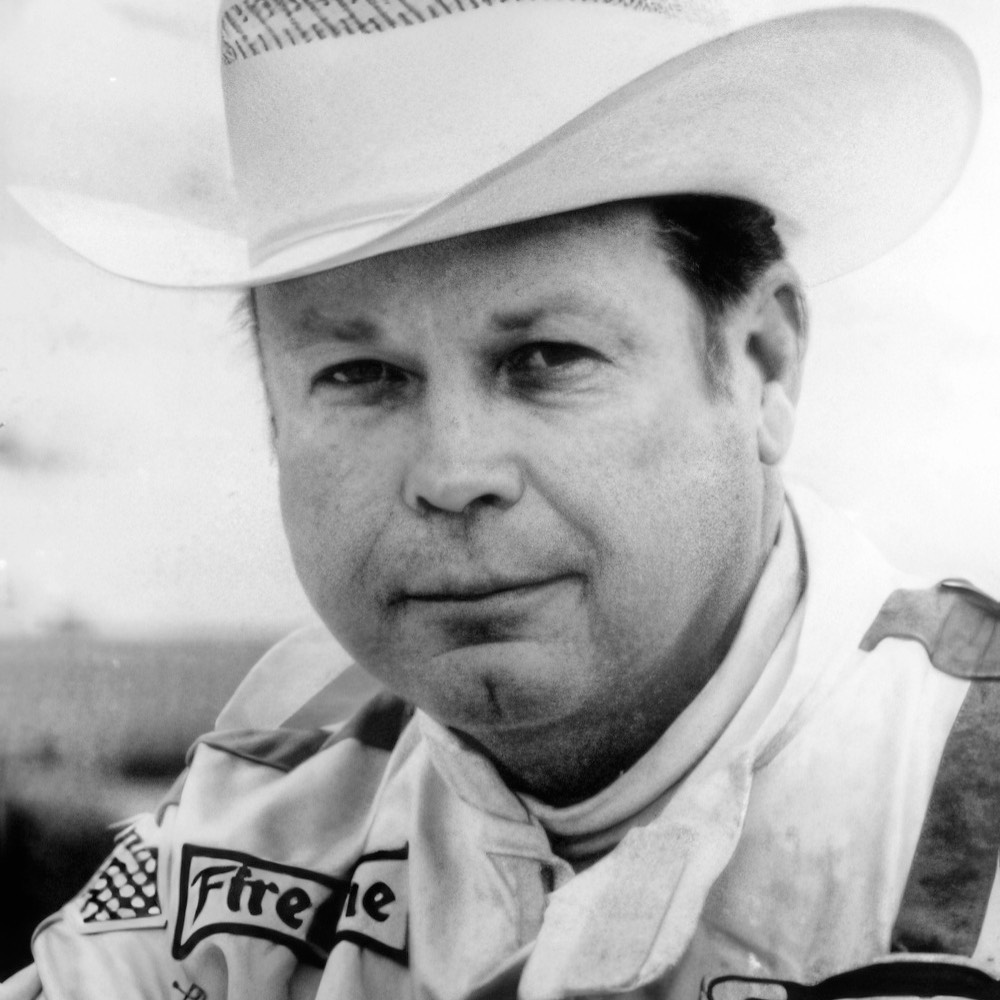
Lloyd Ruby
Career Statistics
Biography
Lloyd Ruby (12 January 1928 - 23 March 2009): American racing driver from Wichita Falls, Texas who participated in two Formula One World Championship Grands Prix, the 1960 Indianapolis 500 and the 1961 United States Grand Prix, retiring from both races and scoring no championship points. Ruby is far better known for his extraordinary career in American Championship Car racing where he won seven USAC races and is remembered as perhaps the greatest driver never to win the Indianapolis 500, leading the race in five different years but never capturing victory in motorsport's most famous race. Born in Texas and raised in harsh circumstances during the Depression, Ruby began racing jalopies and midget cars in the late 1940s.
He progressed through the USAC ranks, establishing himself as one of America's premier drivers. His driving style was aggressive and spectacular, earning him the nickname 'Ruby the Ripper' for his hard-charging approach that thrilled fans. Ruby made his first Indianapolis 500 start in 1960, qualifying the car entered by John Zink. The Indianapolis 500 counted toward the Formula One World Championship from 1950-1960, making Ruby's 1960 Indy participation his F1 debut.
He ran competitively before retiring with mechanical failure after 121 laps. Later in 1961, Ruby entered the United States Grand Prix at Watkins Glen in upstate New York, driving a Lotus 18-Climax entered by J. Frank Harrison. This was a true Formula One road racing event, and Ruby qualified a respectable 13th of 19 starters, demonstrating he could adapt to road racing. However, he retired after 76 laps with magneto failure, ending his Formula One career with two starts and two retirements.
While his Formula One career was brief and unsuccessful, Ruby's achievements in USAC Championship Car racing established his legend. Between 1958 and 1977, Ruby competed in 177 USAC Championship races, winning seven and achieving 88 top-ten finishes. He won races at Milwaukee, Trenton, Indianapolis Raceway Park, and other circuits, establishing himself as a consistent frontrunner. At the Indianapolis 500, Ruby's record is one of the sport's great tragedies.
He competed in the race from 1960 to 1977, leading a total of 126 laps across five different years (1964, 1966, 1968, 1970, and 1971), but never won. His misfortunes are legendary: in 1964 he finished third, his best result; in 1966 he was leading comfortably with 10 laps remaining when he was controversially black-flagged for leaking oil, costing him certain victory; in 1968 he led until retiring with mechanical failure with just 25 laps to go; in 1969 he was a full lap ahead of the field when he drove away from a pit stop with the fuel hose still attached, destroying his chances; and in 1970 and 1971 he led but retired both times with mechanical failures. Ruby's inability to win despite leading so often earned him the title 'The Greatest Driver Never to Win the Indianapolis 500,' which became the name of his 2000 biography written by Ted Buss.
The string of heartbreaking failures at Indianapolis is unmatched in the race's history. Beyond Championship Car racing, Ruby achieved significant success in sports car endurance racing. He won the 24 Hours of Daytona twice, in 1965 and 1966, both times co-driving with Ken Miles. He and Miles also won the 12 Hours of Sebring in 1966 and clinched the 1966 World Sportscar Championship together, defeating the factory Ferrari and Porsche teams—a remarkable achievement for an American privateer effort.
Ruby's partnership with Miles was one of the most successful in endurance racing, combining Ruby's stamina and consistency with Miles' engineering brilliance and speed. After Miles' death in a testing accident in 1966, Ruby lost one of his closest friends and racing partners. Ruby continued racing into the late 1970s, finally retiring from competitive driving in 1977 at age 49 after his final Indianapolis 500 start. He was inducted into the Auto Racing Hall of Fame in 1991, the Motorsports Hall of Fame of America, and the Texas Motorsports Hall of Fame, recognition of his achievements despite never winning the Indianapolis 500.
After retirement, Ruby lived quietly in Texas, occasionally attending racing events and reunions. He rarely gave interviews, preferring privacy to reliving his Indianapolis heartbreaks. Friends described him as philosophical about his career—proud of his achievements but inevitably haunted by the victories that slipped away. Ruby passed away on 23 March 2009 at age 81 in Wichita Falls, Texas. Obituaries celebrated his career and noted that despite never winning Indianapolis, his talent and achievements placed him among American racing's elite.
Known for his aggressive driving style, consistency, ability to lead races, and grace in handling repeated disappointments, Lloyd Ruby represents both the triumph and tragedy of motorsport—a supremely talented driver whose greatest prize remained forever just out of reach.