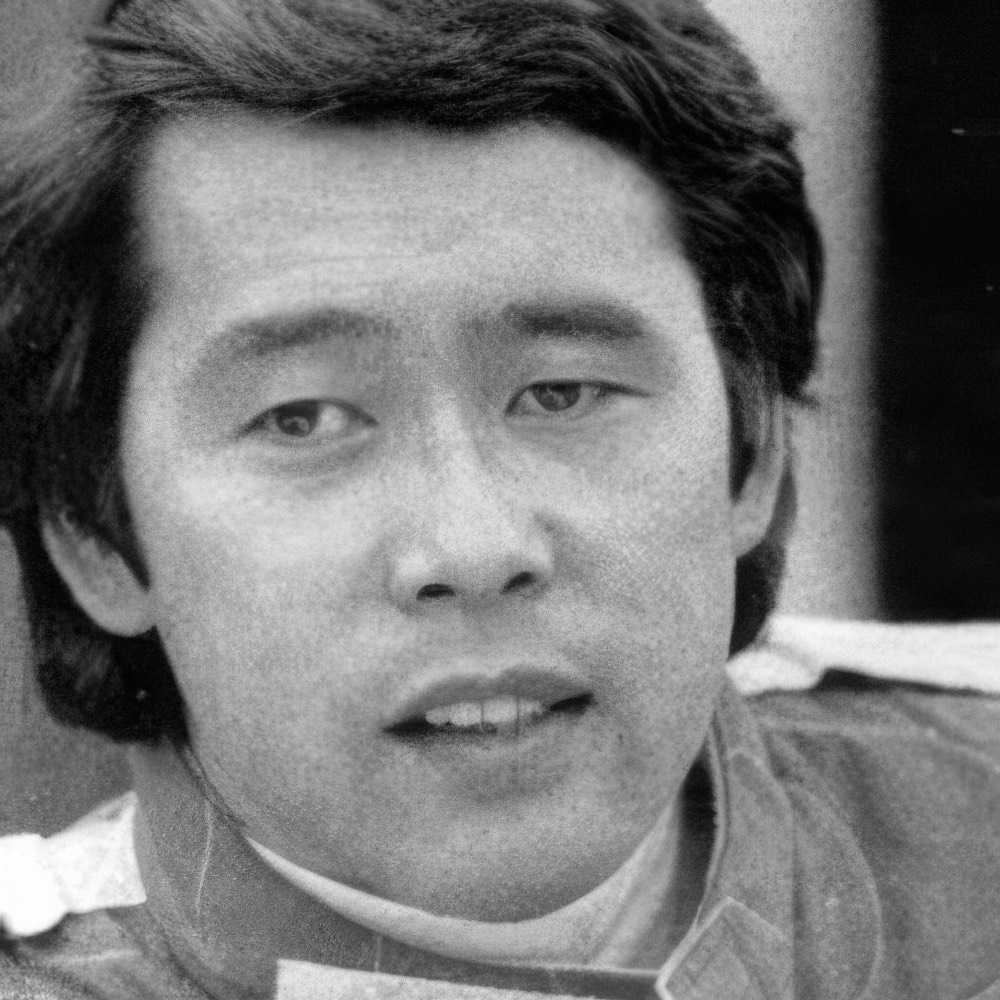
Masahiro Hasemi
Career Statistics
Biography
Masahiro Hasemi (13 November 1945 - Present): Japanese racing driver from Tokyo who participated in one Formula One World Championship Grand Prix, the 1976 Japanese Grand Prix at Fuji Speedway, driving for the Japanese Kojima Engineering team. He qualified tenth and finished 11th, seven laps behind race winner James Hunt. Hasemi is far better known for his extraordinary success in Japanese motorsport, winning the Japanese Touring Car Championship three times (1989, 1991, 1992), the All Japan Sports Prototype Championship in 1990, and the 1992 Daytona 24 Hours. Following retirement in 2001, Hasemi established NDDP Racing, a successful Super GT team.
Born in Tokyo in November 1945, Hasemi began his motorsport career in motocross as a teenager, developing bike control skills that would later transfer to car racing. He turned to car racing in 1964 with a Nissan Bluebird, competing in Japanese national events and quickly establishing himself as one of the country's fastest young drivers. Throughout the late 1960s and early 1970s, Hasemi competed in saloon cars and GT races in Japan, winning numerous events and building his reputation. Since 1974, he drove F2 Kojima cars in the Japanese Formula 2000 Championship, establishing a relationship with Kojima Engineering that would lead to his Formula One opportunity.
Kojima Engineering, founded by Matsuhisa Kojima, decided to enter Formula One for the 1976 Japanese Grand Prix, creating the Kojima KE007 powered by a Cosworth DFV engine. As Kojima's leading driver, Hasemi was selected to drive the car at Japan's first Formula One World Championship race, held at Fuji Speedway on 24 October 1976 in torrential rain. During the first qualifying session, Hasemi put on a stellar performance, setting the fourth-fastest time overall before an error cost him a chance at pole position. His pace shocked the established Formula One teams—a Japanese driver in a Japanese car running near the front was a remarkable achievement that excited Japanese fans and demonstrated Hasemi's raw speed.
However, in the second qualifying session and final qualifying, Hasemi was unable to replicate his early pace, eventually qualifying tenth on the grid—still a respectable achievement for a debut. The race took place in appalling conditions, with heavy rain creating rivers of water across the track. Visibility was near zero, and conditions were so dangerous that several drivers withdrew, fearing for their safety. Hasemi started the race and drove steadily, avoiding the accidents and incidents that eliminated numerous competitors.
However, he was lapped multiple times by the leaders and finished 11th, seven laps behind race winner James Hunt, whose championship battle with Niki Lauda was decided in Japan's torrential conditions. Hasemi's single Formula One start ended his brief F1 career. Kojima Engineering withdrew from Formula One, citing the enormous costs and the impossibility of competing against established European teams. However, Hasemi's participation as the first Japanese driver racing for a Japanese team at a Japanese Grand Prix was historic, paving the way for future Japanese involvement in Formula One.
Returning to Japanese national racing, Hasemi enjoyed extraordinary success over the following decades. In touring car racing, he won the Japanese Touring Car Championship (JTCC) three times—in 1989, 1991, and 1992—establishing himself as Japan's premier touring car driver. His consistent speed and racecraft made him a fan favorite and a dominant force in JTCC competition. In 1990, Hasemi won the All Japan Sports Prototype Championship, further demonstrating his versatility across different racing disciplines.
His ability to adapt from single-seaters to touring cars to sports prototypes marked him as one of Japan's most complete drivers. Hasemi's greatest international achievement came at the 1992 24 Hours of Daytona, where he shared a Nissan with compatriots Kazuyoshi Hoshino and Toshio Suzuki. The trio drove brilliantly to take overall victory at one of endurance racing's most prestigious events, giving Japan a major international triumph and proving that Japanese drivers and manufacturers could compete at the highest level. Hasemi continued racing into his 50s, finally retiring from active competition in 2001 at age 55—a remarkable career spanning nearly four decades.
His longevity and sustained competitiveness into middle age demonstrated both his physical fitness and continued passion for racing. Following retirement, Hasemi founded NDDP Racing (Nissan Driving Development Program), a Super GT team that competes in Japan's premier GT racing series. Under Hasemi's leadership, NDDP Racing has achieved success in Super GT, developing young Japanese drivers and maintaining Hasemi's connection to motorsport. Known for his extraordinary longevity as a competitive driver, success across touring cars, sports prototypes, and single-seaters, historic role as the first Japanese driver for a Japanese Formula One team at a Japanese Grand Prix, Daytona 24 Hours victory, and post-retirement work developing young talent, Masahiro Hasemi represents Japanese motorsport's growth from national obscurity to international competitiveness.
While his single Formula One start produced a modest result, his broader career spanning five decades established him as one of Japan's greatest racing drivers.