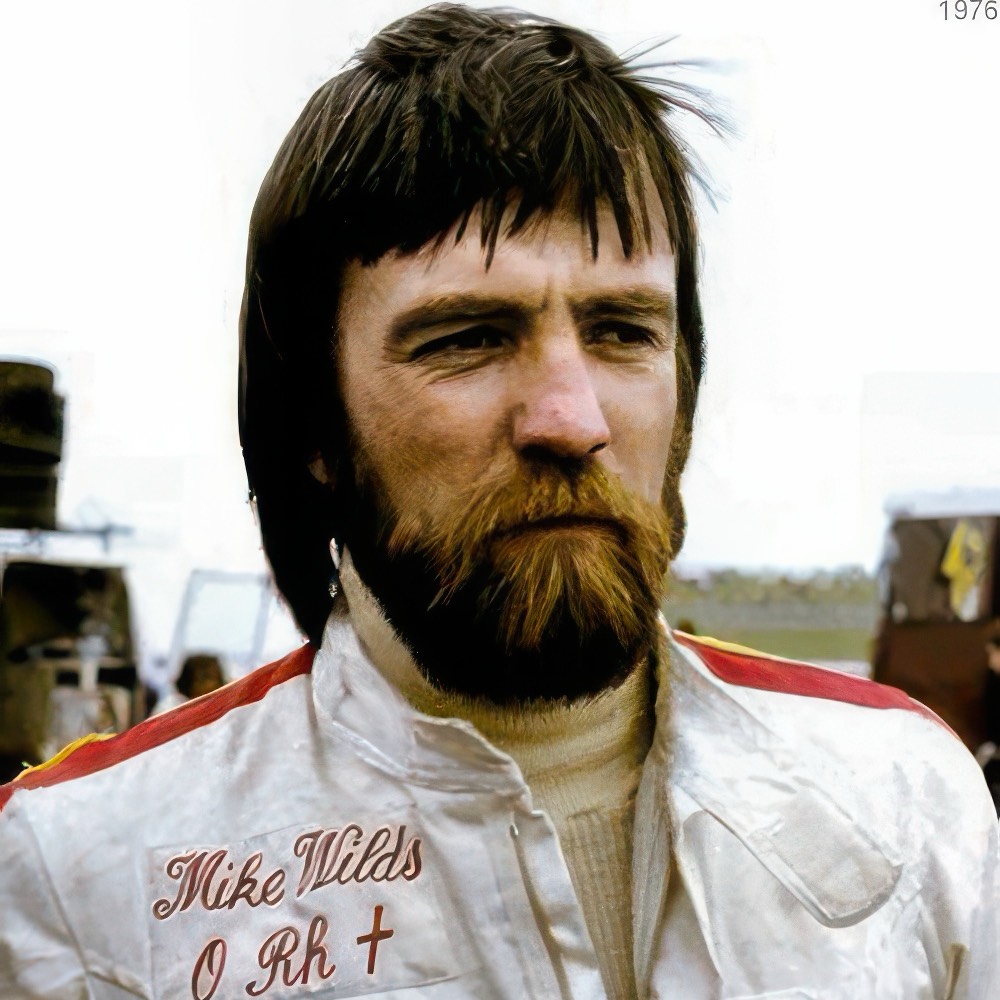
Mike Wilds
Career Statistics
Biography
William Michael Wilds (7 January 1946 - Present): British racing driver from England who participated in eight Formula One World Championship Grands Prix in 1974-1975 with March, Ensign, and BRM, scoring no championship points. Wilds is the son of a newspaper photographer and enjoyed success in British Formula 3 and European Formula 5000 before his brief Formula One career. Following retirement from competitive driving, Wilds became a commercial helicopter pilot and instructor while remaining active in historic car racing. Born in England, Wilds was the son of a newspaper photographer, giving him connections to media and motorsport coverage from a young age.
He began racing in 1965 with a DRW in club events, showing immediate promise. However, in 1966, Wilds suffered a serious accident when he rolled his car at Brands Hatch's Paddock Hill Bend, breaking his pelvis. The injury required months of recovery and raised questions about whether he would return to racing. Demonstrating resilience, Wilds recovered and returned to competition. By 1973, racing a March 733-Ford in British Formula 3, Wilds won twice during the season, including beating future Formula One star Jacques Laffite at Mallory Park—a significant victory that demonstrated he could compete against future Grand Prix winners.
Wilds finished third in the 1973 Lombard North Central British F3 Championship, establishing himself as one of Britain's leading F3 drivers. For 1974, Wilds moved to the European Formula 5000 series, racing large, powerful single-seaters on road courses across Europe. His F5000 performances were strong enough to attract Formula One attention. Wilds made his Formula One debut in 1974 with a non-works March, attempting to qualify for several races with limited success.
He then moved to Ensign, a small British team, before joining BRM for two races. At the 1974 British Grand Prix at Brands Hatch on 20 July, Wilds made his first Formula One race start, though he retired with mechanical failure. For the 1975 Formula One season, Wilds joined Stanley BRM for the opening two rounds of the championship—the Argentine Grand Prix at Buenos Aires and Brazilian Grand Prix at Interlagos. At Buenos Aires, Wilds started 22nd in the BRM P201 and completed 24 laps before retiring with a broken engine.
At Interlagos, he again qualified 22nd, finishing a race after 22 laps due to clutch problems—suggesting he was classified despite not completing full race distance. Wilds's BRM career ended abruptly after Brazil due to his comments to team boss Louis Stanley about changing the BRM V12 engine in favor of a Ford DFV. Stanley, a controversial and idiosyncratic team principal who fiercely defended BRM's V12 despite its obsolescence, took offense at Wilds's suggestion and fired him. Bob Evans replaced Wilds for the next race in South Africa.
The BRM P201 retired from the opening two Grands Prix of 1975 before Stanley abandoned the project entirely, vindicating Wilds's assessment that the car was uncompetitive. Wilds's Formula One career consisted of eight race entries across 1974-1975, with limited starts and zero points. His brief stint demonstrated the difficulties faced by drivers attempting Formula One with small, underfunded teams running uncompetitive equipment. Following his Formula One disappointment, Wilds continued racing in other categories before transitioning into commercial aviation.
He became a commercial helicopter pilot and instructor, applying his mechanical understanding and reflexes to flying. Helicopter piloting requires similar skills to racing—quick decision-making, spatial awareness, and calm under pressure—making it a natural transition for Wilds. In addition to his helicopter career, Wilds has remained active in historic car racing, regularly competing in events for classic racing cars across Europe. His participation in historic racing has kept him connected to motorsport and introduced his name to new generations of fans who appreciate drivers from Formula One's 1970s era.
Known for his 1973 British F3 third-place finish, victory over Jacques Laffite at Mallory Park, broken pelvis from 1966 Brands Hatch crash, two races with BRM before being fired by Louis Stanley for suggesting replacing the V12 engine with a Ford DFV, career as commercial helicopter pilot and instructor, and continued participation in historic racing, Mike Wilds represents the drivers whose brief Formula One careers were defined more by team politics and inadequate equipment than by their own abilities. His success in F3 and later aviation career demonstrate competence and adaptability beyond his zero-point Formula One record.