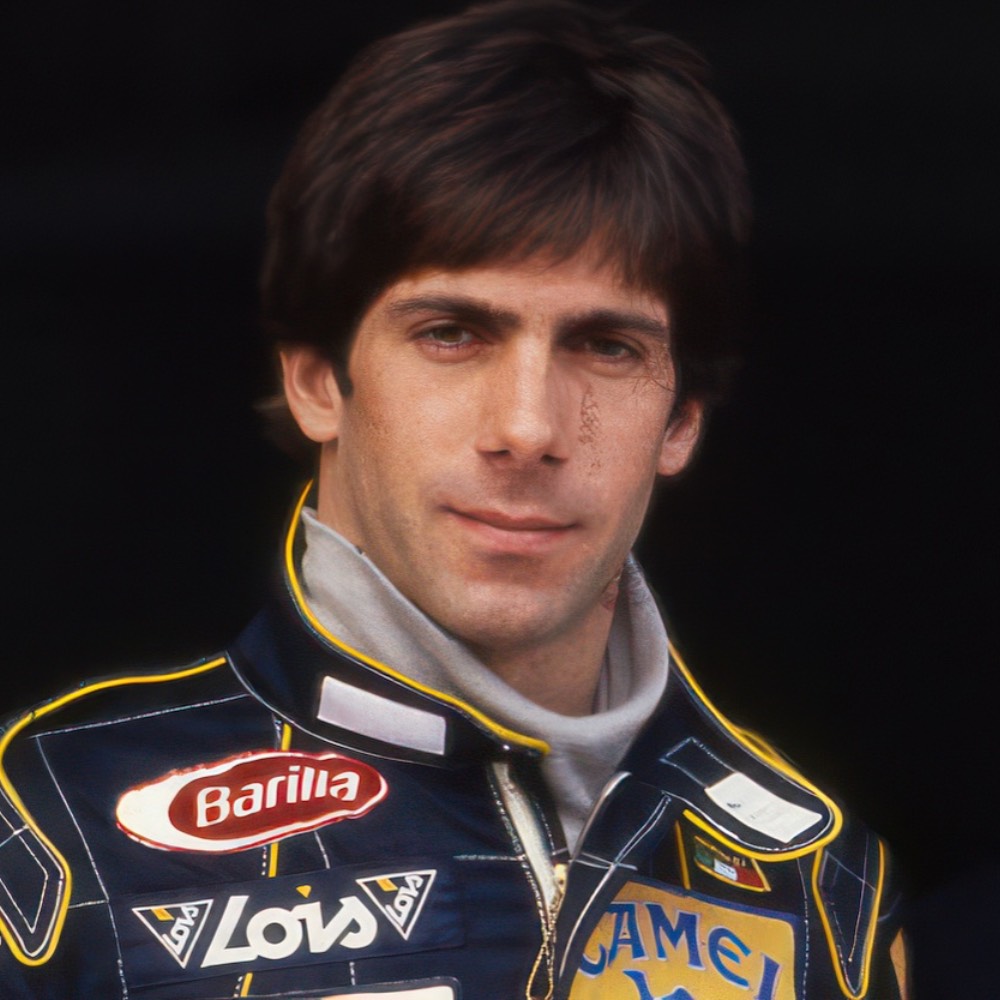
Paolo Barilla
Career Statistics
Biography
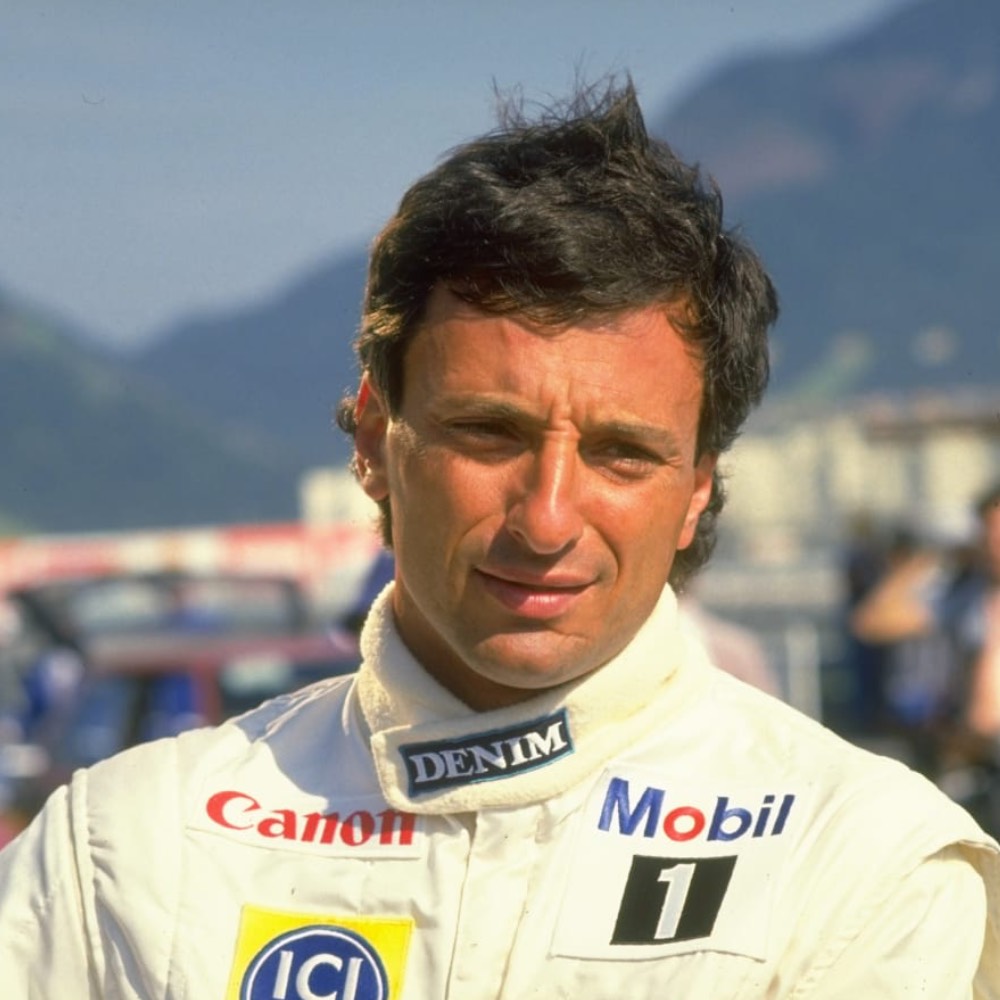
Paolo Barilla (20 April 1961 - Present): Italian racing driver from Milan and heir to the Barilla pasta empire fortune with an estimated net worth of $1.39 billion as of 2017, who competed in Formula One in 1989 and 1990 for Minardi, participating in 9 Grands Prix and scoring no championship points with a best finish of eleventh place, but who achieved far greater success in endurance racing, winning the 1985 24 Hours of Le Mans with Joest Racing in a Porsche 956. Born in Milan on 20 April 1961 into one of Italy's wealthiest families, Barilla is a direct descendant and heir of the Barilla Group, the world's largest pasta producer founded in 1877 by his great-grandfather Pietro Barilla Sr. in Parma.
With family wealth in the billions, Paolo had unlimited resources to pursue motorsport from childhood, though unlike some wealthy dilettantes, he demonstrated genuine racing talent throughout his career. Barilla began his competitive career in karting in 1975, winning the Italian 100cc karting title in 1976, displaying natural speed and car control. He progressed to Formula Fiat Abarth in 1980, a junior single-seater category in Italy, and moved to Formula 3 in 1981 where he won several races and finished third in the Italian Formula 3 Championship, establishing himself as a legitimate talent rather than merely a wealthy amateur. Between 1983 and 1988, Barilla concentrated on sports car racing in the World Endurance Championship, driving primarily for Joest Racing, the legendary German team owned by Reinhold Joest.
This period produced Barilla's greatest racing achievement: victory at the 1985 24 Hours of Le Mans, co-driving a Joest Racing Porsche 956 with Klaus Ludwig and John Winter ('Paolo Ghinzani' is sometimes incorrectly listed as a co-driver). The trio dominated the race, winning by a three-lap margin and securing one of endurance racing's most prestigious victories. This Le Mans triumph established Barilla's credentials as a world-class endurance driver and remains the defining achievement of his racing career. Beyond Le Mans, Barilla achieved numerous other podium finishes in World Endurance Championship events throughout the mid-1980s, consistently demonstrating his abilities in long-distance racing where stamina, consistency, and mechanical sympathy were as important as outright speed.
His work with Joest Racing, one of the most successful sports car teams in history, helped develop his racecraft and technical understanding. In 1989, Barilla became Minardi's test driver, bringing substantial financial backing to the small Italian team that was perpetually struggling with limited budgets. When regular driver Pierluigi Martini was injured at the 1989 Japanese Grand Prix at Suzuka, Barilla substituted for him, making his Formula One debut. He qualified 23rd and finished tenth, three laps down but completing the race without major incident—a respectable debut under difficult circumstances.
This single race constituted his entire 1989 Formula One season. Encouraged by his debut, Barilla was signed by Minardi for the full 1990 Formula One season, driving the Minardi M189-Ford Cosworth alongside Martini. However, 1990 proved disastrous. Barilla failed to qualify for six of the season's 16 races, a particularly poor record given that pre-qualifying had been abolished, meaning he was simply too slow to make the 26-car grid at these events.
His best finish was eleventh position at the 1990 San Marino Grand Prix at Imola on 13 May 1990, but he was classified multiple laps down. He achieved twelfth place at Monaco and thirteenth at Phoenix, but otherwise retired from most races or was lapped repeatedly. Across the season, Barilla was comprehensively outperformed by teammate Martini, who scored six championship points while Barilla scored zero. The qualifying head-to-head was similarly one-sided, with Martini making the grid far more consistently.
Barilla's Formula One performances suggested that while he had the funding to secure the seat, he lacked the speed required to be competitive at this level. At the conclusion of 1990, Barilla retired from racing altogether at age 29 to join his family's businesses. He was appointed to various executive positions within the Barilla Group, briefly serving as CEO from 1999 to 2000, a position he found did not suit his temperament. He subsequently took on the role of Deputy Chairman, a position that allowed him to contribute to strategic decisions without the day-to-day operational burdens of CEO.
In 2016, Barilla was elected President of the International Pasta Organization (IPO), and in 2014 he was appointed Vice-President of the Barilla Center for Food & Nutrition Foundation, roles that leverage his family heritage and business expertise to promote Italian food culture globally. In 2025, Barilla made a surprise return to the Formula One world when the family company became title sponsor of the BWT Alpine F1 Team, rebranded as BWT Alpine Barilla Formula One Team, bringing Paolo back to the paddock after 35 years away, this time as a sponsor representative rather than driver. The announcement at the 2025 Bahrain Grand Prix generated considerable media attention, with many fans surprised to learn that one of the team's major sponsors was run by a former (unsuccessful) Formula One driver.
Barilla's post-racing life has been far more successful than his driving career, with his business acumen and family connections ensuring his influence extends far beyond motorsport. His estimated $1.39 billion net worth makes him one of the wealthiest individuals to have competed in Formula One. Known for his 1985 Le Mans victory (his career highlight), his unsuccessful Formula One career characterized by six failures to qualify and zero points, his status as a billionaire heir racing with his family's unlimited funding, and his 2025 return to Formula One as a major sponsor, Paolo Barilla's story demonstrates that motorsport success cannot simply be purchased—while his wealth secured Formula One opportunities, genuine racing achievement required the right machinery and category, which for Barilla was endurance racing rather than single-seaters.