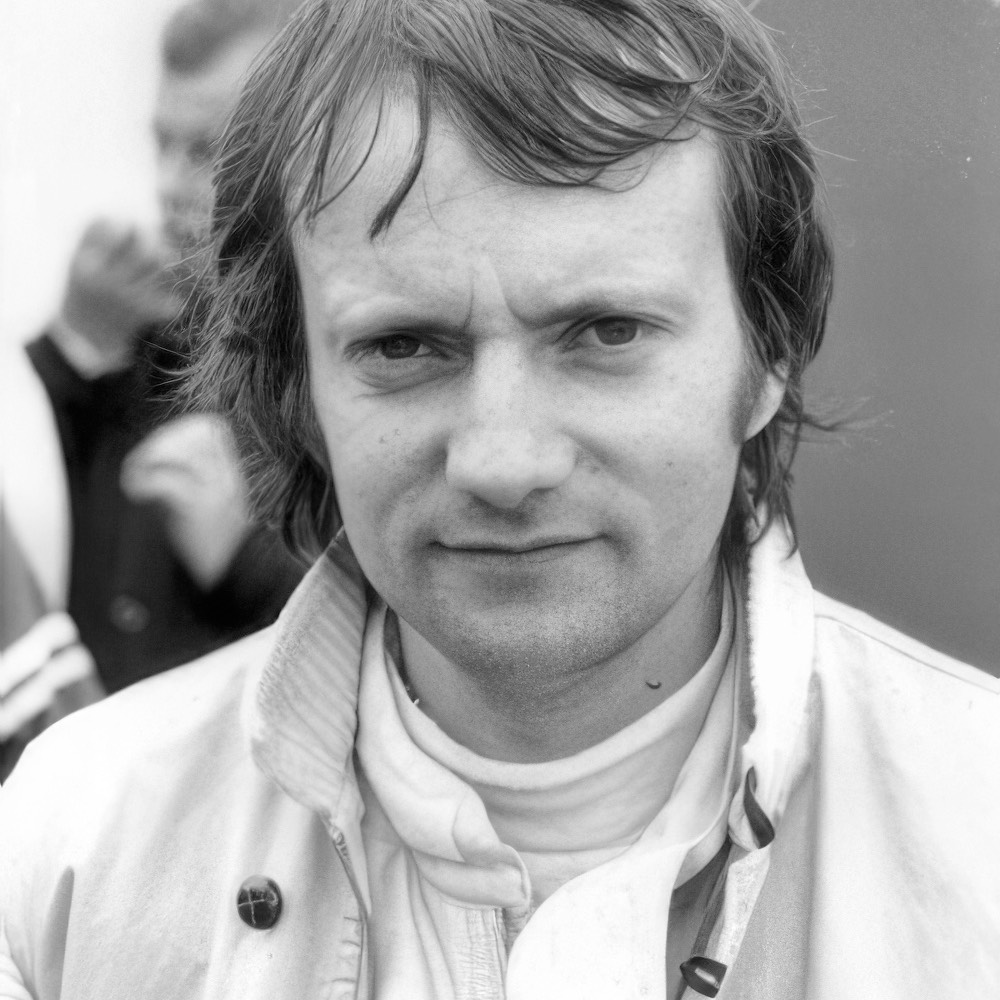
Patrick Gaillard
Career Statistics
Biography
Patrick Gaillard (born 12 February 1952) is a French former racing driver who competed in five Formula One World Championship Grands Prix during 1979 and a sixth non-championship race in 1980, scoring no championship points and failing to qualify for three of his five championship attempts while driving for the struggling Ensign team, before returning to Formula 2, Can-Am, and sports car racing where he enjoyed greater success, representing another talented driver whose brief Formula One career failed to reflect his genuine abilities due to consistently uncompetitive machinery. Born in Paris, France, Gaillard's father owned a van and truck hire business, exposing him to the automotive world from an early age and providing the financial resources that would later enable his racing career, and he began competing in motorsport during the mid-1970s after establishing himself in his family's business.
Gaillard started his racing career in the European Formula Renault series in 1975 and 1976, learning racecraft in affordable one-make competition that served as a training ground for many future Formula One drivers, and he demonstrated sufficient speed and consistency to justify progression to more competitive categories. In 1977, Gaillard moved to Formula 3, competing in various British championships (BARC and BRDC) as well as the European championship, gaining experience against international competition and building his reputation as a competent if unspectacular driver who could run competitively in the midfield. His breakthrough season came in 1978 when he won two races—at Imola and the Nürburgring—in the European Formula 3 Championship, driving a Chevron B43-Toyota for the Chevron factory team, and he finished third in the championship behind Jan Lammers and Anders Olofsson, establishing himself as one of Europe's most promising young drivers and attracting Formula One attention.
For 1979, Gaillard moved to Formula 2 while simultaneously receiving a Formula One opportunity with Team Ensign, one of Formula One's smallest and least competitive operations, replacing Irish driver Derek Daly mid-season in the team's Ensign N179-Cosworth, though the timing of his Formula One debut while still learning Formula 2 was far from ideal. Gaillard's Formula One debut came at the 1979 French Grand Prix at Dijon on 1 July 1979, but he failed to qualify for his home race, a humiliating introduction to Grand Prix racing that highlighted the Ensign N179's fundamental lack of competitiveness, as the car was simply too slow to make the 26-car grid. At the British Grand Prix at Silverstone, Gaillard successfully qualified and started the race, finishing 13th and three laps behind winner Clay Regazzoni, a modest result but at least a race completion that demonstrated he could handle Formula One machinery even if the car's performance prevented competitive results.
His German Grand Prix attempt at Hockenheim brought another failed qualification, as did his Dutch Grand Prix attempt at Zandvoort, leaving Gaillard with just one successful race start from four attempts, and while he started the Austrian Grand Prix at the Österreichring, he failed to finish the race, bringing his 1979 Formula One season to a conclusion with no championship points and a frustrating record of three failed qualifications, one retirement, and one finish far down the order. In 1980, Gaillard returned to Ensign for the Spanish Grand Prix and finished sixth, the last of six cars still running at the finish and five laps behind the winner, and this result would have earned him his only World Championship point, but the race was subsequently downgraded to non-championship status due to the FISA-FOCA war that was splitting Formula One's governance during this period, meaning Gaillard's best result didn't count toward the World Championship.
After his Formula One opportunities dried up following Ensign's continuing struggles, Gaillard returned to Formula 2 and also competed in Can-Am racing in North America and sports car racing at Le Mans between 1980 and 1983, finding greater success in these categories where he could compete with properly competitive equipment rather than struggling at the back of Formula One grids. Patrick Gaillard's Formula One statistics—five World Championship starts (or six if counting the downgraded Spanish race), three failed qualifications, zero points scored—tell a story of a driver who simply never received the opportunity to demonstrate his abilities at the World Championship level, as the Ensign N179 was hopelessly uncompetitive and even talented drivers struggled to qualify it consistently.
His two Formula 3 victories in 1978 and his third place in the European championship demonstrated that he possessed genuine racing ability, but Formula One is ultimately about results, and Gaillard's failure to score a single World Championship point meant he would be remembered as yet another driver who made a brief, unsuccessful Formula One appearance before disappearing back into the lower categories. The fact that his best Formula One result—sixth place in Spain 1980—was achieved in a race that was subsequently stripped of championship status adds a final cruel twist to Gaillard's Grand Prix career, as even this modest achievement was effectively erased from the record books, leaving him with nothing to show for his Formula One attempts except a handful of race starts and several failed qualifications.
Patrick Gaillard's story represents dozens of talented racing drivers during the 1970s and 1980s who made brief Formula One appearances with small, underfunded teams, showed flashes of competence when they could actually qualify and start races, but never received opportunities with competitive equipment that might have allowed them to demonstrate their true abilities, and who are now remembered only as footnotes in Formula One history despite possessing talent that in different circumstances might have led to longer and more successful Grand Prix careers.