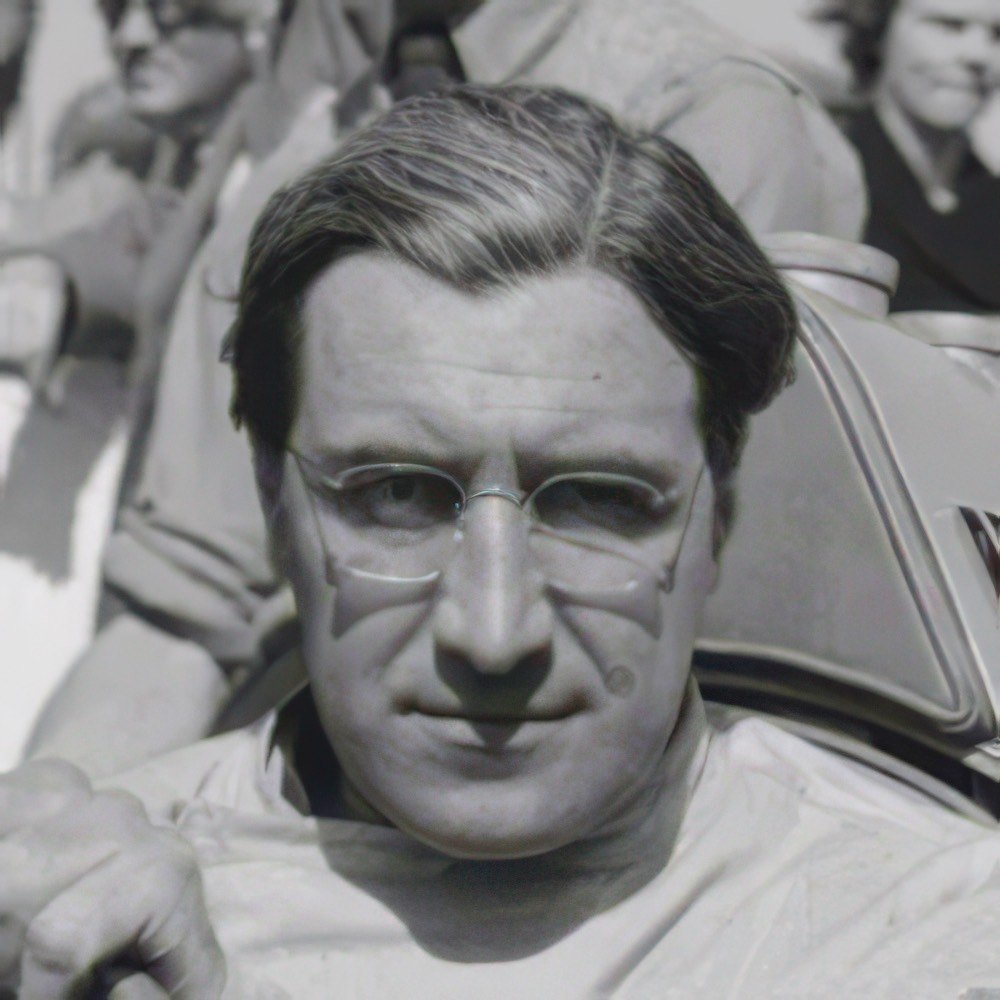
Alan Brown
Career Statistics
Biography
Alan Everest Brown (20 November 1919 - 20 January 2004) was a British racing driver who competed in nine Formula One World Championship Grands Prix from 1952 to 1954, scoring two championship points while also becoming an important figure in British motorsport as a team owner and entrant who ran drivers including Jim Clark, Jack Brabham, and Dan Gurney. Born in Malton, Yorkshire, on 20 November 1919, Brown's early adulthood was dominated by World War II. He joined the British Army and served throughout the war, reaching the rank of Major—a significant achievement reflecting his leadership abilities. After missing the Dunkirk evacuation in 1940, Brown was among the last British troops to leave France before its fall to Nazi Germany, experiencing the desperate final days of the French campaign.
Following the war, Brown worked as a truck salesman, a practical profession that kept him connected to the automotive world. His entry into motorsport came through Bob Hamblin, a dealer who bought Brown a racing car, providing the financial backing needed to begin competing. Brown's first competition car was a Formula 3 Cooper, and he made his competitive debut finishing second at the Great Auclum hillclimb and second at Luton Hoo, immediately showing promise despite his inexperience. Brown progressed quickly through British club racing, and by 1951 he had formed Ecurie Richmond racing team with Eric Brandon.
Racing Cooper-Nortons, Brown demonstrated impressive pace, winning the Luxembourg Grand Prix and finishing the season with nine wins, twelve second places, and two third-place finishes. This outstanding season earned him second place behind Stirling Moss for the prestigious BRDC Gold Star, establishing Brown as one of Britain's leading drivers outside Formula One. Brown made his Formula One World Championship debut on 18 May 1952, beginning a three-season Grand Prix career. He competed in nine World Championship races through 1954, achieving the distinction of becoming the first driver to score championship points for Cooper when he finished fourth at the 1952 British Grand Prix at Silverstone, earning two championship points.
This result represented both Brown's best Formula One finish and a historic moment for Cooper, marking the beginning of the marque's journey toward becoming World Champion constructors by decade's end. Beyond his championship point-scoring finish, Brown is also credited with giving the first Vanwall its race debut, piloting the car that would evolve into Britain's first championship-winning Formula One constructor later in the 1950s. After retiring from driving in the mid-1950s, Brown transitioned to team ownership and management, where he made his greatest impact on motorsport. From 1961-1962, Brown became a Formula One constructor with the Emeryson cars, designing and building his own Grand Prix machines.
While the Emerysons never achieved competitive success, the experience demonstrated Brown's technical knowledge and ambition. As a private entrant, Brown ran cars for some of Formula One's greatest drivers, providing equipment for Jim Clark, Dan Gurney, and Jack Brabham during their careers—a remarkable roster reflecting the respect Brown commanded in the paddock. His ability to attract such talented drivers to his privateer operation demonstrated both his technical competence and the trust drivers placed in his preparation. In 1963, supported by Esso petroleum company, Brown imported a Ford Galaxie to contest the British Saloon Car Championship, expanding his racing interests beyond single-seaters to touring cars.
Jim Clark, then establishing himself as one of Formula One's greatest drivers, scored his first British Saloon Car Championship victory at Brands Hatch driving Brown's Ford Galaxie. This victory marked the beginning of Clark's touring car success, and Brown's role in facilitating it demonstrated his influence across multiple racing categories. Throughout his team ownership career, Brown earned a reputation for meticulous preparation, fair dealing with drivers, and technical competence that made his cars reliable and competitive despite limited budgets compared to works teams. His Ecurie Richmond team became one of Britain's most respected privateer operations during the 1950s and early 1960s, regularly fielding competitive entries in various categories.
Alan Brown passed away in Guildford, Surrey, on 20 January 2004 at age 84, having lived through Formula One's entire history from its 1950 inception. While his driving career brought modest success—nine race starts and two championship points—Brown's greater legacy came through his roles as team owner, constructor, and entrant who provided opportunities for some of Britain's finest drivers. His Ecurie Richmond team, his Emeryson constructor project, and his touring car program all contributed to British motorsport's development during its formative decades. Today, Alan Brown is remembered by historians as one of the many important figures whose contributions to Formula One extended far beyond their own driving statistics, helping build the infrastructure and privateer teams that supported the championship's growth.