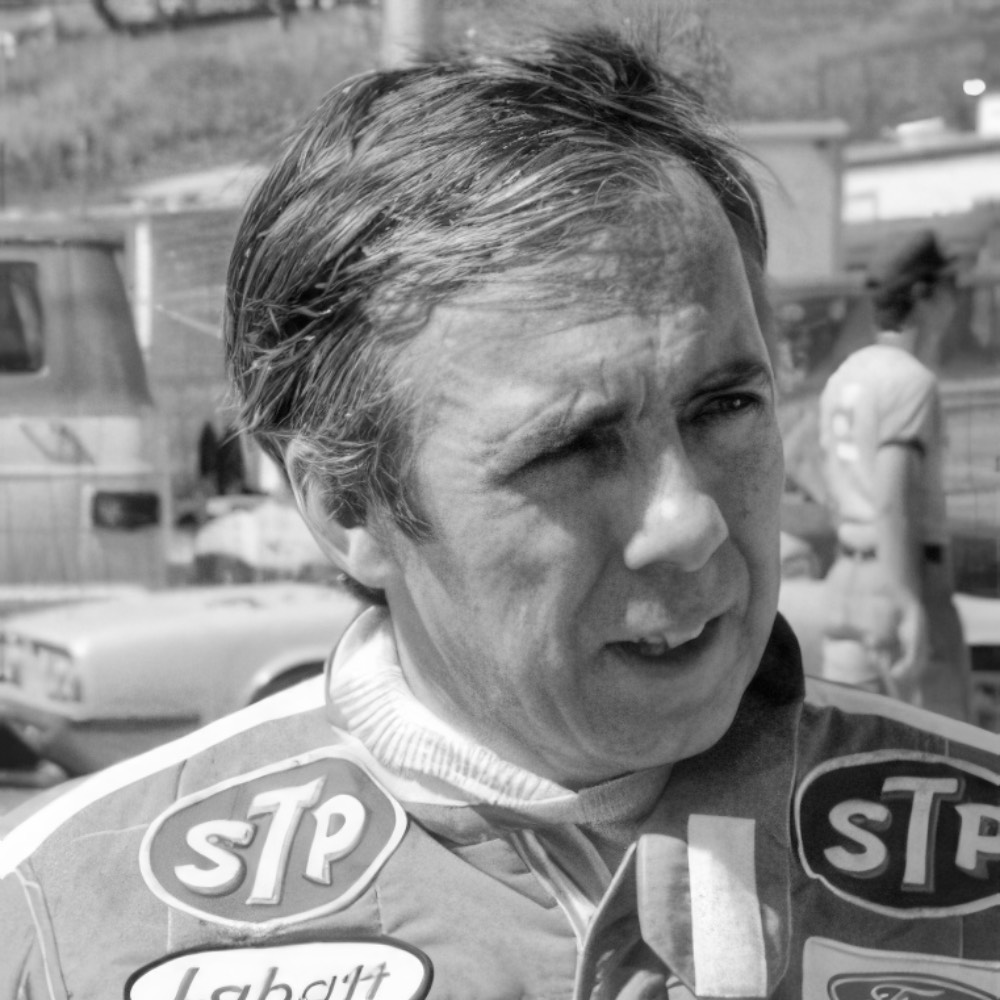
Bill Brack
Career Statistics
Biography
William 'Bill' Brack (born 26 December 1935) is a Canadian former racing driver who competed in three Formula One World Championship races between 1968 and 1972, all at his home Canadian Grand Prix, while achieving far greater success as a three-time Canadian national champion in Formula Atlantic racing during the 1970s. Born and raised in Toronto, Ontario, Canada, Brack's introduction to motorsport came relatively late through an unusual avenue. In the early 1960s, he became involved in ice racing—a uniquely Canadian form of motorsport where cars compete on frozen lakes—driving Minis that were company cars in Huntsville, Ontario. This ice racing experience developed exceptional car control skills, teaching Brack to manage vehicles at the limits of adhesion in treacherous conditions.
By 1967, Brack had transitioned to conventional circuit racing and won his first national saloon car championship, demonstrating that his ice racing prowess translated to tarmac competition. During the mid-1960s, recognizing the commercial opportunities in Canada's growing sports car market, Brack established his own dealership, Sports Cars Unlimited, becoming the Lotus distributor for Canada. This connection to Lotus proved crucial to his racing career, providing access to competitive machinery. In 1967 and 1968, Brack raced a Lotus 41 in Formula B competition, winning the Eastern Canadian championship in both years and establishing himself as one of Canada's most promising racing talents.
His success and Lotus connections led to his Formula One opportunity. Brack made his Formula One debut at the 1968 Canadian Grand Prix at Mont-Tremblant, driving the #27 Lotus 49B-Cosworth. Qualifying 20th on the grid, Brack's debut was short-lived when a broken halfshaft forced retirement after just 18 laps. While disappointing, merely qualifying a Formula One car at his home Grand Prix represented a significant achievement for a Canadian privateer driver.
After sitting out the 1970 Canadian Grand Prix, Brack returned to Formula One at the 1969 Canadian Grand Prix at Mosport, this time driving the #16 BRM P138. He completed 80 laps before retiring, though insufficient distance meant he wasn't officially classified in the final results. For his third and final Formula One appearance at the 1972 Canadian Grand Prix, again at Mosport, Brack drove the #17 Marlboro BRM P180, but his race ended after twenty laps when he spun off the circuit. Over three Formula One race entries spanning 1968 to 1972, Brack never finished a race or scored championship points, though his appearances represented pioneering efforts by a Canadian driver competing on home soil before Canada had developed a strong domestic single-seater racing infrastructure.
However, Brack's Formula One disappointments were eclipsed by his extraordinary success in Formula Atlantic racing, a category that flourished in North America during the 1970s. Formula Atlantic provided exciting, affordable single-seater racing with cars using production-based engines, attracting strong fields and enthusiastic crowds. In 1973, Brack spent his first full season in the Canadian Formula Atlantic Championship, driving a Lotus 59-Cosworth to the championship title—his first national championship since 1967. The following year, Brack successfully defended his title driving a Lotus 69, becoming the first two-time Canadian Formula Atlantic champion.
In 1975, having switched to a Chevron B29, Brack completed an unprecedented hat-trick of consecutive Canadian Formula Atlantic championships. His achievement of three consecutive national titles in 1973, 1974, and 1975 remains unique in Canadian motorsport history—Bill Brack is the only driver to win three Canadian national driving championships in consecutive years. This remarkable consistency demonstrated Brack's exceptional talent and established him as one of Canada's greatest racing drivers. The Formula Atlantic championships brought Brack far more recognition and success than his three unsuccessful Formula One attempts, proving that national-level success can be more rewarding than marginal participation in world championship competition.
After retiring from competitive driving, Brack remained deeply involved in Canadian motorsport. He opened the Brack Driving Concepts Academy at Shannonville Motorsport Park, east of Belleville, Ontario, where he trained generations of Canadian racing drivers, passing on his decades of experience and car control skills. The driving school became one of Canada's most respected driver training facilities, with Brack's ice racing background informing his teaching of vehicle dynamics and control techniques. Beyond driver training, Brack became instrumental in promoting historic racing in Canada, founding and promoting the Canadian Historic Formula Atlantic Association to preserve and celebrate the Formula Atlantic cars that had provided him with his greatest racing successes.
Through this organization, Brack ensured that Formula Atlantic's role in Canadian motorsport history was remembered and celebrated, organizing historic races and events featuring the classic single-seaters of the 1970s. Bill Brack was inducted into the Canadian Motorsport Hall of Fame in recognition of his three consecutive national championships and his contributions to developing Canadian motorsport through his driving school and historic racing promotion. Though his Formula One career consisted of just three unsuccessful race entries at the Canadian Grand Prix, Brack's legacy rests securely on his unprecedented three consecutive Canadian national championships and his five decades of contributing to Canadian motorsport as a driver, instructor, and promoter.
His story demonstrates that success in motorsport can be measured in many ways beyond Formula One participation, and that dedication to national-level competition and motorsport development can create a legacy as meaningful as international racing success.