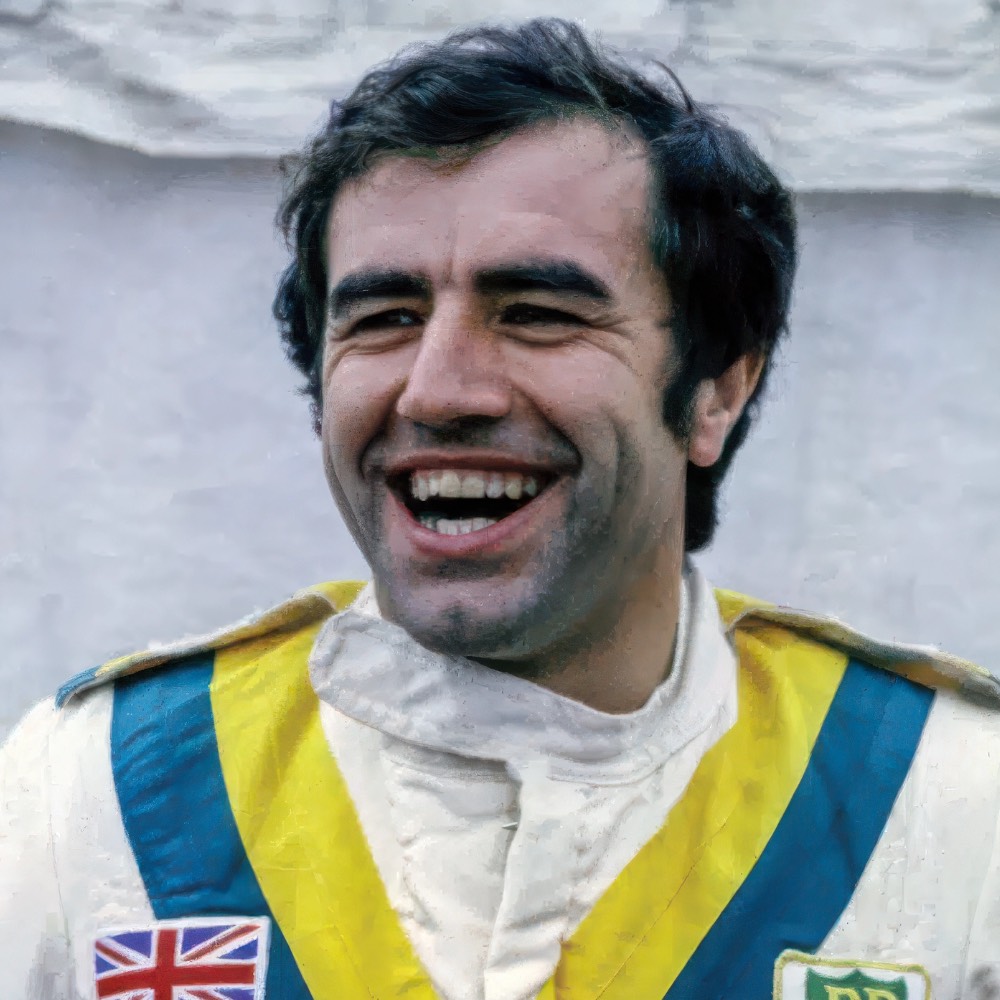
Brian Henton
Career Statistics
Biography
Brian Henton (born 19 September 1946) is a former British racing driver from Castle Donington, Leicestershire—born literally next to the Donington Park racing circuit that would later host Formula One—who achieved the unique distinction of being the only driver in Formula One history to set a fastest lap without ever scoring a championship point. This remarkable feat, accomplished at the 1982 British Grand Prix, encapsulates Henton's career: undeniably talented, occasionally brilliant, but ultimately defined by misfortune, poor timing, and lack of opportunity with competitive machinery.
Henton's background was working-class and entrepreneurial. He worked as a motorcycle dealer in his early years, providing him with both mechanical knowledge and the financial means to begin racing. He started his motorsport career in saloon car racing before moving into single-seaters. In 1970, he moved into Formula Vee racing an Austro chassis, demonstrating immediate promise. His breakthrough came in 1971 when he won 14 races and captured the British Formula Vee Championship, establishing himself as one of Britain's most promising young racing drivers.
Building on this success, Henton moved up to Super Vee for 1972, finishing second in the British series and confirming his talent in more powerful single-seaters. His dominant performance came in 1974 when he accepted an offer to drive in British Formula Three with March Engineering. Henton proceeded to demolish the competition, winning an extraordinary 17 races and both British Formula Three Championships (there were two parallel championships at the time). This dominant season marked him as a future Formula One prospect and one of Britain's brightest racing talents.
Despite his Formula Three success, Henton's path to Formula One was difficult and frustrating. His Formula One debut came on July 19, 1975, when Team Lotus called him up to replace Jacky Ickx, who had abruptly decided to leave the team. Unfortunately for Henton, the Lotus 72—once the dominant car of the early 1970s—was by 1975 outdated and uncompetitive. The opportunity that should have launched his career instead damaged his reputation, as he struggled with poor machinery and his Formula One prospects suffered accordingly.
After his disappointing Lotus stint, Henton spent several years trying to establish himself in Formula One while also competing in Formula Two, where he achieved greater success. He drove for seven different Formula One teams between 1975 and 1982: Lotus, March, Boro, Surtees, Toleman, Arrows, and Tyrrell, as well as his own team British F1 Racing. This constant team-hopping reflected the precarious nature of his Formula One career—he never secured a stable drive with competitive machinery that would allow him to demonstrate his true potential.
In 1977, Henton made an audacious attempt to establish his own Formula One team. Together with writer Don Shaw, he set up British Formula 1 Racing, buying a March 761 and entering both British national Formula One races and select World Championship events. Running your own team while also driving required enormous dedication, technical knowledge, and financial resources. While the venture demonstrated Henton's determination and entrepreneurial spirit, the lack of resources meant the team was never competitive, and it folded after one season.
Henton achieved his greatest racing success in Formula Two, the primary feeder series to Formula One. After finishing runner-up in 1979 driving a Ralt, he returned in 1980 and won the European Formula Two Championship driving a Toleman-Hart designed by the brilliant engineer Rory Byrne and running on Pirelli tires. The championship victory finally vindicated Henton's talent and earned him a full-time Formula One drive with Toleman for 1981, alongside Derek Warwick.
Unfortunately, Henton's timing proved disastrous once again. The Toleman TG181 for 1981 was, in Henton's own words, "something of a disaster"—overweight, underdeveloped, and hopelessly uncompetitive. Despite his recent Formula Two championship, Henton struggled to qualify the car, succeeding only once all season. His teammate Warwick fared little better, and both drivers endured a miserable season that bore no resemblance to their Formula Two success just months earlier.
Henton's Formula One career reached its bizarre climax at the 1982 British Grand Prix at Brands Hatch. Driving for Tyrrell as a substitute driver, Henton qualified and raced but finished outside the points. However, during the race he set the fastest lap—becoming the only driver in Formula One's 75-year history to record a fastest lap without ever scoring a championship point. This unique achievement perfectly encapsulates Henton's career: capable of genuine speed and brilliance, but never provided with consistent opportunities or competitive equipment to convert that speed into meaningful results.
His last Formula One outing came at the Race of Champions at Brands Hatch in April 1983, which also turned out to be the last non-championship Formula One race in the modern era. After 38 Grand Prix starts across eight seasons, Henton retired from Formula One with zero championship points—a statistic that dramatically understates his talent but accurately reflects the lack of opportunities he received. His career total of 38 starts placed him in Formula One, but his inability to ever drive consistently competitive machinery meant he could never demonstrate his true potential.
After retiring from Formula One, Henton transitioned successfully to business. He opened a car dealership, leveraging his motorsport reputation and business experience, and also got involved in property development. His entrepreneurial skills, first demonstrated when he ran his own Formula One team, served him well in civilian life, and he achieved financial success that had eluded him in racing.
Brian Henton's legacy is that of unfulfilled potential. His 1974 Formula Three dominance (17 wins) and 1980 Formula Two championship demonstrated genuine talent, but his Formula One career was characterized by poor timing, uncompetitive machinery, and lack of financial backing. The fact that he remains the only driver to set a fastest lap without scoring a point is a statistical curiosity that highlights both his speed and his misfortune. Henton represents a type of driver common in Formula One history: talented enough to reach the pinnacle of motorsport, but never provided with the tools, timing, or luck necessary to demonstrate their true abilities at that level.