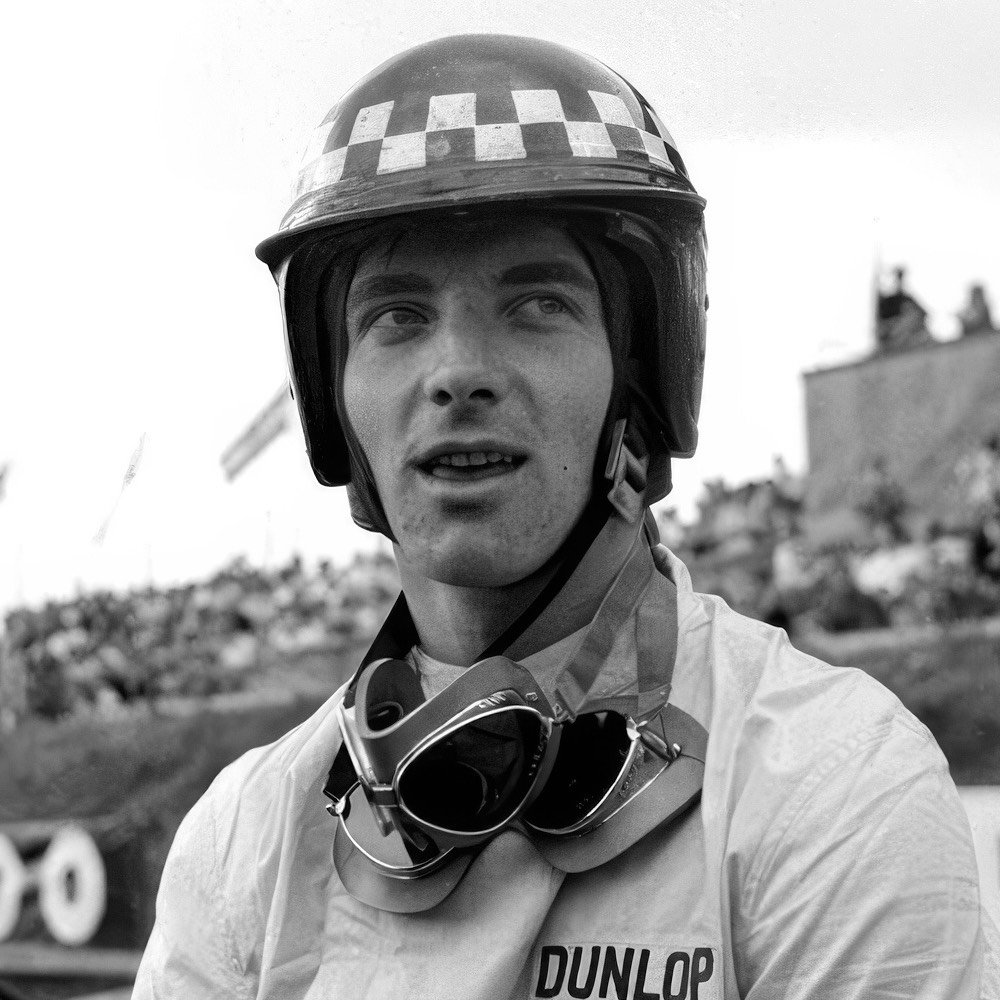
Chris Bristow
Career Statistics
Biography
Christopher William 'Chris' Bristow (2 December 1937 - 19 June 1960) was a British racing driver who competed in Formula One during 1960, demonstrating exceptional raw speed before becoming the youngest driver to die in a Formula One World Championship event when he crashed fatally at the Belgian Grand Prix at age 22. Born in Lambeth, London, on 2 December 1937, Bristow earned the nickname 'the wild man of British club racing' during his formative years, as his aggressive, spectacular driving style frequently resulted in spins and collisions on virtually every racetrack he competed on. This wild, fearless approach demonstrated tremendous commitment and bravery, though critics questioned whether Bristow possessed the discipline and smoothness required for Formula One success.
Bristow started his racing career in the mid-1950s in sports car racing, driving an MG Special in national events and scoring wins in 1956. His talent, despite the frequent accidents, attracted attention from the British Racing Partnership, who invited him to compete at the 1959 British Grand Prix at Aintree as a third driver. Driving a Cooper Formula 2 car—less powerful than the Formula One machinery—Bristow managed to finish 10th, demonstrating enough potential to earn a full Formula One opportunity for 1960. For the 1960 season, British Racing Partnership signed Bristow to drive their Cooper-Climax in Formula One World Championship races.
His debut in a full Formula One car came at the Monaco Grand Prix, Formula One's most prestigious and demanding street circuit. Remarkably, Bristow recorded a joint-third fastest qualifying time, though grid position rules gave him fourth on the starting grid. This sensational qualifying performance suggested that Bristow's raw speed could translate to Formula One success. However, his race ended on lap 17 when gearbox failure forced his retirement, preventing him from capitalizing on his brilliant grid position.
At the following Dutch Grand Prix at Zandvoort, Bristow again demonstrated his qualifying pace by out-qualifying both his British Racing Partnership teammates, starting seventh on the grid. Once more, however, his race ended prematurely when engine failure struck in the opening laps, leaving Bristow with two impressive qualifying performances but two retirements. These results captured Bristow's career paradox—exceptional one-lap speed combined with an inability to finish races, whether due to mechanical failures or his own aggressive driving style. The 1960 Belgian Grand Prix at Spa-Francorchamps was held on 19 June in warm, dry, sunny conditions—ideal weather for racing around one of motorsport's fastest and most dangerous circuits.
The old Spa circuit featured long straights reaching tremendous speeds connected by fast, sweeping corners through the Belgian countryside, with minimal safety barriers and trees lining much of the track. During lap 20, while racing for sixth position, Bristow attempted to pass Willy Mairesse's Ferrari at Burnenville corner, one of Spa's fast sections. Something went wrong—whether Bristow misjudged the pass, lost control, or suffered mechanical failure remains unclear—and his #36 Cooper left the track at high speed. The car struck barriers and trees, and Bristow sustained massive injuries that killed him instantly.
He was 22 years old, becoming the youngest driver to die in a Formula One World Championship event at that time. Tragically, Bristow's death was not the only fatality that day at Spa. Later in the same race, British driver Alan Stacey was also killed when his Lotus struck a bird, causing him to crash fatally. The same day, American driver Jimmy Bryan died in a Championship Car race at Langhorne Speedway in Pennsylvania, making 19 June 1960 one of motorsport's darkest days, with three drivers killed in two races on opposite sides of the Atlantic.
Over his brief Formula One career, Bristow started four World Championship races, never finishing a race or scoring championship points. His statistics reflect a career barely begun, cut short before his talent could develop and mature. However, those who raced against Bristow and observed his qualifying performances believed he possessed exceptional natural speed that might have led to great success had he lived and learned to channel his wild aggression into controlled pace. Decades after his death, British Racing Partnership team owner Ken Gregory called Bristow 'the early Schumacher of his day,' stating that 'he [almost certainly] would have been a potential world champion' if he had learned discipline and smoothness to complement his raw speed.
Fellow drivers acknowledged Bristow's bravery and commitment, though some questioned whether his aggressive style would ever have been sustainable in Formula One's unforgiving environment. To honor Bristow's memory and recognize his potential, the annual Autosport BRDC Young Driver of the Year Award winner is presented with the Chris Bristow Trophy, ensuring his name remains connected to Britain's emerging racing talents. Chris Bristow represents both the promise and peril of 1960s Formula One—a young driver with exceptional speed competing in an era when circuits had minimal safety features and accidents regularly proved fatal. His death at 22, after just four races, denied motorsport the opportunity to see whether the 'wild man of British club racing' would have matured into a World Champion or whether his aggressive style would have led to further accidents.
Today, Bristow is remembered as one of Formula One's great 'what ifs' and as a sobering reminder of the sport's deadly history.