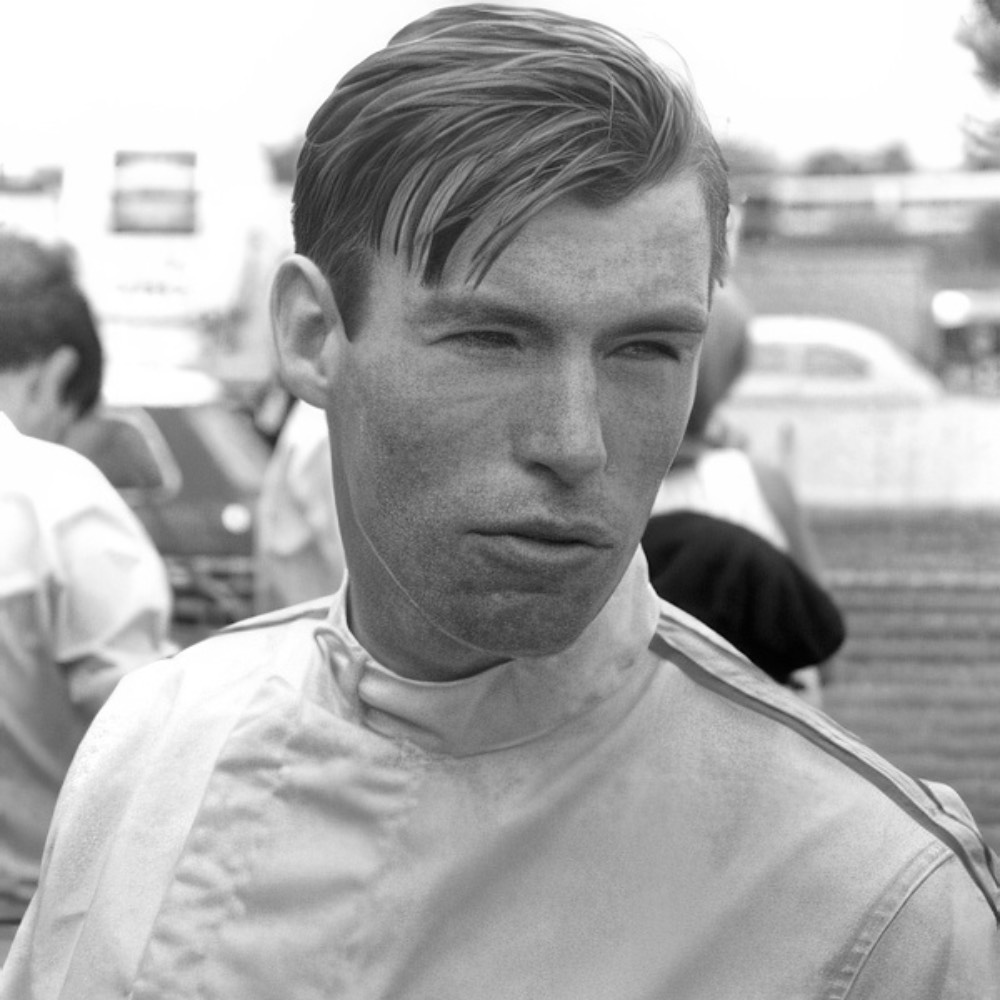
Chris Irwin
Career Statistics
Biography
Christopher Frank Stuart Irwin (born 27 June 1942) is a former British racing driver from Wandsworth, London, whose promising Formula One career was tragically ended by a horrific accident at the 1968 1000km Nürburgring endurance race that left him with severe head injuries and prevented him from ever racing again—a career cut short just as he was establishing himself as one of Britain's most talented young drivers. Irwin's story is one of Formula One's great "what might have been" narratives, as his speed, particularly in wet conditions, had marked him as a future Grand Prix winner before fate intervened catastrophically.
Irwin began racing in the early 1960s, progressing through the junior categories with impressive results. His breakthrough came in 1964 during his first full Formula Three season when he finished third in the Grovewood Awards, a prestigious recognition of young British talent that identified future Formula One stars. This result marked Irwin as a driver to watch, leading to increased opportunities with competitive teams and equipment in Britain's fiercely contested Formula Three championship.
In 1966, Irwin achieved his greatest junior success by winning the British Formula Three Championship with a remarkable 17 victories—a dominant performance that left no doubt about his talent and readiness for promotion to higher categories. Such dominance in Formula Three, widely regarded as the most competitive proving ground for young drivers, virtually guaranteed Formula One opportunities, and Irwin graduated directly to Formula One that same year, picked up by Brabham—one of the sport's leading teams.
Irwin made his Formula One debut on 16 July 1966 while concentrating primarily on Formula Three but occasionally racing in Formula Two as well—a common pattern for young drivers building experience across multiple categories. His 1966 and early 1967 Formula One appearances were sporadic as he balanced commitments across different series, but his speed was evident whenever he competed at the highest level, suggesting he would become a regular race winner once provided with sustained opportunities and competitive machinery.
During the 1967 French Grand Prix at Le Mans—one of Formula One's most demanding circuits, featuring the famous Mulsanne Straight and high-speed corners requiring enormous bravery—Irwin demonstrated extraordinary pace that shocked even his experienced teammates. On the first day of practice, driving Brabham's V8-powered car, Irwin lapped faster than team leader Jackie Stewart, already established as one of Formula One's best drivers. Switching to the more powerful H16-engined car the following day, Irwin again went quicker than Stewart had managed in the same machine, proving his speed was no fluke and announcing himself as a genuine talent capable of challenging the sport's established stars.
Irwin participated in 10 Formula One World Championship Grands Prix between 1966 and 1968, scoring two championship points. His points finish came with fifth place at the 1967 French Grand Prix at Le Mans—the same race where he had impressed during practice. While his World Championship statistics were modest, they reflected limited opportunities rather than limited talent. In an era when testing was restricted and seat time precious, Irwin's occasional Formula One appearances prevented him from demonstrating his full potential, though those who worked with him recognized his ability.
Beyond Formula One, Irwin also competed successfully in Formula Two—the secondary single-seater championship featuring cars less powerful than Formula One but attracting many of the same drivers. In 1968, he won the Eifelrennen race at the Nürburgring, one of Formula Two's most prestigious events. This victory demonstrated his versatility and, particularly, his mastery of the Nürburgring—arguably the world's most demanding and dangerous circuit, requiring courage, precision, and total commitment across its 14-mile Nordschleife layout featuring over 170 corners.
Tragically, that same circuit would end Irwin's career. On 19 May 1968, during practice for the 1000km Nürburgring endurance race, Irwin was driving a Ford P68 sports prototype—part of Ford's ambitious sports car racing program competing against Porsche and Ferrari. The Ford P68 was notoriously difficult to drive, described by numerous drivers as "twitchy" and unstable, particularly through the Nürburgring's high-speed sections where aerodynamic balance was critical.
At the Flugplatz section—a high-speed compression where cars became briefly airborne after cresting a rise—Irwin lost control of the P68. The car landed awkwardly on its tail, destabilizing it completely, and began flipping end over end in a series of violent rolls. The accident was catastrophic, with the P68's inadequate safety structure providing minimal protection. Irwin suffered severe head injuries in the crash and was rushed to hospital in critical condition. While he eventually recovered consciousness, the injuries were so severe that racing again was impossible.
The accident ended Irwin's career at age 25, just as he was transitioning from promising young driver to established Formula One regular. Had the crash not occurred, Irwin's trajectory suggested a successful Formula One career featuring race victories and possibly championship contention. His speed in wet weather, demonstrated skill at the Nürburgring, and ability to match established stars like Jackie Stewart marked him as exceptional talent denied the opportunity to fulfill his potential.
After the accident, Irwin faced a long rehabilitation process, learning to cope with the lasting effects of his head injuries. The medical treatment available in 1968 was primitive compared to modern standards, and drivers who survived serious head trauma often faced permanent cognitive or physical impairments. That Irwin survived at all was fortunate; the Nürburgring claimed numerous lives during its history, and many drivers who crashed as violently as Irwin did not survive.
In the decades following his accident, Irwin largely withdrew from public life, living quietly in rural Rutland in the UK. Unlike some former drivers who remained involved in motorsport through commentary, team management, or historic racing, Irwin chose privacy over continued involvement in the sport that had nearly killed him. In a rare appearance at a race meeting, Irwin attended Thruxton Circuit's 40th anniversary celebrations in April 2008, marking one of his few public appearances in the four decades since his career-ending crash.
Chris Irwin's legacy is one of unfulfilled promise—a genuinely talented driver whose career was cut tragically short before he could demonstrate his full potential. His 1966 Formula Three championship with 17 wins, his impressive pace against Jackie Stewart at the 1967 French Grand Prix, and his victory at the challenging Eifelrennen all suggested a driver capable of Formula One success. That a career-ending accident prevented him from achieving this success makes his story one of motorsport's saddest "what if" narratives.
Irwin's experience also highlighted the horrific dangers of 1960s motorsport, when inadequate safety standards, primitive medical care, and dangerous circuits like the old Nürburgring created an environment where talented young drivers' careers—and lives—could be ended in an instant. The Ford P68 that crashed with Irwin was later banned from racing due to safety concerns, vindication that came too late for the driver whose career it had destroyed. Chris Irwin's story serves as a sobering reminder of the price many drivers paid during motorsport's most dangerous era, when reaching Formula One required not only talent and determination but also survival.