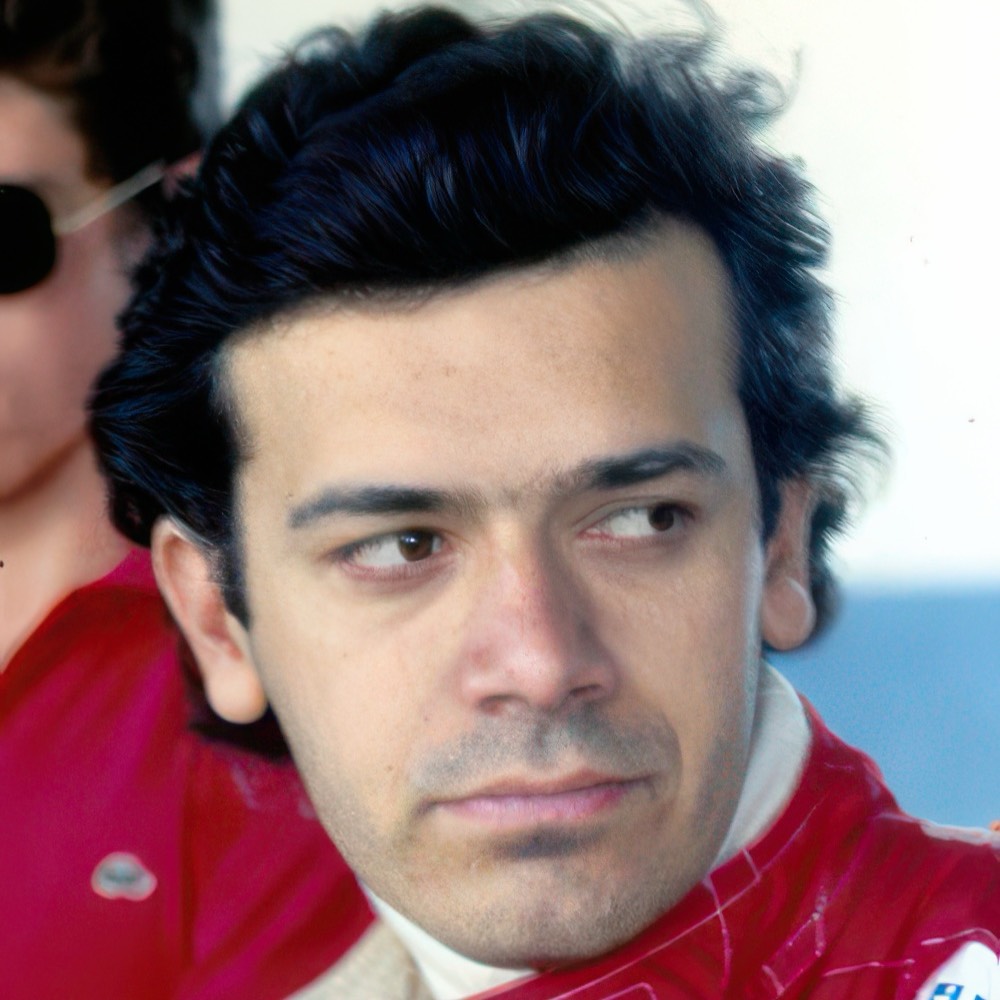
Lamberto Leoni
Career Statistics
Biography
Lamberto Leoni (24 May 1953 - Present): Italian racing driver from Bagnacavallo who participated in five Formula One World Championship Grands Prix from 1977 to 1978, qualifying only once and starting one race, the 1978 Argentine Grand Prix, where he finished 11th and scored no championship points. Leoni's Formula One career represents one of the sport's countless drivers who reached the pinnacle only to find the equipment and opportunities insufficient to demonstrate their abilities. After racing in Italian Formula Three, Leoni graduated to European Formula Two in 1976, showing promising pace that earned him opportunities with competitive teams. In 1977, driving a Ferrari V6-engined Chevron B40 for Scuderia Everest, Leoni won the Adriatic Grand Prix at Misano on aggregate, marking the high point of his junior formula career.
This victory caught the attention of Formula One teams looking for drivers who could bring sponsorship and showed adequate pace. Leoni made his Formula One debut at the 1977 Italian Grand Prix at Monza, driving for Surtees, the team founded by former World Champion John Surtees. However, the Surtees TS19 was one of the least competitive cars on the grid, and Leoni failed to qualify. He attempted two more races with Surtees without success.
For 1978, Leoni switched to Team Ensign, another small British constructor struggling with uncompetitive equipment. At the season-opening Argentine Grand Prix in Buenos Aires, Leoni finally qualified, starting 22nd of 24 cars on the grid. Racing in sweltering heat at the Autódromo Oscar Alfredo Gálvez, Leoni completed the full race distance, finishing 11th, five laps behind race winner Mario Andretti. While outside the points, finishing a race represented an achievement given the poor equipment and his limited experience.
Leoni attempted two more Grands Prix with Ensign—Long Beach and Monaco—but failed to qualify for either. After the Monaco failure, his Formula One career was over. Five race entries, one start, one finish, zero points, zero fastest laps—statistics that tell a story of unfulfilled potential and inadequate machinery. Following his Formula One disappointment, Leoni returned to Formula Two and later competed in the new Formula 3000 series that replaced F2 in 1985.
He achieved moderate success in these categories without ever dominating. His best period came in the late 1980s when he raced for various teams in F3000, occasionally challenging for points finishes. In 1987, Leoni established his own racing team, First Racing, which competed in Formula 3000. The team showed promise, and Leoni successfully transitioned from driver to team owner and manager. First Racing scored several victories with drivers including Marco Apicella (who would later have his own one-race Formula One career) and Pierluigi Martini (who went on to a lengthy F1 career with Minardi).
Leoni demonstrated better acumen as a team owner than he had opportunity to show as a driver. In 1989, Leoni made an ambitious but ultimately unsuccessful attempt to return to Formula One, this time as a team owner. First Racing announced plans to enter Formula One with a car designed by Brazilian engineer Richard Divila and Italian driver Gabriele Tarquini at the wheel. However, the team struggled to secure adequate funding and technical resources.
The car never materialized beyond initial design work, and the project collapsed before reaching the grid. The failed F1 venture cost Leoni financially, and First Racing's Formula 3000 program suffered as resources were diverted to the doomed F1 project. Following the Formula One disappointment, Leoni sold First Racing and dramatically changed direction. He moved into powerboat racing, where he found unexpected success and enjoyment.
Competing in offshore powerboat racing championships through the 1990s and early 2000s, Leoni proved that his competitive drive remained strong even if his motorsport career had not achieved the heights he once hoped. Leoni's powerboat racing career proved more successful than his four-wheeled efforts, with multiple race victories and championship challenges. The sport's smaller fields and different competitive dynamics suited him better than the intensely competitive world of single-seater racing. Known for his determination, willingness to take risks (both in racing and business), and resilience in the face of disappointment, Lamberto Leoni's career exemplifies the experiences of countless racing drivers who reached Formula One only to find that talent alone was insufficient without competitive machinery and financial backing.
His transition to team ownership and later success in powerboat racing demonstrate adaptability and refusal to let early setbacks define his life.