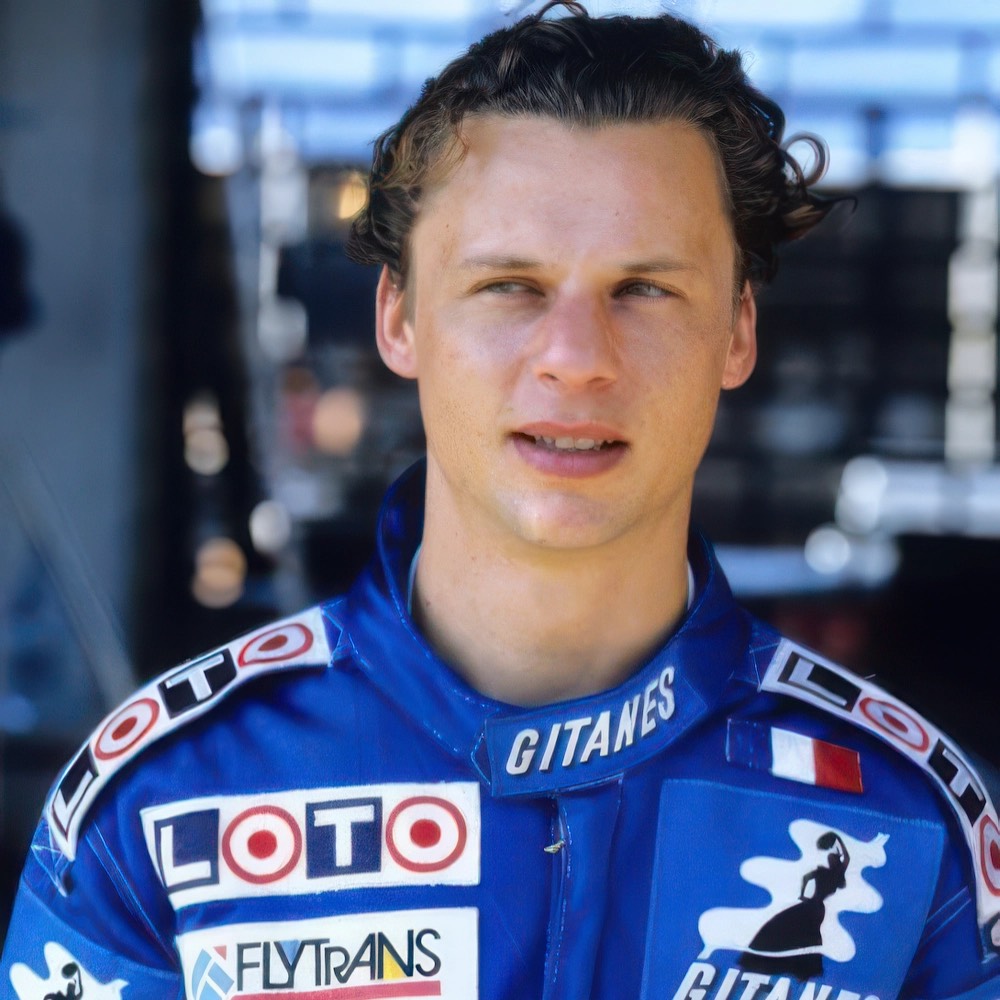
Olivier Grouillard
Career Statistics
Biography
Olivier Grouillard (born 2 September 1958) is a French racing driver who competed in Formula One from 1989 to 1992, remembered less for his modest achievements and more for developing an unfortunate reputation as a "blocker" whose defensive tactics angered faster competitors and ultimately contributed to his departure from the sport. Born in France, Grouillard showed promise in junior formulae, winning the 1984 French Formula 3 Championship before progressing to Formula 3000, where he finished runner-up in the 1988 season, earning him a promotion to Formula One with Ligier for 1989. His debut season with Ligier saw Grouillard partner veteran René Arnoux, filling the seat vacated by Stefan Johansson.
He made his Formula One debut at the 1989 Brazilian Grand Prix, qualifying 22nd and finishing 9th, a respectable if unspectacular start. At Imola, he overcame spinning his car during practice to start 10th, but was controversially disqualified when mechanics worked on his car during a red flag period—a technical infringement that denied him a potential points finish. His season's highlight came at his home race, the French Grand Prix at Circuit Paul Ricard, where he started 17th but drove an impressive race to finish 6th, scoring his only World Championship point of 1989 and delighting the partisan French crowd. However, this solitary point represented the high-water mark of Grouillard's Formula One career.
For 1990, Grouillard and Nicola Larini swapped seats, with Grouillard moving to the struggling Osella Squadra Corse team while Larini took his place at Ligier. The move proved disastrous—Osella was one of Formula One's weakest teams, operating on a shoestring budget with outdated equipment. Grouillard became the team's sole driver and faced the indignity of pre-qualifying, a system where the slowest teams had to beat each other just to reach the main qualifying session. He failed to pre-qualify for seven races and participated in only nine events throughout the season, frequently being eliminated before even reaching proper qualifying.
The frustration of driving hopelessly uncompetitive machinery clearly affected Grouillard's on-track behavior. During this difficult period, he began earning a controversial reputation among fellow drivers for blocking faster cars during qualifying and races, refusing to yield position despite being significantly slower. While defensive driving is legitimate racecraft, Grouillard's tactics crossed the line into obstruction in the eyes of many competitors, who viewed him as dangerously unpredictable and unwilling to show proper awareness of faster traffic. For 1991, Osella rebranded as Fondmetal under new sponsorship, but Grouillard's fortunes didn't improve significantly.
He completed only four Grands Prix during the season, continuing to struggle with uncompetitive machinery and further cementing his reputation as a difficult driver to overtake, even when being lapped. His blocking tactics led to several incidents and complaints from front-running drivers, eroding his credibility within the paddock. Grouillard's final Formula One season came in 1992 when Ken Tyrrell offered him a lifeline, inviting him to drive the Tyrrell 020B-Ilmor in the #3 car alongside Andrea de Cesaris. This represented a significant step up in machinery compared to Osella/Fondmetal, and Grouillard started 16 races—the most of any season in his F1 career.
However, he managed to finish only four races due to frequent mechanical failures and several accidents, with his best result being 8th place at the San Marino Grand Prix at Imola. Despite driving for a more established team, Grouillard's reputation continued to precede him, and his blocking tendencies remained a source of frustration for other drivers. By season's end, Tyrrell decided not to retain him, and with his reputation as a "blocker" now well-established throughout the paddock, no other team was willing to offer him a seat for 1993. At age 34, Grouillard's Formula One career ended not with a dramatic accident or controversy, but simply because no team wanted him—a sad conclusion for a driver who had once been French F3 Champion and F3000 runner-up.
Over the course of his four-season Formula One career, Grouillard participated in 62 Grands Prix but recorded only 41 actual race starts due to failures to pre-qualify or qualify. He scored just one championship point—that 6th place at the 1989 French Grand Prix—representing one of the lowest points-per-start ratios of any driver with 40+ starts in Formula One history. After leaving Formula One, Grouillard faded from international motorsport prominence, competing in various lower-level series and eventually retiring from professional racing. Olivier Grouillard's Formula One career serves as a cautionary tale about reputation in motorsport—a driver whose limited talent and controversial on-track behavior combined to create a paddock reputation that ultimately proved insurmountable, ending his F1 career despite driving for established teams and having opportunities that many drivers never receive.