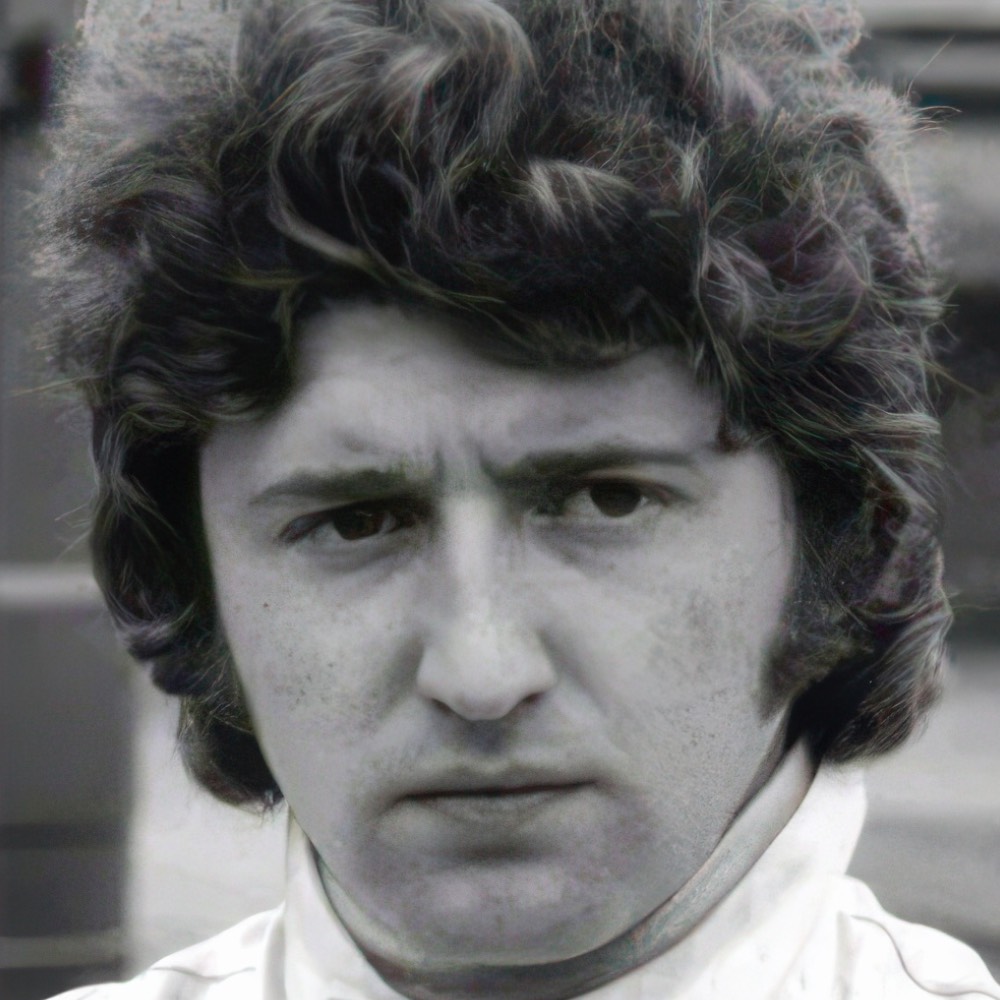
Otto Stuppacher
Career Statistics
Biography
Otto Leopold Stuppacher (3 March 1947 - 2001): Austrian racing driver from Vienna who attempted to enter Formula One in 1976 with the ÖASC Racing Team driving a Tyrrell 007, but failed to qualify at all three races he entered and is widely regarded as one of the most unsuccessful Formula One drivers in history, with his attempts characterized by extraordinarily slow lap times and organizational chaos. Born into extraordinary wealth in Vienna on 3 March 1947, Stuppacher was the son of an incredibly wealthy woman who had inherited one of the largest real estate management companies in Austria, providing Otto with unlimited financial resources to pursue motorsport despite limited natural talent.
He competed in hillclimbs and sports car racing in Austria during the early 1970s, achieving modest results in national-level competition before harboring ambitions to race in Formula One. For 1976, Stuppacher purchased a customer Tyrrell 007-Ford Cosworth, a competitive car from 1974 that had been successfully raced by Jody Scheckter, and entered the car under the ÖASC Racing Team banner alongside teammate Karl Oppitzhauser, who was similarly attempting to buy his way into Formula One. Their first attempt came at the 1976 Austrian Grand Prix at the Österreichring on 15 August 1976, Austria's home race where one might expect local drivers to receive preferential treatment. However, Stuppacher and Oppitzhauser were refused entry entirely by the race organizers, not even being permitted to attempt qualifying.
The duo had attempted to raise a petition from the other teams to allow them to participate, but the petition was rejected, and neither driver was allowed to take part. The circumstances of this refusal remain unclear, but likely involved concerns about the drivers' competence and the team's organization. Stuppacher's next attempt came at the 1976 Italian Grand Prix at Monza on 12 September 1976. This time he was permitted to attempt qualifying, but the result was disastrous.
Stuppacher qualified in 26th and last position, over 13 seconds slower than pole-sitter Jacques Laffite in the Ligier, an enormous gap even by the standards of backmarker teams. This performance would have resulted in Stuppacher failing to qualify for the 24-car grid. However, in a bizarre twist, Stuppacher had already left the circuit and returned home to Austria before learning that several faster drivers had been excluded from the race due to various technical irregularities, which promoted Stuppacher onto the grid. By the time he learned of his unexpected promotion to the starting grid, it was too late for him to return to Monza, and he was unable to take the start.
This farcical situation—being too slow to qualify, leaving in disappointment, then learning he had actually qualified but being unable to get back in time—perfectly encapsulated Stuppacher's Formula One misadventure. Stuppacher made his third and final qualifying attempt at the 1976 United States Grand Prix East at Watkins Glen on 10 October 1976, but again was hopelessly off the pace, failing to qualify by a considerable margin. His final Formula One attempt came at the 1976 United States Grand Prix at Long Beach (sometimes called USA West) on 28 March 1976, where he was over 27 seconds slower than the pole-sitter, failing to qualify by an absolutely massive margin that suggested either serious mechanical problems or simply complete lack of pace.
After this fourth failed attempt, Stuppacher's Formula One ambitions ended. Across his four attempts to qualify for Formula One races in 1976, Stuppacher was refused entry once, failed to qualify three times (with gaps of 13+ and 27+ seconds to pole), and managed to technically 'qualify' once but couldn't actually start because he had already left. This record of comprehensive failure established Stuppacher as one of Formula One's least successful drivers, and his name became synonymous with wealthy but untalented pay drivers who bought outdated equipment and embarrassed themselves. The gaps he demonstrated to competitive cars suggested either catastrophic mechanical problems throughout all his attempts (unlikely) or simply that he lacked the basic skill level required to drive a Formula One car competitively.
Following his Formula One debacle, Stuppacher returned to Austrian national motorsport but largely disappeared from international racing. Interestingly, Stuppacher had a sister, Elisabeth Stuppacher, who competed successfully in harness racing (horse racing) and became Austrian harness racing champion from 1993 to 2000, suggesting the family had more talent with horses than racing cars. Otto Stuppacher was found dead in his Vienna apartment in 2001, reportedly having died sometime earlier but not discovered immediately. He was 54 years old.
The circumstances surrounding his death remained largely private, and he passed away largely forgotten by the motorsport world except as a cautionary tale about money not equaling talent. Known for being regarded as one of Formula One's most unsuccessful drivers, for his extraordinarily slow lap times (27+ seconds off pole), for the farcical Monza incident where he left before learning he had qualified, and for representing the extreme end of 1970s pay-driver culture when wealth could buy Formula One entries but not competence, Stuppacher's Formula One story remains a bizarre footnote in the sport's history—a reminder that even in Formula One's relatively informal era, some drivers were simply too slow to be allowed to compete.