Pedro Diniz
Career Statistics
Biography
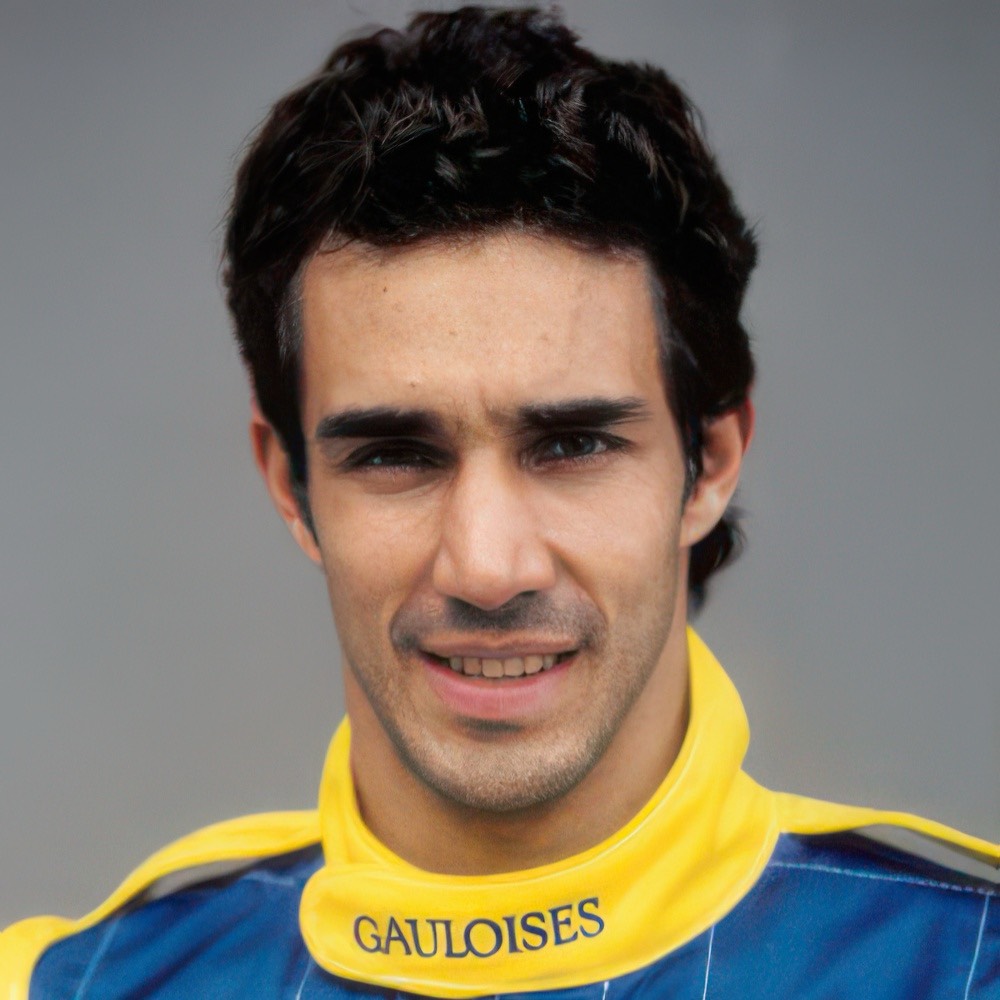
Pedro Paulo Falleiros dos Santos Diniz (born 22 May 1970) is a Brazilian former racing driver and businessman who competed in 98 Formula One World Championship Grands Prix between 1995 and 2000, scoring 10 championship points while driving for Forti, Ligier, Arrows, and Sauber, and while he was often dismissed as a pay driver due to his substantial family backing from his father's Pão de Açúcar supermarket empire, he gradually earned respect through consistent performances and several strong point-scoring finishes, before transitioning to motorsport administration and founding the Formula Renault 2.0 Brazil Championship that helped develop the next generation of Brazilian racing drivers. Born and raised in São Paulo, Brazil, into one of the country's wealthiest families—his father Abilio Diniz owned the Pão de Açúcar supermarket chain and the Companhia Brasileira de Distribuição (CBD), making the family one of Brazil's most prominent business dynasties—Pedro grew up with resources that most aspiring racing drivers could only dream of, though he would spend his entire Formula One career trying to prove that his achievements were based on talent rather than merely his family's financial support.
Diniz began karting relatively late at age 18, later than most professional racing drivers who typically start in their early teens, and while he achieved minor success in karting, he progressed to car racing by competing in the Brazilian Formula Ford Championship before moving to Europe to compete in the highly competitive British Formula 3 Championship, where he gained experience against many future Formula One drivers. His progression to Formula One came in 1995 when he joined the struggling Forti team, one of Formula One's smallest and least competitive operations, and his maiden season was characterized by mechanical failures and back-of-the-grid struggles, though he gained valuable experience and demonstrated reasonable speed relative to his machinery's limitations.
For 1996, Diniz secured a significant upgrade by joining Ligier, a more established French team, and he had a memorable incident at the Argentine Grand Prix when his car burst into flames after a pit stop due to a stuck-open fuel valve, an incident that could have been fatal but which Diniz escaped without serious injury, demonstrating the courage required of Formula One drivers even during routine pit stops. In 1997, Diniz moved to Arrows alongside Finnish driver Mika Salo, and this season proved to be his breakthrough year in Formula One, as he scored a solid fifth place at the Belgian Grand Prix at Spa-Francorchamps and sixth at the Monaco Grand Prix, ending the year tied on points with Salo and demonstrating that he could match a highly-rated teammate when both had equal equipment.
The 1998 season with Arrows saw Diniz continue his development, and he finished 14th in the Drivers' Championship, a respectable result for a driver in a midfield car, and his consistent performances convinced Sauber to sign him for 1999, giving him a drive with one of Formula One's most respected independent teams. The 1999 season with Sauber was frustrating due to chronic reliability problems, as Diniz retired from 12 of 16 races, but significantly, he scored points in three of the four races he actually finished—including back-to-back sixth places at the Austrian and German Grands Prix—demonstrating that when the car held together, he possessed genuine speed and racecraft. Diniz remained with Sauber for 2000, his final Formula One season, and while he failed to score points, he drove competently and maintained his professional reputation, though at age 30 he recognized that his Formula One career had reached its natural conclusion without having secured a drive with a top team that might have allowed him to demonstrate the full extent of his abilities.
After leaving Sauber at the end of 2000, Diniz purchased a share in the Prost Grand Prix team, hoping to remain involved in Formula One as a team owner, but the team folded after just one more season in 2001, bringing an end to his direct involvement with Grand Prix racing. Following his Formula One career, Diniz founded the Formula Renault 2.0 Brazil Championship in 2002, which operated until 2006 and provided a crucial training ground for young Brazilian drivers aspiring to international careers, helping to maintain Brazil's proud motorsport tradition by creating opportunities for the next generation of racers. Beyond motorsport, Diniz remained involved in his family's business empire and various entrepreneurial ventures, applying the same determination and professionalism that had characterized his racing career to his business activities, and he has maintained connections with Brazilian motorsport as an elder statesman of the sport in his country.
Throughout his Formula One career, Diniz was labeled a pay driver—a dismissive term for drivers whose seats are secured primarily through sponsorship rather than pure talent—and while it is undeniable that his family's wealth provided opportunities that less affluent drivers never received, his performances, particularly from 1997 onwards, demonstrated that he possessed legitimate Formula One ability and that his reputation as merely a wealthy amateur was unfair and inaccurate. Pedro Diniz's legacy in Formula One is complex: his statistics—98 starts, 10 points, no podiums—suggest a mediocre career, and his status as a pay driver meant he was never fully respected by some observers, but those who worked with him and competed against him recognized that he developed into a competent, professional driver who extracted maximum performance from midfield equipment and who conducted himself with dignity throughout a six-season career that proved longer and more successful than many more highly-rated drivers achieved, while his post-Formula One work founding the Formula Renault Brazil series demonstrated genuine commitment to developing Brazilian motorsport beyond his own personal ambitions.