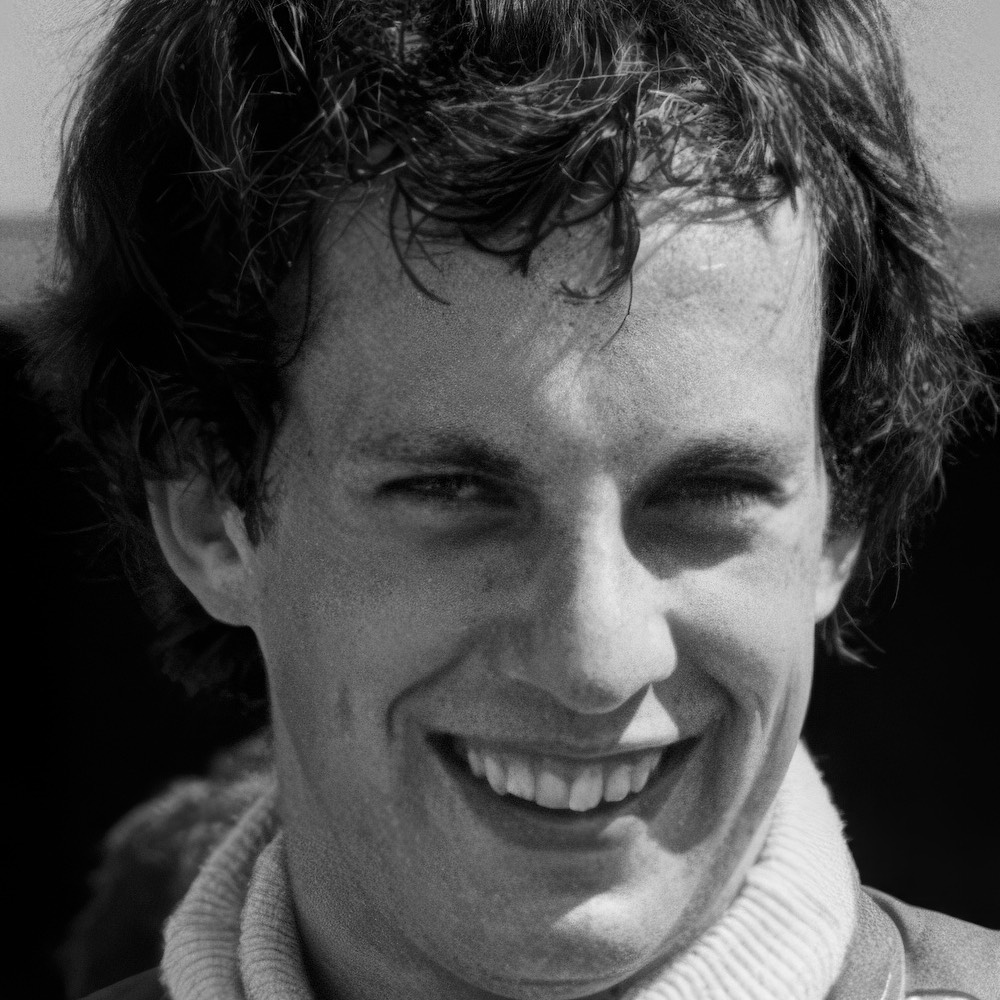
Tony Brise
Career Statistics
Biography
Anthony William 'Tony' Brise (28 March 1952 - 29 November 1975) was a British racing driver who competed in ten Formula One Grands Prix during 1975, scoring one championship point while demonstrating exceptional talent that led many to predict a brilliant future, before his tragic death at age 23 in a plane crash that also claimed team owner Graham Hill and four other team members. Born in Dartford, Kent, on 28 March 1952, Brise was the son of John Brise, a 500cc Formula 3 racer, meaning motorsport was in his blood from birth. Growing up surrounded by racing, young Tony started racing karts at just eight years old, demonstrating natural talent that quickly became apparent. By 1969, at age 17, Brise had become joint British Karting Champion, establishing himself as one of Britain's most promising young racing talents.
Brise's transition to car racing came in Formula Ford, where he took numerous victories driving an unfancied Kent Messenger-backed Elden, finishing runner-up in the 1971 British Formula Ford championship despite competing with equipment that was generally considered inferior to his rivals'. His ability to extract maximum performance from modest machinery demonstrated exceptional racecraft and car control. The Kent Messenger newspaper continued sponsoring Brise when he graduated to Formula 3 for 1972, and he repaid their faith with consistently impressive performances. In 1973, Brise's talent fully flourished when he won both the John Player British Formula 3 Championship and the Lombard Formula 3 Championship, dominating Britain's premier junior single-seater category and marking himself as a future Formula One star.
His double championship success attracted significant attention from Formula One teams. For 1975, Brise competed in the new Formula Atlantic category, immediately demonstrating his adaptability and speed in the more powerful machinery. He dominated the season with an extraordinary run of six consecutive victories—at Snetterton, Oulton Park, and twice each at Brands Hatch and Silverstone—winning the MCD International Formula Atlantic Championship convincingly. This perfect demonstration of consistency and speed made Brise one of Britain's hottest motorsport properties, and Formula One opportunities quickly materialized.
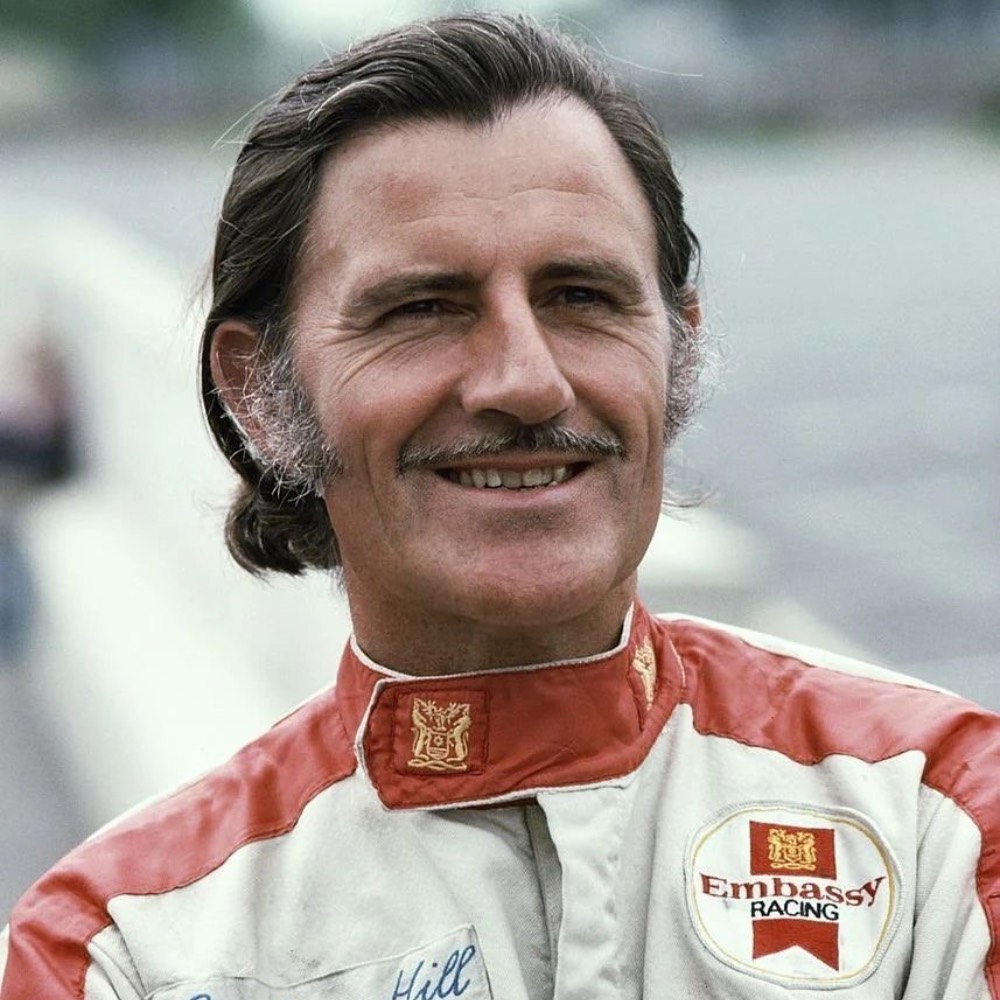
Brise made his Formula One debut on 27 April 1975 for Williams at the Spanish Grand Prix at Montjuïc Park near Barcelona. The race proved controversial and tragic, marred by driver strikes over inadequate safety barriers, numerous crashes, and the deaths of four spectators when a crashed car vaulted barriers into the crowd. Brise competed in this chaotic environment, gaining valuable if traumatic Formula One experience. At the same Spanish Grand Prix, two-time World Champion Graham Hill attempted to qualify his Embassy Hill team's car but failed, marking Hill's retirement from driving.
Recognizing Brise's exceptional talent, Hill immediately offered the young driver the Embassy Hill race seat for the remainder of 1975, replacing himself as team driver while remaining as team owner. This opportunity represented a dream scenario for Brise—joining a team owned by a World Champion who could mentor his development. Over the following races, Brise demonstrated tremendous promise, recording impressive qualifying performances and frequently outperforming his more experienced teammate Alan Jones, who would later become World Champion. Brise's speed and racecraft validated Hill's faith in the young Briton, and paddock observers increasingly spoke of Brise as a future World Champion.
At the Swedish Grand Prix at Anderstorp on 8 June 1975, Brise achieved his first World Championship point, finishing sixth and demonstrating his ability to score results with the mid-grid Embassy Hill equipment. Throughout the season, Brise continued impressing observers with his maturity, speed, and professionalism. Mario Andretti, who raced against Brise, later said: 'Jeez, that guy Brise…he was something special,' reflecting the enormous regard in which the young Briton was held by his peers. Many in motorsport believed Brise possessed exceptional natural talent that would inevitably lead to World Championships once he secured competitive machinery.
Tragedy struck on 29 November 1975. Hill, Brise, team designer Andy Smallman, and three Embassy Hill mechanics—Ray Brimble, Tony Alcock, and Terry Richards—were returning to London from Paul Ricard circuit in southern France, where they had been testing the new Embassy Hill GH2 car. The group traveled in Hill's twin-engine six-seat Piper Aztec aircraft, piloted by Hill himself. Attempting to land at Elstree Airfield near London at night in thick fog, Hill misjudged the approach in the terrible visibility.
The aircraft crashed into trees at Arkley golf course and immediately burst into flames. All six men aboard died instantly. Brise was just 23 years old, having competed in ten Formula One races and scored one championship point. The crash devastated British motorsport, claiming not only Hill—Britain's first World Champion and most famous racing driver—but also Brise, widely considered Britain's brightest young talent, along with the promising designer Smallman and three dedicated mechanics.
The Embassy Hill team collapsed immediately, unable to continue after losing its owner, driver, designer, and key personnel in one horrific accident. The tragedy robbed motorsport of witnessing Brise's potential fulfilled, leaving only tantalizing glimpses of what might have been. His contemporaries remained convinced throughout their lives that Brise would have become World Champion had he lived. Jackie Stewart later stated that Brise possessed all the qualities needed for World Championship success—speed, intelligence, racecraft, and maturity beyond his years.
Tony Brise is remembered as one of British motorsport's greatest 'what ifs'—a supremely talented driver whose career was just beginning when it was tragically ended. Today, the annual Autosport BRDC Young Driver of the Year Award winner receives the Chris Bristow Trophy, but Brise's name is equally remembered when discussing Britain's most promising talents whose potential was never realized.