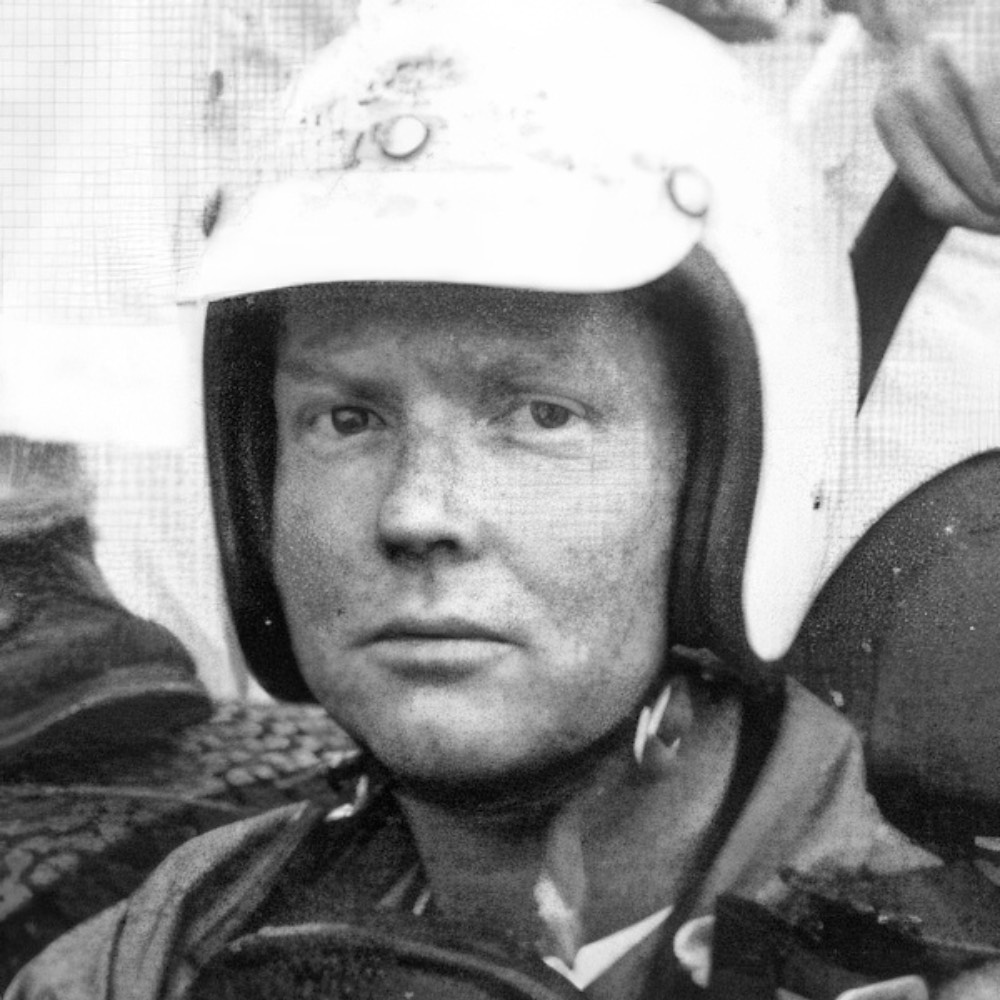
Chuck Daigh
Career Statistics
Biography
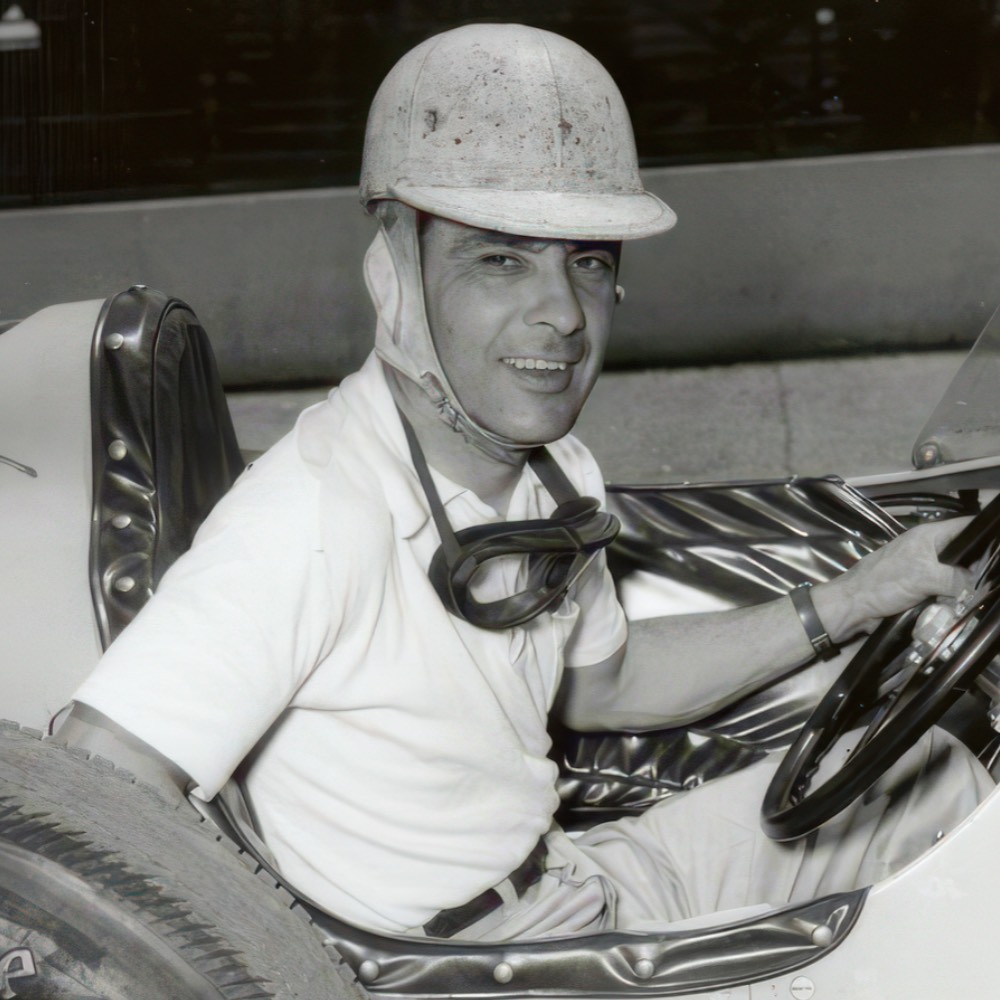
Charles George 'Chuck' Daigh (29 November 1923 - 29 April 2008) was an American racing driver and engineer who competed in six Formula One World Championship Grands Prix during 1960, driving the American-built Scarab entered by wealthy sportsman Lance Reventlow, though the front-engined Scarab was obsolete before it even debuted, having been rendered uncompetitive by the rear-engined revolution led by Cooper and Lotus, and Daigh scored no championship points in Formula One despite being one of America's most talented sports car drivers, having won the 1959 12 Hours of Sebring and multiple Can-Am races. Born in Long Beach, California, on 29 November 1923, Daigh grew up during the Depression and came of age during World War II, and he enlisted in the U.
S. Army as a paratrooper, serving with distinction during some of the war's most critical campaigns, parachuting into Sicily, crossing to mainland Italy at Salerno, and on D-Day parachuting into Normandy as part of the Allied invasion of France, surviving the war and returning to America with the discipline and courage that would serve him well in motorsport. After the war, Daigh became involved in engineering and motorsport, and his mechanical aptitude and engineering knowledge made him valuable to racing teams who needed skilled mechanics and engineers who could also drive, leading to his association with Lance Reventlow's Scarab team. Lance Reventlow was the son of Woolworth heiress Barbara Hutton and was one of America's wealthiest young men, and he founded Reventlow Automobiles Inc.
(which produced cars under the Scarab name) with the ambitious goal of building American racing cars that could compete successfully against European manufacturers in both sports car and Formula One competition. Daigh became one of Reventlow's key engineers and drivers, and in 1958 he drove the Scarab sports car to victory at the Riverside International Grand Prix, defeating a field that included factory teams from Ferrari and other European manufacturers as well as legendary drivers like Phil Hill, an achievement that represented American sports car racing's coming of age. In 1959, Daigh achieved his greatest sports car success when he won the 12 Hours of Sebring, one of the world's most prestigious endurance races, demonstrating that he possessed both the speed and stamina required for success in long-distance competition, and this victory established him as one of America's elite sports car drivers.
Encouraged by their sports car successes, Lance Reventlow decided to enter Formula One with the Scarab team in 1960, and Daigh was chosen as one of the drivers for the ambitious American assault on Grand Prix racing, though the project was doomed from the start by fundamental design decisions that rendered the Scarab F1 car obsolete before it turned a wheel in competition. The Scarab F1 car featured a front-mounted engine at a time when the rear-engined revolution initiated by Cooper in 1958-1959 had already demonstrated that front-engined Formula One cars were obsolete, and by the time the Scarab appeared at World Championship races in mid-1960, even the traditionalist Ferrari team was developing rear-engined cars, making the Scarab's front-engine layout hopelessly outdated.
Daigh made his Formula One debut at the 1960 Monaco Grand Prix on 29 May 1960, but failed to qualify for the race, a humiliating introduction to Grand Prix racing for the Scarab team and a harbinger of the struggles that would characterize their entire Formula One campaign. Throughout the 1960 season, Daigh started six Formula One World Championship races driving the Scarab, competing at circuits including Monaco, Zandvoort, Spa, Reims, Silverstone, and others, but the car's fundamental obsolescence meant that he was never competitive, and he finished no races in the points-paying positions, scoring zero World Championship points despite his considerable talent and experience. The Scarab F1 project was abandoned at the end of 1960 after failing to achieve any success, and Lance Reventlow closed down his Formula One operation, with Daigh returning to American sports car racing where he could actually compete for victories rather than struggle at the back of Formula One fields.
Beyond his racing career, Daigh was especially respected as an efficient and brilliant mechanic and engineer, and he enjoyed setting up the cars he drove as much as he enjoyed driving them, bringing an engineer's analytical approach to motorsport that made him valuable to teams even when his driving results were modest. Daigh twice attempted to qualify for the Indianapolis 500, America's most prestigious motor race, but was unsuccessful both times, demonstrating that even talented and experienced drivers could struggle with the unique demands of Indianapolis oval racing, which required different skills and setup approaches than road racing. After retiring from active competition, Daigh remained involved in the automotive industry and continued working as an engineer, applying the mechanical knowledge and problem-solving skills he had developed during his racing career to other projects.
Chuck Daigh died on 29 April 2008 at age 84, passing away more than four decades after his brief and unsuccessful Formula One career, but his legacy extended beyond his six winless Formula One starts to encompass his 1959 Sebring victory, his 1958 Riverside Grand Prix triumph over Ferrari, and his work as an engineer and mechanic that contributed to American motorsport development during a crucial era. Chuck Daigh's Formula One statistics—six starts, zero finishes, zero points—fail to capture his significance in American motorsport history or his genuine abilities as a racing driver, as his Formula One failure was due entirely to the Scarab's obsolete design rather than any deficiency in his driving, and his success in American sports car racing demonstrated that he possessed world-class talent that simply never received a competitive Formula One platform, making him one of many drivers whose Formula One careers were defined by uncompetitive machinery rather than personal ability.