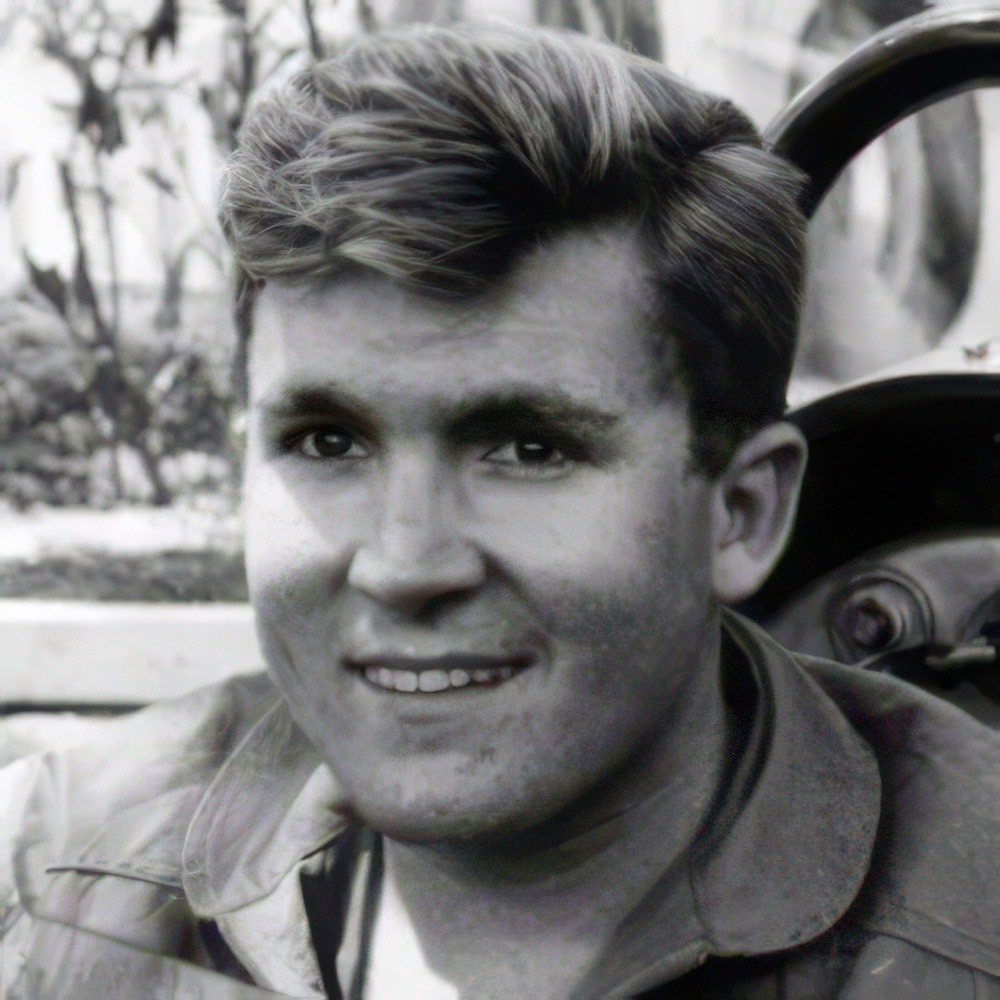
Lance Reventlow
Career Statistics
Biography
Lance Reventlow (24 February 1936 - 24 July 1972): American racing driver, designer, and constructor from London, England who was the only child of Woolworth heiress Barbara Hutton and Count Kurt Haugwitz-Reventlow. Reventlow used his inherited wealth to pursue his passion for racing and engineering, creating Scarab Racing and constructing one of America's most ambitious Formula One projects of the late 1950s. He participated in one Formula One World Championship Grand Prix, the 1960 Belgian Grand Prix at Spa-Francorchamps, failing to finish after retiring with clutch failure. Born in London but raised primarily in the United States, Reventlow was the heir to part of the Woolworth fortune through his mother, one of the wealthiest women in the world.
Despite—or perhaps because of—his privileged background, Reventlow developed a genuine passion for engineering and racing rather than simply living off his inheritance. He was educated in Switzerland and the United States, and served in the United States Army. In the mid-1950s, Reventlow began racing sports cars in California, competing in an Automotive Safety Foundation program that led him to SCCA racing. He raced Ferraris and Maseratis with some success, but his ambitions extended beyond driving—he wanted to design and build his own race cars.
In 1957, Reventlow established Reventlow Automobiles Inc. (RAI) in Venice, California, and created Scarab Racing. His vision was to build an all-American sports racing car to compete against the European manufacturers dominating the sport. He assembled a talented team including designer Warren Olson, chassis engineer Dick Troutman, engineer Tom Barnes, and fabricators like Phil Remington. The result was the Scarab sports racing car, powered by a Chevrolet V8 engine.
The Scarab sports cars achieved considerable success. Chuck Daigh, driving for Scarab, won multiple SCCA races in 1958 and 1959, and the team became a serious competitor. Reventlow himself drove Scarabs to several victories. Encouraged by this success, Reventlow made the bold—some said foolhardy—decision to enter Formula One. In 1960, Scarab Racing created a Formula One car, a front-engined design at a time when the rear-engined revolution was already underway.
The Scarab F1 car was beautifully engineered but fundamentally outdated before it turned a wheel. Powered by a Chevrolet V8 engine and designed by Leo Goossen and Dick Troutman, the car made its debut at Monaco in 1960 with Chuck Daigh driving. Daigh failed to qualify. Reventlow himself drove at the Belgian Grand Prix at Spa, qualifying 16th of 18 starters—a creditable effort. However, he retired after just nine laps when the clutch failed.
It would be Reventlow's only Formula One start. The Scarab F1 team attempted several more races in 1960 with both Reventlow and Daigh driving, but neither qualified again. The front-engined design simply could not compete with the new rear-engined cars from Cooper, Lotus, and others. By the end of 1960, Scarab withdrew from Formula One, having achieved no points and only one race start. The financial losses were substantial, though for Reventlow the money was less important than the failure to achieve competitive performance.
Following the Scarab project's end, Reventlow continued racing sports cars sporadically through the early 1960s. He married actress Jill St. John in 1960 (they divorced in 1963), and later married model Cheryl Holdridge in 1964. Despite his wealth, Reventlow lived relatively modestly by the standards of heirs to vast fortunes, maintaining genuine friendships in the racing community and working on engineering projects.
Tragedy struck on 24 July 1972 when Reventlow, his wife Cheryl, and two others were killed when their Cessna 206 airplane crashed in a thunderstorm near Aspen, Colorado. Reventlow was piloting the plane. He was just 36 years old. The crash investigation determined that the plane encountered severe weather that Reventlow, who had a pilot's license but limited instrument-flying experience, was unable to navigate.
His death shocked the racing community, cutting short a life that had already contributed significantly to American motorsport. The Scarab sports cars remain highly collectible and are celebrated as examples of American automotive engineering at its finest. The Formula One project, while unsuccessful, represented admirable ambition—an attempt to challenge European dominance with American engineering and resources. Known for his engineering curiosity, genuine passion for racing, humility despite his wealth, and willingness to risk his fortune pursuing his dreams, Lance Reventlow represents a unique figure in motorsport—a wealthy heir who sought achievement through engineering excellence rather than simply enjoying his inheritance.