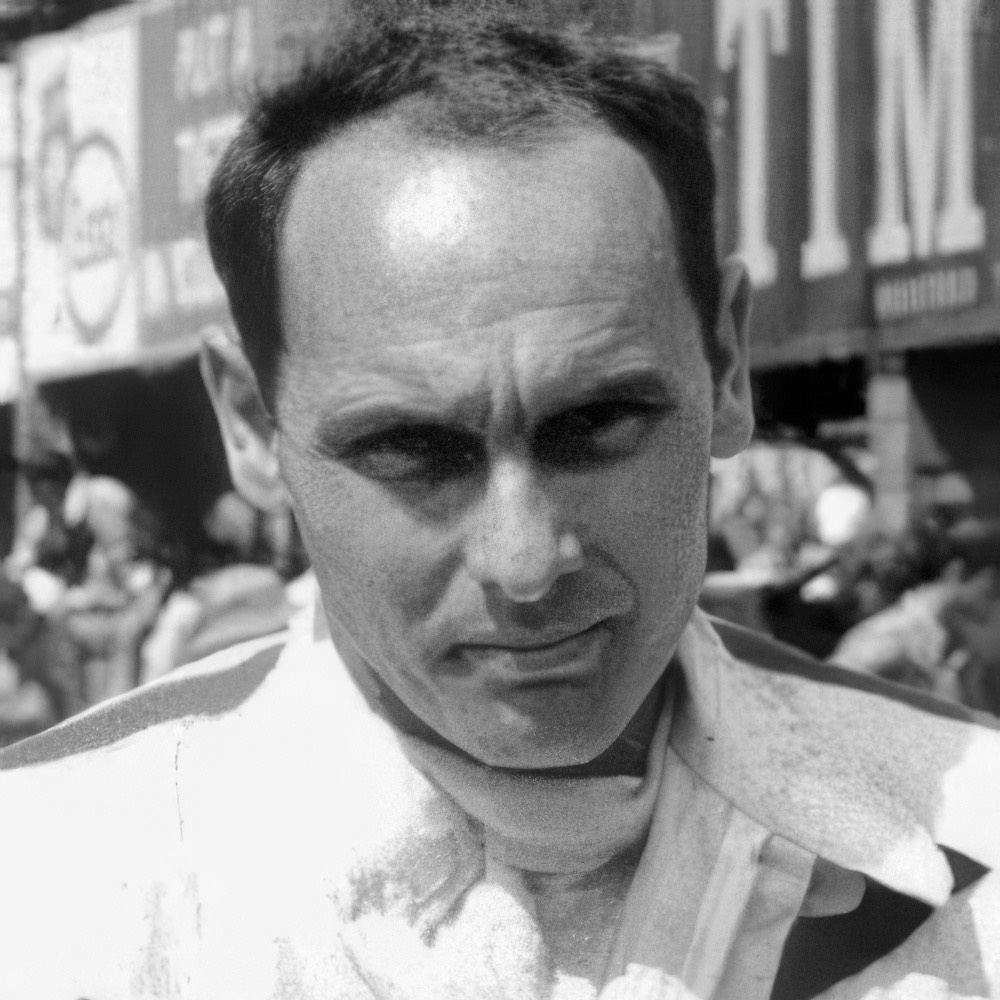
Peter de Klerk
Career Statistics
Biography
Peter David de Klerk (16 March 1935 - 11 July 2015): South African racing driver from Pilgrim's Rest, Transvaal who participated in four Formula One World Championship Grands Prix between 1963 and 1970, scoring no championship points with a career-best finish of tenth place at the 1965 South African Grand Prix, but who achieved greater recognition for building and racing the innovative "Alfa Special," a self-constructed Formula One car powered by an Alfa Romeo engine that competed successfully against factory teams in South African national racing. Born in Pilgrim's Rest, a historic gold-mining town in Transvaal, on 16 March 1935, de Klerk grew up in rural South Africa far from major motorsport centers.
He got his first foothold in motorsport as a mechanic, working his passage from Durban to London to learn about racing cars in the late 1950s. In England, he worked for Colin Chapman at Lotus, building Coventry Climax racing engines and learning engineering and fabrication techniques that would later enable him to build his own racing car. This apprenticeship at Lotus provided invaluable knowledge about chassis design, engine preparation, and the fundamentals of competitive racing car construction. Upon returning to South Africa in the early 1960s, de Klerk applied his Lotus experience to build his own Formula One car.
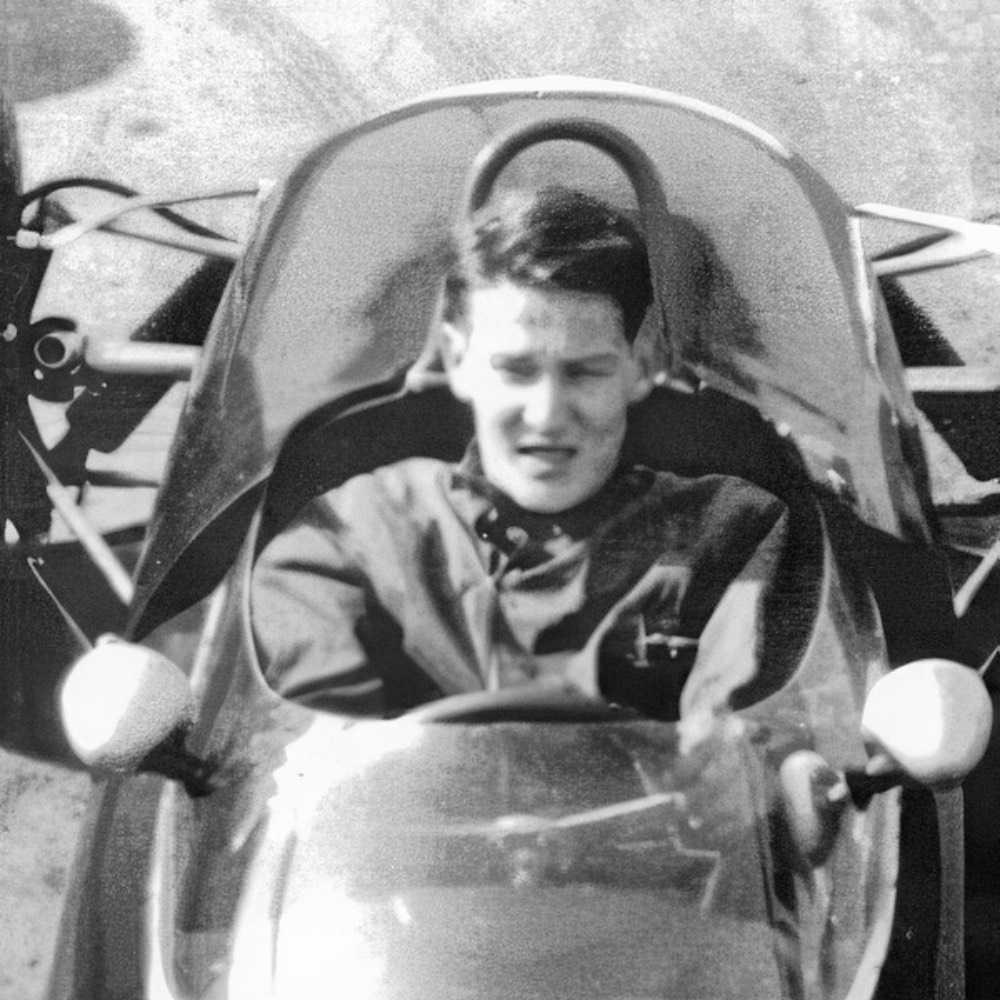
In 1962, he created the remarkable "Alfa Special," a custom-made single-seater racing car powered by an Alfa Romeo Giulietta 1.5-liter straight-four engine. The car featured a hand-built chassis of de Klerk's own design, demonstrating both his engineering skill and his determination to compete despite limited resources. The Alfa Special competed in the South African Formula One Championship (a separate series from the World Championship that featured local and visiting international drivers) and proved remarkably competitive.
De Klerk scored his first major racing success in 1962 when he won the Mozambique Grand Prix at Circuito de Lourenço Marques (now Maputo) in his Alfa Special, defeating several faster cars through superior racecraft and local knowledge. He repeated this victory in 1963, establishing the Alfa Special's credentials as a genuine giant-killer that could compete with factory-built Lotuses and Coopers despite being constructed in a small South African workshop. De Klerk made his Formula One World Championship debut at the 1963 South African Grand Prix at East London on 28 December 1963, entering his own Alfa Special. He qualified toward the back of the grid against the full international field but completed the race, finishing well down but classified, demonstrating his car could survive against world championship opposition.
His second World Championship appearance came at the 1965 South African Grand Prix at East London on 1 January 1965, again in the Alfa Special. This time de Klerk delivered his career-best World Championship result, finishing tenth, six laps behind race winner Jim Clark but ahead of several other competitors. While tenth place scored no championship points (only the top six scored in 1965), it represented a creditable performance for a privateer in a self-built car competing against factory teams. De Klerk's final two World Championship appearances came in 1969 and 1970, but by this time he had abandoned the Alfa Special in favor of more competitive machinery.
At the 1969 South African Grand Prix on 1 March 1969, he drove a Brabham-Climax, retiring early with mechanical problems. At the 1970 South African Grand Prix on 7 March 1970, he again drove a Brabham-Climax but retired after just 12 laps. These disappointing results ended his World Championship career with four starts, one tenth-place finish, and zero points, though this statistical record doesn't capture the remarkable achievement of building his own competitive racing car. Beyond his Formula One World Championship appearances, de Klerk competed extensively in South African national motorsport throughout the 1960s.
The Alfa Special became a fan favorite in South African racing, and de Klerk achieved numerous victories in domestic events, establishing himself as one of South Africa's leading drivers despite his limited resources. In 1966, de Klerk expanded into international sports car racing, competing at the 24 Hours of Le Mans driving a Porsche Carrera 6 co-driven with German driver Udo Schütz. The duo finished sixth overall, an excellent result that demonstrated de Klerk's abilities in endurance racing. The same year, he won the South African 6 Hours at Kyalami driving a Porsche 718 RS, further establishing his sports car credentials.
De Klerk's sports car success continued through the late 1960s, with Porsche becoming his preferred machinery for endurance events. Following his retirement from competitive racing in the early 1970s, de Klerk remained connected to South African motorsport but largely stepped away from the international scene. He lived quietly in South Africa, occasionally attending historic racing events where his Alfa Special was remembered with affection as a symbol of South African motorsport ingenuity and determination. Peter de Klerk passed away on 11 July 2015 at age 80, mourned by the South African motorsport community as one of their pioneering drivers.
His obituaries highlighted the Alfa Special as his greatest achievement—a home-built racing car that competed successfully against factory teams, embodying the resourcefulness and engineering skill that characterized privateer racing during the 1960s. The Alfa Special survives and is occasionally displayed at South African motorsport events, serving as a tangible reminder of de Klerk's contribution to the country's racing heritage. Known for building the remarkable self-constructed Alfa Special that competed in Formula One, for winning the Mozambique Grand Prix twice (1962, 1963), for his tenth-place finish at the 1965 South African Grand Prix in his home-built car, for his sixth-place finish at the 1966 Le Mans 24 Hours, and for representing South African engineering ingenuity during the 1960s, Peter de Klerk remains a respected figure in South African motorsport history, proving that talent, determination, and engineering skill could overcome limited resources to compete at international level.