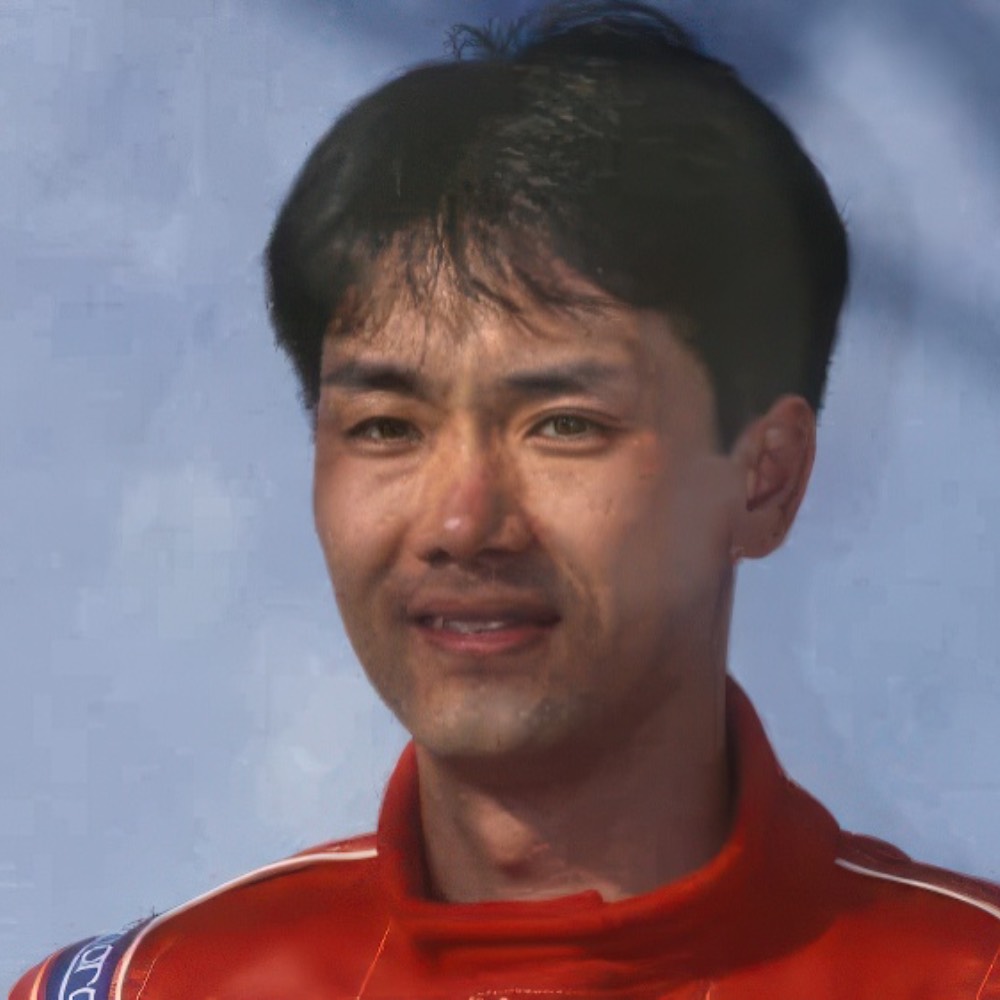
Taki Inoue
Career Statistics
Biography
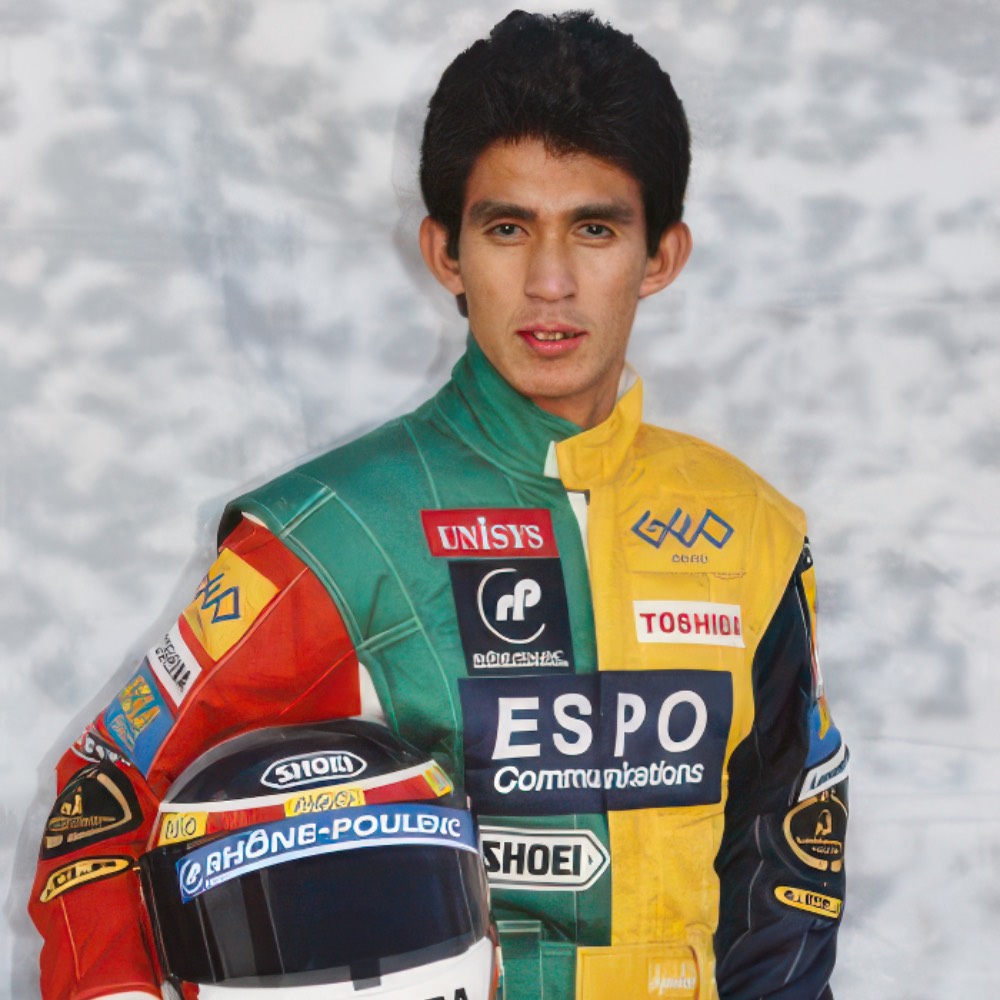
Takachiho "Taki" Inoue (born 5 September 1963) is a Japanese former racing driver from Kobe who competed in Formula One during the 1994 and 1995 seasons, participating in 18 Grand Prix races and scoring no championship points, but achieving lasting fame—or infamy—for a series of mishaps that have made him one of motorsport's most endearing cult figures. Known for his self-deprecating humor and willingness to acknowledge his limitations, Inoue has publicly proclaimed himself "the worst driver in Formula One" and admitted he initially had no idea what a pit stop was, transforming what could have been an embarrassing career into an unlikely source of entertainment and sympathy for motorsport fans worldwide.
Inoue began racing in the Fuji Freshman touring car series in Japan in 1985, though his early performances did little to suggest future Formula One potential. After another unremarkable season where he failed to impress, he made the ambitious decision to travel to England in 1987 to attend the Jim Russell Racing School at Snetterton, one of Britain's most respected driver training facilities. He competed in the British Formula Ford Championship in 1988, the entry-level single-seater category that has launched countless successful careers, though Inoue's results suggested he lacked the natural speed of future Formula One stars.
After his British sojourn, Inoue returned to Japan and competed in All-Japan Formula Three from 1989 to 1993—a highly competitive domestic championship featuring many talented drivers. His best result was ninth place in the 1993 Japanese Formula Three Championship, hardly the championship-winning form typically expected of Formula One candidates. In 1994, he moved to International Formula 3000, the primary feeder series to Formula One, though again his results were unremarkable. Nevertheless, armed with substantial financial backing, Inoue secured his Formula One opportunity.
Inoue made his Formula One debut at the 1994 Japanese Grand Prix at Suzuka with the Simtek team, replacing Jean-Marc Gounon after bringing significant funding to the struggling outfit. Simtek was one of Formula One's backmarker teams, operating on a shoestring budget and fielding uncompetitive cars that regularly failed to qualify. Inoue's debut followed this pattern: he failed to qualify for the race, an inauspicious start that foreshadowed the difficulties to come. Despite this failure, his financial backing secured him a full-time seat with Footwork Arrows for the 1995 season.
The 1995 season with Arrows was characterized by a series of incidents that would cement Inoue's reputation as Formula One's most accident-prone driver. For most of the season, his teammate was Italian driver Gianni Morbidelli, though late in the season Max Papis replaced Morbidelli. Occasionally Inoue actually outpaced his teammates, demonstrating that he possessed at least some racing ability, but his season is remembered not for competitive performances but for spectacular mishaps that provided unintentional entertainment to television audiences worldwide.
The most infamous incident occurred at the 1995 Hungarian Grand Prix at the Hungaroring, broadcast live on television to millions of viewers worldwide. Inoue retired from the race when his car caught fire due to engine problems. Following standard safety procedures, he attempted to assist the marshals in extinguishing the flames from his stricken Arrows. However, in a moment of extraordinary bad luck, a Tatra 623 safety car driven by a marshal to the scene struck Inoue from behind, knocking him down and injuring his leg. The bizarre accident—a Formula One driver being hit by the very safety car deployed to protect drivers—became instant motorsport folklore and has been replayed countless times on television compilations of racing mishaps.
Despite the injury from the safety car incident, Inoue recovered in time for the next race, demonstrating physical resilience even if his driving skills remained questionable. However, other incidents throughout the 1995 season suggested a driver struggling with Formula One's demands. Reports emerged of Inoue admitting he initially did not understand the concept of pit stops, one of racing's most fundamental strategies. Such admissions, while honest, highlighted the vast gulf between his preparation and the standards expected at motorsport's highest level.
Entering the 1996 season, Inoue lobbied Tyrrell for a race seat, but the British team chose his countryman Ukyo Katayama, who brought Mild Seven sponsorship money from Japan Tobacco—a more lucrative financial package. Instead, Inoue was announced in January 1996 to drive for the Minardi team, traditionally one of Formula One's backmarkers. However, one of his personal sponsors pulled out at the last minute, withdrawing the funding that had secured his seat. Without money, Inoue's Formula One career ended abruptly before the 1996 season began, leaving him with 18 Grand Prix starts across two seasons and zero championship points.
After his Formula One career ended, Inoue briefly switched to sports car racing before retiring from professional driving at the end of 1999. His post-racing career took an unexpected turn when he became a driver manager in Japan, presumably advising young drivers to avoid the mistakes he had made. More significantly, Inoue embraced his reputation as Formula One's most unsuccessful driver, transforming potential embarrassment into entertainment through self-deprecating humor.
Inoue's honest acknowledgment of his limitations proved endearing to motorsport fans. He publicly stated in interviews that he was "not good enough to drive in F1" and repeatedly referred to himself as the worst Formula One driver in history—extraordinary admissions from someone who had reached motorsport's pinnacle. Rather than trying to rewrite history or make excuses, Inoue embraced his role as Formula One's lovable failure, an approach that earned him a cult following.
In the social media era, Inoue gained popularity on Twitter (now X), where his humorous and self-deprecating posts about Formula One and his own career earned him thousands of followers and genuine affection from fans. His tweets often made fun of his own mishaps, including the infamous safety car incident, and provided witty commentary on current Formula One races. This transformation from failed driver to social media personality demonstrated impressive self-awareness and humor, qualities that transcended his lack of racing success.
In a 2015 interview with Top Gear magazine, Inoue candidly stated: "I was not good enough to drive in F1." This brutal honesty, combined with his willingness to laugh at himself, made him far more popular in retirement than he ever was during his racing career. Modern Formula One fans who never witnessed his races have discovered him through viral videos of his mishaps and his entertaining social media presence, ensuring his legacy endures decades after his last Grand Prix.
Taki Inoue's Formula One career statistics—18 starts, zero points, multiple accidents, struck by a safety car—should represent abject failure. Instead, through self-awareness, humor, and honesty about his limitations, Inoue has achieved a form of immortality that eludes many more successful drivers. He is remembered fondly as the embodiment of determination over talent, a driver who reached Formula One through financial backing rather than merit but who has since earned genuine affection by acknowledging this truth with grace and humor. In an era when many drivers take themselves impossibly seriously, Taki Inoue's willingness to laugh at his own shortcomings has made him one of motorsport's most endearing figures—proof that how you respond to failure matters more than the failure itself.