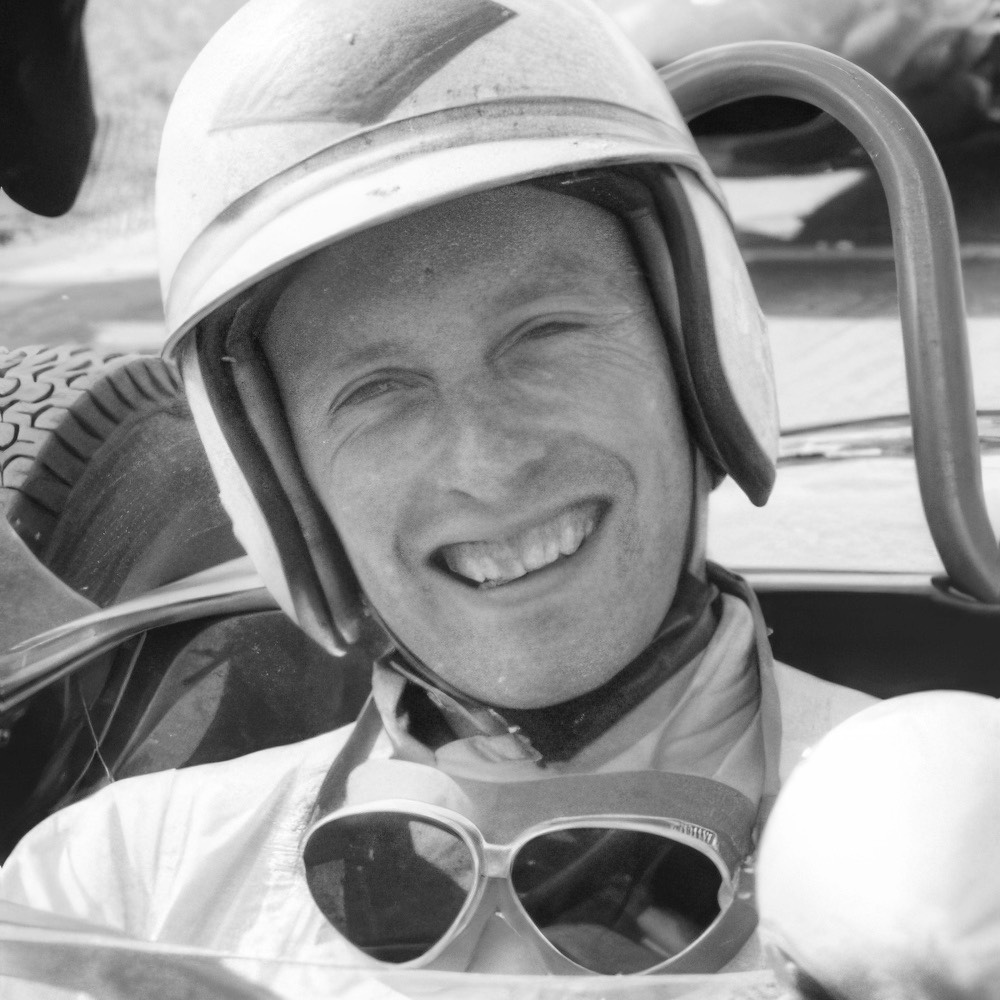
Peter Ashdown
Career Statistics
Biography
Peter Hawthorn Ashdown (16 October 1934 - Present): British racing driver from Danbury, Essex who participated in one Formula One World Championship Grand Prix, the 1959 British Grand Prix at Aintree, finishing 12th in a Cooper-Climax entered in the Formula Two class, but who achieved far greater success in British sports car racing, winning three consecutive Autosport Sports Car Championships (1959, 1960, 1961) and taking class wins at the Nürburgring 1000km endurance race. Born in Danbury, Essex on 16 October 1934, Ashdown grew up during World War II and developed his passion for motorsport during Britain's post-war racing boom. He trained as a vehicle mechanic, learning the practical skills that would serve him throughout his racing career, both in maintaining his own cars and understanding their mechanical limits.
At age 18, faced with the prospect of compulsory National Service, Ashdown made a strategic decision: rather than serving the standard two years, he volunteered for three years in the Royal Air Force, trading the extra year for better pay, conditions, and crucially, choice of posting. This proved wise—he was stationed in East Anglia, not too far from his Essex home, allowing him to maintain connections and begin racing during his service. Ashdown's racing career began around 1955 when he first appeared competing in a Dellow, a British sports car powered by a Ford 10 engine. He continued around 1955-1956 racing a Lotus Mark IX as a privateer, not being affiliated with any particular team but competing in British club racing and establishing himself among the country's capable amateur racers.
Prior to his Formula One appearance, Ashdown became one of the leaders of the British Formula Junior scene in the late 1950s, competing successfully in this junior single-seater category. However, a serious accident at Rouen-Les-Essarts in France in 1958 considerably hampered his career progression—Ashdown broke his collarbone in the crash, missing valuable racing time during a crucial period when he might have secured more significant opportunities. His sole Formula One World Championship appearance came at the 1959 British Grand Prix at Aintree on 18 July 1959, where he drove a Formula Two Cooper-Climax entered by Alan Brown. The 1959 British Grand Prix was one of several World Championship races during the late 1950s that permitted Formula Two cars to compete alongside the Formula One entries, though they raced for separate classifications.
Ashdown finished the race in 12th position overall, third among the Formula Two entries, completing the race six laps behind winner Jack Brabham but earning a classified finish. This would be his only Formula One World Championship appearance, though he continued racing in other categories. Ashdown found his greatest success in sports car racing during the late 1950s and early 1960s, where he became one of Britain's leading drivers. He won three consecutive Autosport Sports Car Championships in 1959, 1960, and 1961, dominating this prestigious British series and establishing himself as the country's premier sports car driver during this period.
His success extended to international endurance racing—Ashdown achieved class wins at both the 1960 and 1962 Nürburgring 1000km races, competing successfully against international opposition on the daunting 14-mile Nordschleife circuit. He also competed at the 12 Hours of Sebring in Florida, demonstrating his abilities on both European and American circuits. Following his front-line racing career in the early 1960s, Ashdown retired from competitive driving to concentrate on running his family businesses in Essex. These included a local Vauxhall dealership, a mail-order motor accessories company, a 'Candy Apple' garage, video hire shops, and video production company—a diverse business portfolio that demonstrated Ashdown's entrepreneurial abilities.
He was also involved in renovating timber-framed cottages, reflecting his interest in traditional English architecture and preservation. Despite retiring from active competition, Ashdown remained connected to motorsport. He became a guiding force behind Perry McCarthy's early racing career in the 1980s, mentoring the future 'Top Gear Stig' and helping develop his talent during McCarthy's formative years. This mentorship role allowed Ashdown to pass on his racing knowledge and experience to the next generation of British drivers.
Ashdown has lived a long life primarily in Essex, maintaining his business interests and occasionally attending historic racing events where his three consecutive Autosport Sports Car Championships are remembered as significant achievements in British motorsport during the late 1950s and early 1960s. His single Formula One appearance, while brief and in a Formula Two car, places him in the official World Championship records. Known for his three consecutive Autosport Sports Car Championships (1959-1961), for his class wins at the Nürburgring 1000km endurance races, for his single Formula One appearance finishing 12th at the 1959 British Grand Prix in a Formula Two Cooper, and for mentoring Perry McCarthy's early career, Peter Ashdown represents the talented British amateur racers of the 1950s-1960s who achieved success in national championships while also competing internationally, before transitioning to successful business careers while maintaining connections to motorsport through mentorship and support roles.